
Choosing a padel racket shape is a helpful way to narrow your options, but it should not be treated as a simple beginner-versus-expert rule. Round, teardrop, and diamond rackets differ in sweet spot position and weight distribution, which can affect how they feel and the kind of play they favor. A round model is commonly associated with control and ease of use; teardrop is often described as a balanced option; and diamond is generally designed for power. Use those tendencies to build a shortlist, then compare the particular rackets’ balance, weight, and comfort before deciding.
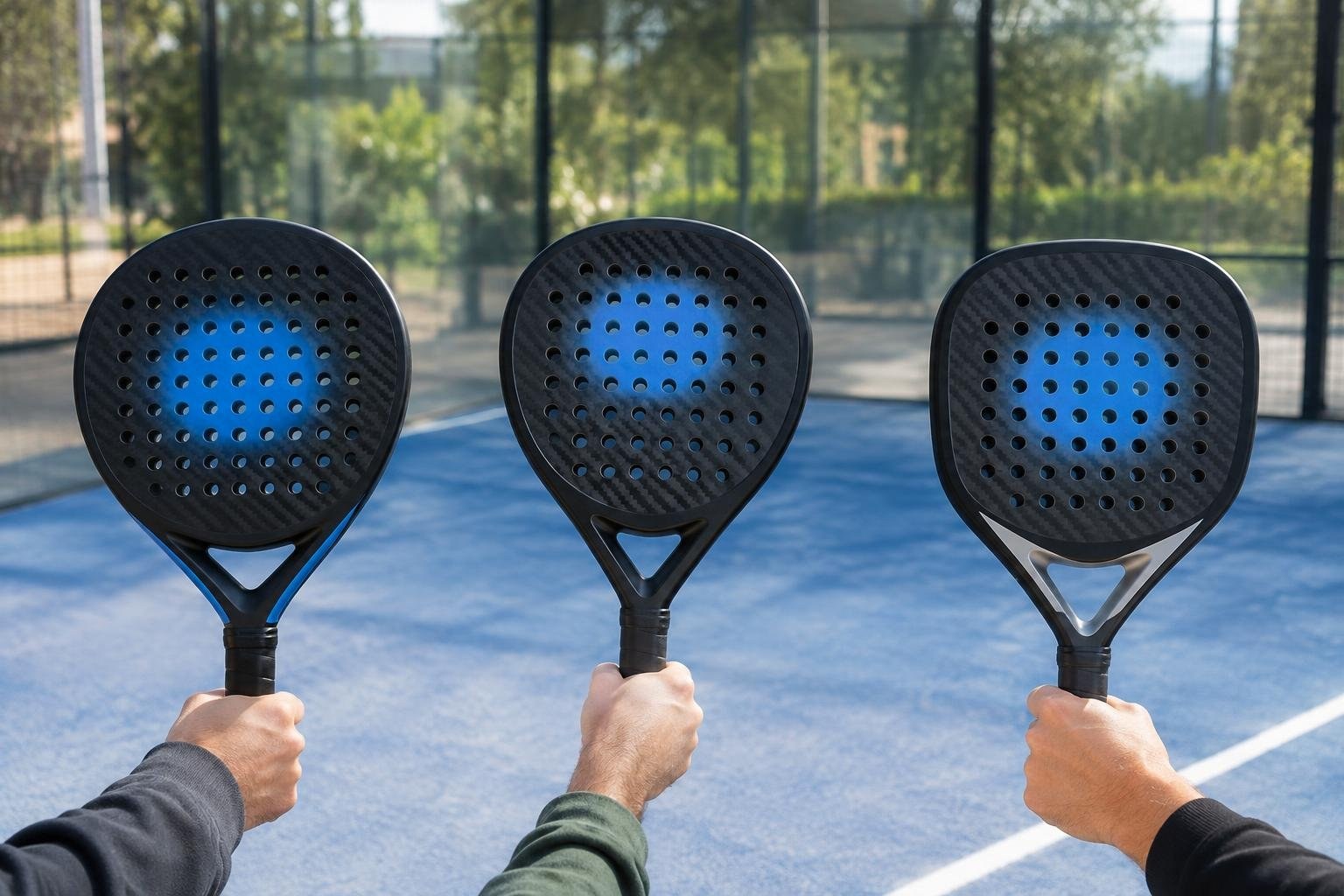
What do the three padel racket shapes mean?
The three familiar padel racket shapes are round, teardrop, and diamond. Their practical differences relate to the sweet spot, the area where contact tends to feel most effective, and to weight distribution. Shape gives you a useful first filter, but it cannot tell you everything about a racket’s balance or feel.
- Round: commonly associated with control and described as the easiest shape to play with.
- Teardrop: often treated as a versatile or balanced middle ground.
- Diamond: designed with a more power-oriented profile; its sweet spot is positioned higher and can be harder to control.
These are tendencies, not guarantees. A racket’s shape does not by itself tell you whether you will like its weight, balance, or handling. Use the shape to decide what to try, then assess the actual model. That distinction helps avoid the common mistake of buying a shape label as if it were a complete performance specification.
When should you choose a round padel racket?
A round racket is a good first shape to consider if your priorities are control, reliable placement, and a manageable learning experience. It is commonly described as the easiest shape to play with. That makes it a practical starting point for a new player who is still developing timing and contact consistency.
Choose a round model as a candidate, not as an automatic answer. Ask whether the racket feels comfortable and easy to move through your shots. If you can test it, focus on ordinary rallies and controlled placement rather than judging it only on a dramatic smash. A racket that lets you make repeatable contact may suit your current needs better than one selected mainly for maximum power.
A round shape can also be worth considering if you favor a defensive approach or want to prioritize placement. That does not mean every round model is light, low-balanced, or identical in feel. Compare the individual racket’s balance and weight alongside its shape, because the overall design influences the experience.
Is a teardrop racket the best all-round option?
A teardrop racket is worth considering if neither a control-first round model nor a power-focused diamond model sounds like a clear match. It is commonly described as a versatile or balanced shape, and can be a reasonable shortlist choice for players still developing timing and control.
“Balanced” should not be read as a precise measurement or a promise that every teardrop racket will suit every player. Shape descriptions summarize broad design tendencies; a particular racket’s balance and weight can change how it feels. When comparing two teardrop models, handle them if possible and note which one feels easier to position and control.
If you are moving from a round racket, focus on whether the teardrop’s overall feel still lets you make consistent contact. If you are moving from diamond, decide whether the tradeoff toward a more balanced feel meets your needs. Do not choose teardrop just because it is described as versatile: it should feel appropriate for your own shots and level of control.
When does a diamond racket make sense?
A diamond racket is designed for power-oriented play. Its sweet spot is positioned higher on the racket, and the shape is commonly associated with aggressive shots and smashes. The tradeoff is that it can be harder to control and asks for good technique and timing.
Consider diamond if you already make reliable contact and specifically want to explore a more power-focused design. Be cautious if your main issue is mishits, inconsistent placement, or difficulty controlling the racket. In those cases, adding a more demanding shape may not address the problem you actually want to solve.
Do not assume that a diamond shape automatically means high balance or that every racket in the category feels the same. Racket shape and balance are related design considerations, but examples exist of shapes and balance profiles that do not follow a simplistic label-based rule. Compare the individual model and, where possible, test it before committing.
How does choosing a racket shape work in practice?
Buying a racket is a short decision process: identify what you want to improve, use shape to narrow the field, compare the complete models, then choose based on comfort and control rather than marketing language alone.
- Name your priority. Decide whether you most want a control-oriented feel, a balanced option, or a power-oriented design.
- Shortlist a shape. Round, teardrop, and diamond provide a starting comparison.
- Check the complete racket. Compare balance and weight as well as the shape. Other selection factors may include materials and texture.
- Assess how it feels. If a test is available, notice whether the racket is comfortable to maneuver and whether contact feels repeatable.
- Make a reasoned choice. Select the model that best matches your current priorities, not simply the one with the most aggressive description.
This method is more useful than selecting by shape alone because racket guides identify several factors beyond shape, including balance, weight, material, and texture. Keep the goal focused: find a racket you can use consistently, not a label that promises a particular shot.
What signs suggest you should reconsider your racket shape?
It may be time to reconsider your racket if the shape or overall feel no longer matches what you want from your game. Shape is worth reviewing when you are deciding between more control, a balanced feel, and more power. It is not, however, a diagnosis for every difficulty on court.
Before shopping, identify the actual concern. Are you struggling to make consistent contact? Do you want a more controlled feel? Are you looking for a power-oriented racket despite already having reliable technique? Those answers help distinguish a real equipment preference from the assumption that a new shape will automatically fix performance.
Some players focus heavily on a racket’s ability to produce a powerful shot. But if your bigger challenge is avoiding errors and improving consistency, consider whether control and repeatable contact matter more to you. Shape can inform that choice, but it cannot replace practice or guarantee fewer mistakes.
Write down the shots and situations you want the racket to support before comparing models. This gives you a practical reason to change, and a standard for judging whether a candidate feels like an improvement.
What affects padel racket cost?
There is no supported universal price for a round, teardrop, or diamond racket in the available information. Shape alone does not establish what a model costs, so compare the actual options available to you rather than assuming one shape is always cheaper or more expensive.
Set a budget before you browse. Then compare rackets within that budget on the factors relevant to your decision: shape, balance, weight, comfort, and the manufacturer’s stated materials and design details. A higher price or power-focused description should not automatically outweigh whether the racket feels controllable for you.
Check exactly what is included in the price and review the seller’s return, trial, or warranty terms before purchasing. Those details can vary by seller and product, so confirm them directly rather than relying on a general assumption. If you can try a racket before purchase, consider whether that option is worth prioritizing over a feature you may not need.
Cost-conscious buying means comparing the complete offer and choosing for your current needs. It does not mean accepting unclear product details or paying for a shape designed around priorities you do not have.
Which factors affect how a racket feels?
Shape is only one factor in how a racket is likely to feel. Sweet spot position and weight distribution distinguish the main shapes, while guides also identify balance, weight, materials, and surface texture as factors to consider. This is why two rackets with the same shape can still deserve separate evaluation.
Weight is a useful comparison point, but it should not be read in isolation. One guide gives a broad range for adult rackets, yet individual models can differ. Compare the actual product specifications and pay attention to how the racket feels rather than treating a general range as a target for every player.
Materials and texture may also appear in product descriptions. Read those details as specifications, not as proof that a racket will suit you. The central buying question remains whether the whole design supports the feel you want and the contact you can make consistently.
To make comparisons fair, avoid changing several things at once. If possible, compare rackets with a similar purpose and note differences in shape, balance, and weight. That makes it easier to identify which design choice is driving your preference.
How do round, teardrop, and diamond rackets compare?
Use this quick comparison as a starting point, then check the particular racket rather than relying on category names alone.
| Shape | Common design emphasis | Worth considering when | Potential tradeoff |
|---|---|---|---|
| Round | Control and an easier-to-play feel | You prioritize placement or are developing timing | It may not be your first choice if power is the leading priority |
| Teardrop | Versatility or a more balanced feel | You want a middle-ground option | The actual balance and feel still vary by model |
| Diamond | Power; higher sweet spot | You have consistent contact and want a power-oriented design | It can be harder to control and more technique-dependent |
These are broad tendencies, not promises about results. The sweet spot and weight distribution help explain the categories, but players should still compare the racket’s balance and other specifications. A round racket is not automatically right for every beginner, nor is a diamond model automatically right for every advanced player.
What should you expect, and how long can choosing take?
Expect to spend time comparing rather than choosing purely by shape. A useful evaluation can happen in one shopping session, but a confident decision may take longer if you want to test different models or wait for an opportunity to try them in play. No fixed selection timeline applies to everyone.
If you can test options, use the same simple observations each time: comfort, ease of moving the racket, how often contact feels centered, and whether the racket supports your intended style. Do not judge solely from one powerful shot. A racket chosen for a power-oriented profile may still be a poor match if ordinary contact feels difficult.
If testing is not available, compare product details carefully and make your priorities explicit. Check shape, balance, weight, and stated materials or texture. Keep a note of why each model made your shortlist, and verify return or warranty terms before ordering.
The result you should expect is a better-informed choice, not an instant change in playing ability. Shape guides can help narrow a selection; they cannot guarantee a particular level of control, power, or match performance.
How do you choose a qualified racket adviser or seller?
For racket advice, seek a provider who can explain the product’s specifications and relate them to your stated preferences without insisting that one shape is best for everyone. A knowledgeable retailer or coach may help you compare candidates, but ask for reasons tied to your needs rather than accepting a recommendation based on a single label.
Useful questions include: Where is the sweet spot positioned? What is the stated weight and balance? What tradeoffs should I expect compared with the other shape I am considering? Can I handle or test the racket? What are the return and warranty terms? Clear answers help you decide whether the advice is relevant.
Be cautious of recommendations that promise a racket will fix your game or guarantee more power. Shape guides describe tendencies, not assured outcomes. A credible recommendation should make the tradeoffs clear, especially when discussing a diamond shape that may be more demanding to control.
There is no need to treat a product recommendation as a substitute for your own comfort assessment. Use advice to understand the options, then choose the model that best matches your priorities and feels manageable to you.
What about warranties, credentials, and safe use?
Racket shape does not involve a court permit or a playing credential, but product safety and purchase terms still deserve attention. Check the manufacturer’s specifications and instructions for the particular model, and confirm its stated weight and other details before buying. Do not infer a specification from the shape alone.
Review the seller’s warranty, return policy, and any trial conditions before paying. These terms are product- and seller-specific, so read the actual policy rather than relying on a general promise. If you are comparing advice from a retailer or coach, remember that a recommendation is not the same as a manufacturer warranty.
For comfort, take your own response seriously. If handling a racket causes discomfort, stop using it and consider whether the model’s weight, balance, or feel is a poor match. This is practical equipment caution, not medical advice. Seek an appropriate health professional for persistent or concerning pain.
No geographic rules, local costs, or special credentials for racket selection are established here. Confirm local consumer protections and the exact purchase terms that apply where you live.
How can you save money without making a poor choice?
You can make a more economical choice without compromising the decision by setting a budget and narrowing the shortlist to rackets that meet your needs. Start with shape, then compare balance and weight. Do not pay extra for a power-focused design if your priority is a controllable feel, or assume a high price will make an unsuitable racket feel right.
- Compare the complete product details, not only the shape or headline description.
- Ask whether testing or handling the racket is possible before purchase.
- Review the seller’s return and warranty terms before ordering.
- Consider a racket that supports your current timing and control rather than buying for an imagined future playing style.
One manufacturer guide suggests that players developing timing and control consider round or teardrop shapes. That is a useful shortlist principle, not a rule that requires replacing a racket or buying a particular model. If your current racket is comfortable and suits your needs, a shape change is not automatically necessary.
Saving safely means verifying the details and terms of the actual offer. Avoid making a decision based only on a discount if you cannot confirm what model is being sold and what support comes with it.
What mistakes and red flags should you avoid?
Common mistakes include treating shape as a complete specification, buying for power before assessing control, and assuming all rackets in one category feel the same. A diamond design can be more demanding to control, while round shapes are commonly described as easier to play with. Those tendencies should inform your decision, not replace a comparison of the actual model.
Use this checklist before you buy:
- Can I explain what I want most: control, a balanced feel, or power?
- Have I compared the specific racket’s balance and weight, not just its shape?
- Does its feel seem manageable for my current timing and contact?
- Have I checked the product details, return conditions, and warranty?
- Am I choosing for how I play now rather than a claim or aspiration?
Be wary of absolute claims that a shape guarantees performance or suits every player at a given level. Also question recommendations that do not explain tradeoffs. If the advice does not address your priorities or the complete racket, gather more information before deciding.
In short, shortlist by shape, compare the whole racket, and make the final call on fit and comfort.
Frequently asked questions
What padel racket shape is best for a beginner?
A round racket is a practical first option for many beginners because it is generally easier to play with and supports control. A teardrop can suit players looking for a more balanced feel. The right choice still depends on the complete racket and how it feels in your hand.
Which padel racket shape gives the most power?
A diamond racket is commonly designed for power, with its sweet spot positioned higher on the head. That can favor aggressive shots, but it may be harder to control and usually asks more of your timing and technique.
Is a round padel racket better for control?
Round rackets are commonly associated with control and are described as easier to play with. This makes them worth considering if you value placement and consistency, but shape alone cannot guarantee control.
Is a teardrop padel racket a good all-round choice?
A teardrop shape is often presented as a middle-ground option between round and diamond designs. It may appeal if you want a balanced feel rather than prioritizing control or power alone.
Does racket shape determine balance?
Not necessarily. Shape is a useful starting point, but rackets with the same shape can still differ in balance and feel. Try to assess the specific racket rather than assuming every diamond or round model plays identically.
Should an intermediate player use a diamond racket?
No. A diamond design can suit an experienced player who wants a power-oriented racket, but it can be more demanding to control. Consider your contact consistency and comfort, not just your playing level or preferred shot.
What should I compare besides padel racket shape?
Compare the racket’s shape, balance, weight, comfort, and how consistently you contact the ball. Shape, balance, and weight all matter, and the best combination depends on the player.
People Also Ask
What shape padel racket should I buy first?
Round is a sensible place to start if you value control and an easier-to-play feel. Teardrop is another option if you want a more balanced feel. Compare the specific racket’s balance and comfort before buying.
Are diamond padel rackets harder to control?
Diamond rackets are commonly designed for power, but their higher sweet spot can make consistent control more demanding. Power is only useful if you can make reliable contact with the ball.
What are the three padel racket shapes?
The main shapes are round, teardrop, and diamond. They differ in sweet spot position and weight distribution, so each can produce a different playing feel.
Which padel racket shape suits a defensive player?
A round shape is often a useful option for a defensive or placement-focused player because it is associated with control. Consider how the racket feels rather than relying on its shape label alone.
Are all diamond padel rackets top-heavy?
No. Shape is a broad guide, not a complete specification. Rackets with different shapes can also vary in balance, weight, materials, and feel, so assess the complete model.
How can I test a padel racket before buying?
Try to compare the racket in hand or test it in play if that is available to you. Notice comfort, maneuverability, and whether you can make repeatable contact, rather than judging only by the shape.
Is a teardrop racket versatile?
It can be. Teardrop rackets are commonly positioned as a versatile middle ground between round and diamond designs, but the feel of the individual racket matters.
For most players unsure what padel racket shape to choose, a round model is a sensible starting point when control and a forgiving feel matter most. A teardrop can offer a middle ground, while a diamond shape is better suited to players who can consistently make clean contact and want a more power-oriented design. Treat shape as one part of the decision, not a guarantee of performance: compare the racket’s actual balance and feel, then try it in play if possible.
Your next step
Explore padel apparel and the Major League Padel community.
Last reviewed and updated October 8, 2026 by the Major League Padel Editorial Team.
Sources
- The ultimate guide to find the perfect padel racket for you – Padel USA
- How to Choose a Padel Racket
- How to Choose the Best Padel Racket: The Ultimate Shape Guide
- How to choose a padel racket: Expert guide – Macron International
- r/padel on Reddit: How did you know which shape to choose?
- Different padel racket shapes. Which one is the best? | Playtomic
- The ultimate guide to choosing the perfect padel racket
- How to Choose A Padel Racket | Wilson Sporting Goods