
Getting ready for your first padel session does not require a full kit of specialist gear. Start by finding out what the venue provides, then prioritize a manageable racket, suitable shoes and access to padel balls. Comfortable clothing is useful; most other accessories are optional until you have played enough to know what would make your sessions easier. This complete padel equipment guide for beginners explains what each item does, what to compare, how to approach spending and which questions to ask before you buy.
What to know before buying padel equipment
Part 1 of a beginner’s introduction to padel explains the foundations: what the sport is, how the court works, and the basic rules and scoring. This guide takes the next practical step: deciding what to bring when you play. You do not need to purchase every item associated with the sport before trying it.
Begin by checking the venue’s arrangements. Then focus on a racket, suitable footwear and balls if they are not provided. Equipment guides also identify clothing and accessories as part of the wider kit, but they need not all be first purchases.
What does a beginner padel kit include?
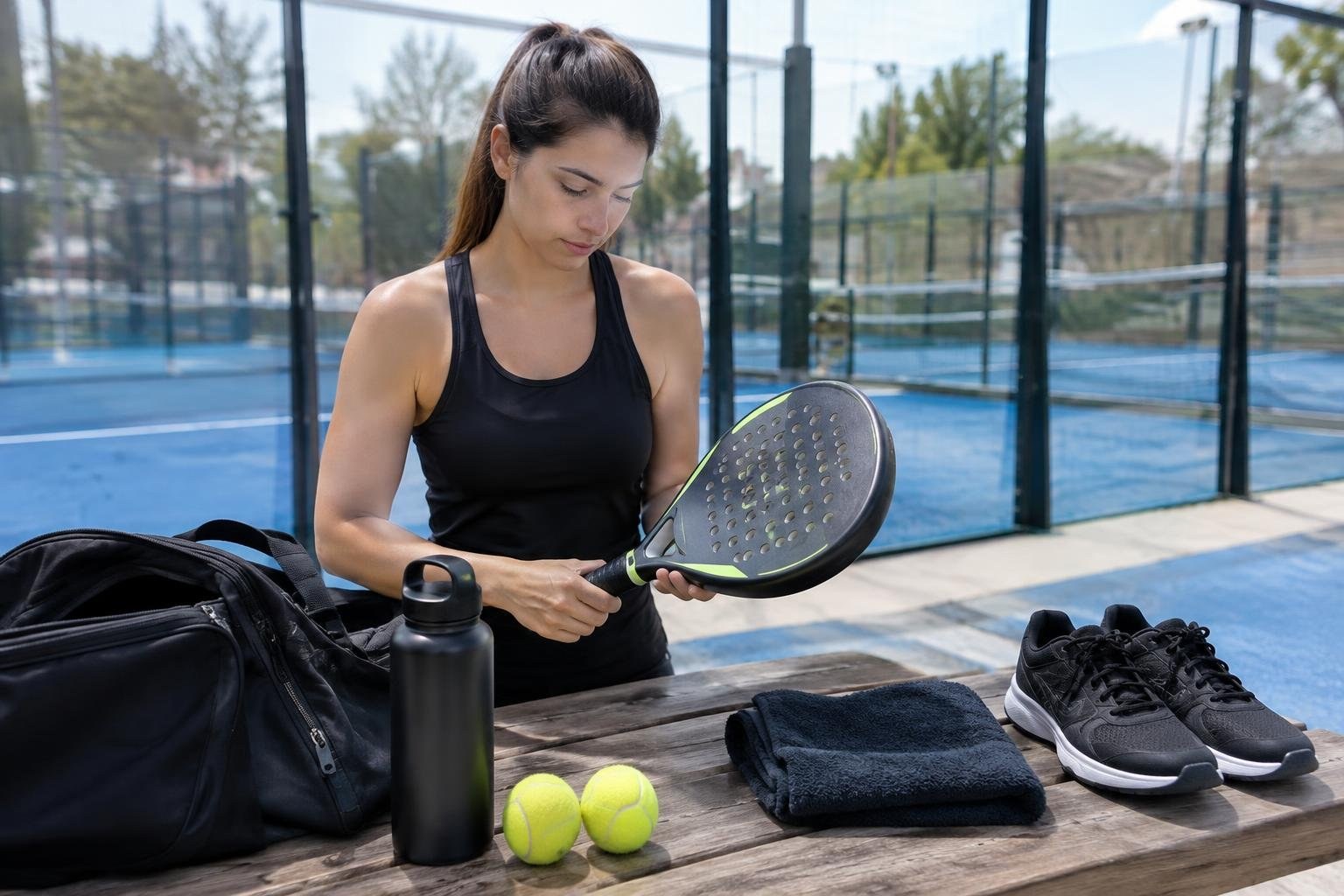
The essential-equipment decision is simple: arrange a racket, padel balls and shoes that work for your playing surface. A racket is the main tool for striking the ball; suitable shoes are intended to provide grip and stability on artificial turf; and padel balls are described as slightly less pressurized than tennis balls.
Comfortable sports clothing helps you take part without distraction. A cover or bag can help you carry and store your kit, but you can decide whether you need one after you know how often you will play and how you travel to the court.
- Core items: racket, suitable shoes and padel balls, unless the venue supplies them.
- Useful clothing: comfortable sportswear that lets you move freely.
- Optional extras: a racket cover or bag and other accessories that solve a real carrying or comfort need.
How to choose a beginner-friendly padel racket
A beginner’s most important purchase is often the racket, but “most important” does not mean you need an advanced or expensive model. Beginner-focused guidance recommends choosing something forgiving and easy to handle while you learn basic strokes. A racket that feels awkward in your hand can make it harder to concentrate on the game.
When comparing options, hold the racket if you can. Check whether its handle feels comfortable, whether you can move it naturally, and whether you feel in control through a gentle practice swing. Do not select solely by brand, color, a professional-looking design or a promise of extra power. A retailer’s suggested model is not automatically the right fit for every player.
Some sellers promote particular rackets as ideal for newcomers. Treat those descriptions as product guidance, not a guarantee. Your comfort and ability to handle the racket are more useful checks than an unsupported claim that one model is best for all beginners.
Options and tradeoffs: what should you prioritize?
Padel rackets, balls and shoes are the three categories to prioritize. Clothing and accessories can support comfort and convenience, but they do not all have to be bought at once. This comparison can help you decide what to sort out first.
| Item | Why consider it | Beginner decision |
|---|---|---|
| Racket | Your main playing tool | Look for a forgiving option that feels manageable in your hand. |
| Padel balls | Used to play; padel balls are described as slightly less pressurized than tennis balls. | Check whether the venue supplies them before buying. |
| Shoes | Padel shoes are designed for grip and stability on artificial turf. | Prioritize comfort, fit and suitability for the surface. |
| Clothing | Supports comfort during play. | Start with sports clothing you already find comfortable. |
| Bag or cover | Can make carrying or storing equipment more convenient. | Consider it once you know what you carry and how often you play. |
There is no universally best option across every category. What you need depends partly on what the club provides and partly on comfort, availability and how you expect to use your kit.
Shoes, clothing and comfort: what actually matters?
Suitable footwear matters because padel shoes are designed to provide grip and stability on artificial-turf courts. Start with fit: the shoes should feel secure and comfortable for the movements you expect to make. If you already own sports shoes, ask the venue whether they are appropriate for its court surface instead of assuming they are suitable.
Clothing does not need to be complicated. Choose comfortable sportswear that lets you move freely and suits the conditions where you are playing. If you are buying new clothing, consider comfort and practical use before buying a coordinated outfit or accessories.
Some equipment guides include bags, covers and additional accessories. These can be helpful if they solve a real need, but they are not a substitute for getting the racket and footwear choices right.
What to expect and when to buy
The right time to buy depends on your plans. If you have one introductory session booked, first ask whether the venue lends or rents equipment. If you expect to play regularly, having your own racket and shoes may be more convenient, but there is no need to commit to a complete set before you understand your preferences.
A useful process is: check what is included, identify what you still need, compare a small number of suitable options, and try the racket in hand when possible. Leave optional purchases until you know they will be used. This approach keeps your first outing focused on playing rather than building a large kit.
Let your booking, access to borrowed gear and personal comfort guide the decision.
Cost and pricing: how to budget without overspending
Padel equipment can be sold individually or as a bundle. A bundle may be convenient if it contains items you already know you need, but a lower combined price is not useful if it makes you pay for unwanted gear. Compare what is included and whether you would otherwise buy each item.
Price also depends on your local selection and the types of equipment you consider. Compare current offers where you live, check what your venue provides, and decide which items are essential before looking at upgrades.
To save sensibly, consider borrowing or renting for an introductory session, buy the essentials before optional accessories, and avoid choosing solely by a discount. A budget-friendly purchase should still feel comfortable and suit the playing surface.
Factors that affect your equipment choices
Several practical factors shape the kit you need: what your venue supplies, how often you expect to play, whether you need to carry your equipment, the options available locally, and how comfortable a racket and shoes feel to you. The surface is also relevant when you choose footwear because padel shoes are designed for grip and stability on artificial turf.
Product descriptions and bundles vary, so compare the contents and intended use rather than assuming that more items mean a better fit. A beginner does not need to buy an item simply because it appears in a comprehensive checklist. Focus on what helps you participate comfortably and safely in the sessions you actually plan to attend.
How to choose a helpful equipment provider
If you want help selecting gear, look for a provider who can explain the options in plain language, answer questions about fit and intended use, and distinguish essential items from add-ons. A club or coach may be able to tell you what equipment is required for a session, while a retailer can explain the products it sells. Ask whether you can handle a racket before deciding.
Be cautious of advice that pressures you to buy a complete set immediately or presents one product as the only suitable choice without considering your needs. Product recommendations are not the same as independent testing. Ask what is included in a package, how the seller handles returns or defects, and whether the equipment is appropriate for a beginner.
Choose a helpful, transparent source of guidance, and verify any local rules or club requirements directly with the venue.
Safety, warranties and venue requirements
Before paying, check the retailer’s current terms for returns, exchanges and product defects. Warranty coverage and consumer rights can vary by seller and location, so read the terms that apply to your purchase rather than relying on a general promise. Ask the venue about any equipment or footwear requirements for its courts.
One basic safety point is easy to overlook: padel rackets are solid rather than strung, and beginner equipment guidance warns that a racket can fly from the hand if grip is lost during a swing. Hold the handle securely and follow the venue’s instructions. Check that footwear feels stable and comfortable before playing.
The provided material does not specify permits, local regulations or a universal equipment certification for beginners. Do not assume that a product’s marketing language establishes a safety credential. When in doubt about a court’s requirements, ask the facility before your session.
Common mistakes and a beginner buying checklist
Beginners commonly spend on accessories before resolving the essentials, select a racket by looks alone, or assume a bundle saves money simply because it combines products. A more useful check is whether you will use every item and whether the racket and shoes feel right for you.
- Confirm whether the venue provides or lends a racket and balls.
- Choose a racket that feels forgiving and manageable in your hand.
- Check that your shoes are comfortable and suitable for the court surface.
- Use padel balls rather than assuming tennis balls are interchangeable.
- Compare bundle contents with the items you actually need.
- Check the seller’s return and warranty terms before purchasing.
- Buy optional accessories only when you can explain how they will help.
Also avoid treating a named product recommendation as proof that it is right for every beginner. Use product descriptions as a starting point, then consider fit, practical use and the venue’s requirements.
A simple plan for your first sessions
Start with three questions: What does the venue provide? Which racket feels comfortable and easy to control? Are your shoes appropriate for the court surface? Once you have answers, choose the minimum kit that lets you play. You can add a bag, accessories or alternate clothing later if they solve a genuine need.
For another overview of the fundamentals, see the beginner guide to getting started with padel. When comparing places to play or get advice, confirm equipment availability and requirements directly with the provider.
Frequently asked questions
What equipment do I need to start playing padel?
Start with a padel racket, suitable court shoes and access to padel balls. Comfortable clothing is useful, while a bag and other accessories can wait until you know what you prefer. Ask the club whether rackets or balls are available to borrow or rent before purchasing.
How do I choose a padel racket as a beginner?
Choose a racket that feels comfortable and easy to control rather than one chosen only for its appearance or a claim of maximum power. Beginner equipment guidance emphasizes a forgiving, manageable racket while you learn basic strokes.
Do I need special shoes for padel?
Padel shoes are designed to provide grip and stability on artificial-turf courts. If you are buying shoes for padel, prioritize a secure, comfortable fit and suitability for the surface where you expect to play.
Are padel balls different from tennis balls?
Padel balls are generally described as having slightly less pressure than tennis balls. Use balls intended for padel and check whether your venue supplies them before you buy a tube.
How much does beginner padel equipment cost?
There is no single reliable price that applies everywhere. The total depends on which items you need, the product choices available locally and whether the venue provides equipment. Compare the cost of borrowing or renting with buying only the essentials first.
Can I play padel without buying my own racket?
Not necessarily. A racket, balls and shoes are the main equipment categories to consider, but a venue may provide some items. Ask what is included in a booking or lesson before buying equipment.
People Also Ask
What should I buy first for padel?
For a first session, ask the venue whether you can borrow or rent a racket and whether balls are included. If you buy your own, begin with a racket that feels manageable, court-suitable shoes and access to padel balls. Add optional gear later.
What kind of padel racket is best for a beginner?
A beginner should prioritize a racket that feels comfortable and easy to handle. Beginner equipment guidance favors a forgiving option while you develop basic strokes, rather than choosing solely for power or appearance.
Can I wear regular trainers to play padel?
Padel equipment guides identify footwear as a core item, with padel shoes designed for grip and stability on artificial turf. Check that the shoes fit securely and suit the playing surface at your venue.
Can I use tennis balls for padel?
Padel balls are described as slightly less pressurized than tennis balls. Use balls intended for padel, and check whether the club supplies them before purchasing your own.
Is it cheaper to buy a padel starter set?
The amount depends on what the venue provides and which equipment you choose. Ask about rental or loan options, then compare buying only the essentials with purchasing a bundle. Do not assume a bundle is better value unless you need its contents.
What should I bring to my first padel lesson?
A practical first-session checklist is: confirm what the venue provides, bring comfortable sports clothing, use suitable court shoes, and arrange a racket and padel balls. A bag and other accessories are optional.
For a first padel session, focus on a racket that feels manageable, suitable footwear, and access to padel balls. Add clothing and optional accessories for comfort and convenience, not because a long checklist is required. If you are unsure about fit or what a club provides, ask before buying. A few deliberate choices can help you start playing without paying for equipment you may not use.
Your next step
Explore padel apparel and the Major League Padel community.
Last reviewed and updated October 8, 2026 by the Major League Padel Editorial Team.
Sources
- Padel Equipment for Beginners: How to Get Started Playing Padel Part 3 – Best Padel Life
- Essential Beginner's Guide to Padel Equipment
- Equipment & Gear Guide | Padel Sport Community
- Padel for Beginners: Essential Gear Checklist (2026) | Cuera Blog
- What Equipment Do You Need for Padel? | SimplePadel
- Padel Equipment Guide | Rackets, Balls & Gear
- Padel kit checklist for beginners: essentials to get started – PDHSports
- Padel Blog: Padel Equipment for Beginners: The Essential Guide to Getting Started | The Padel School Blog