
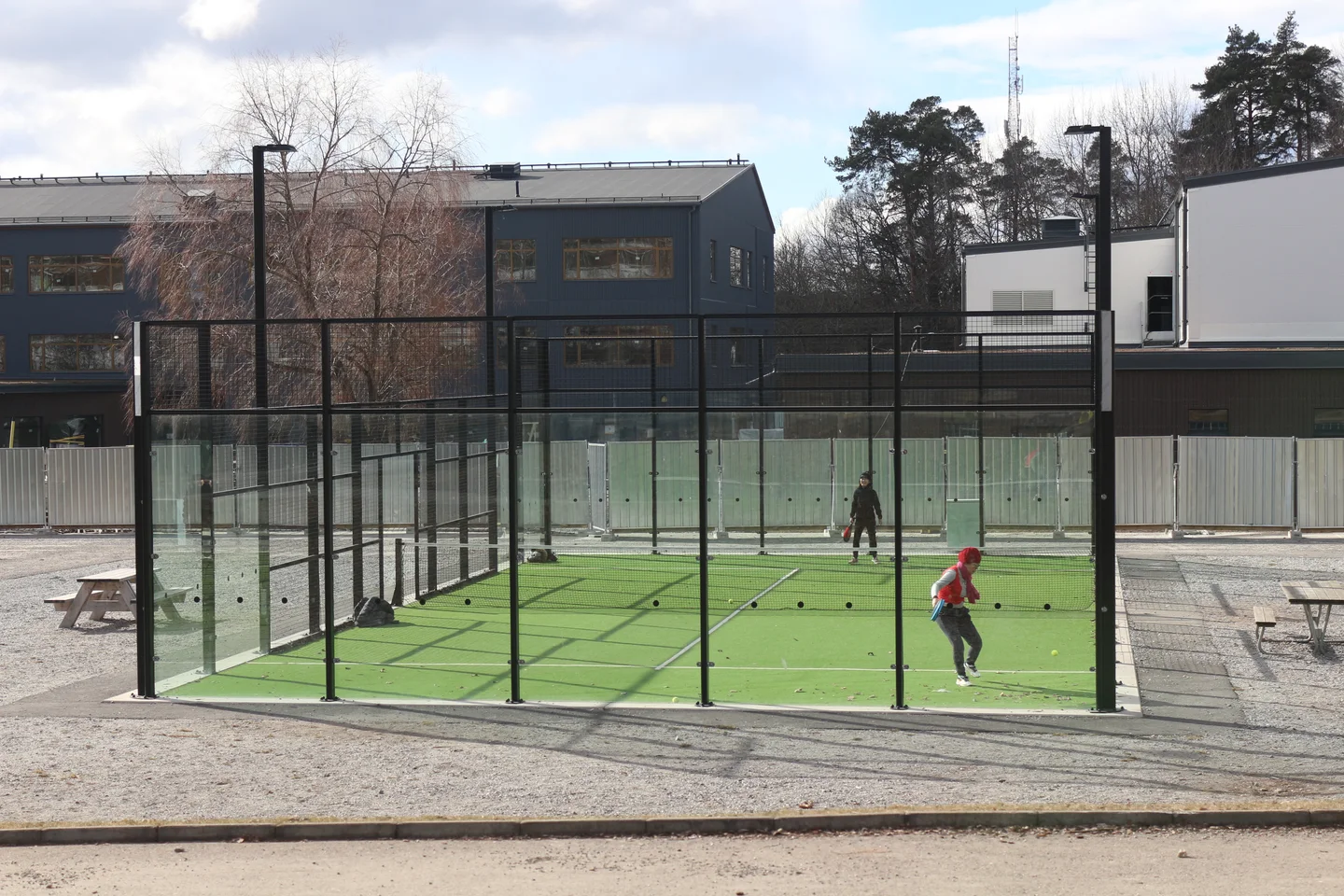
Padel and tennis have enough in common to look familiar: both use a net, a ball and rackets. But the court, equipment and role of the surrounding space make them feel quite different. In padel, players can use the walls to continue a rally; tennis is played on an open court. Padel’s court is smaller, its racket has no strings, and the cited sources describe its ball as producing a lower bounce. This guide compares the differences that matter when choosing which sport to try, what equipment you need, and what to ask before booking a game or lesson.
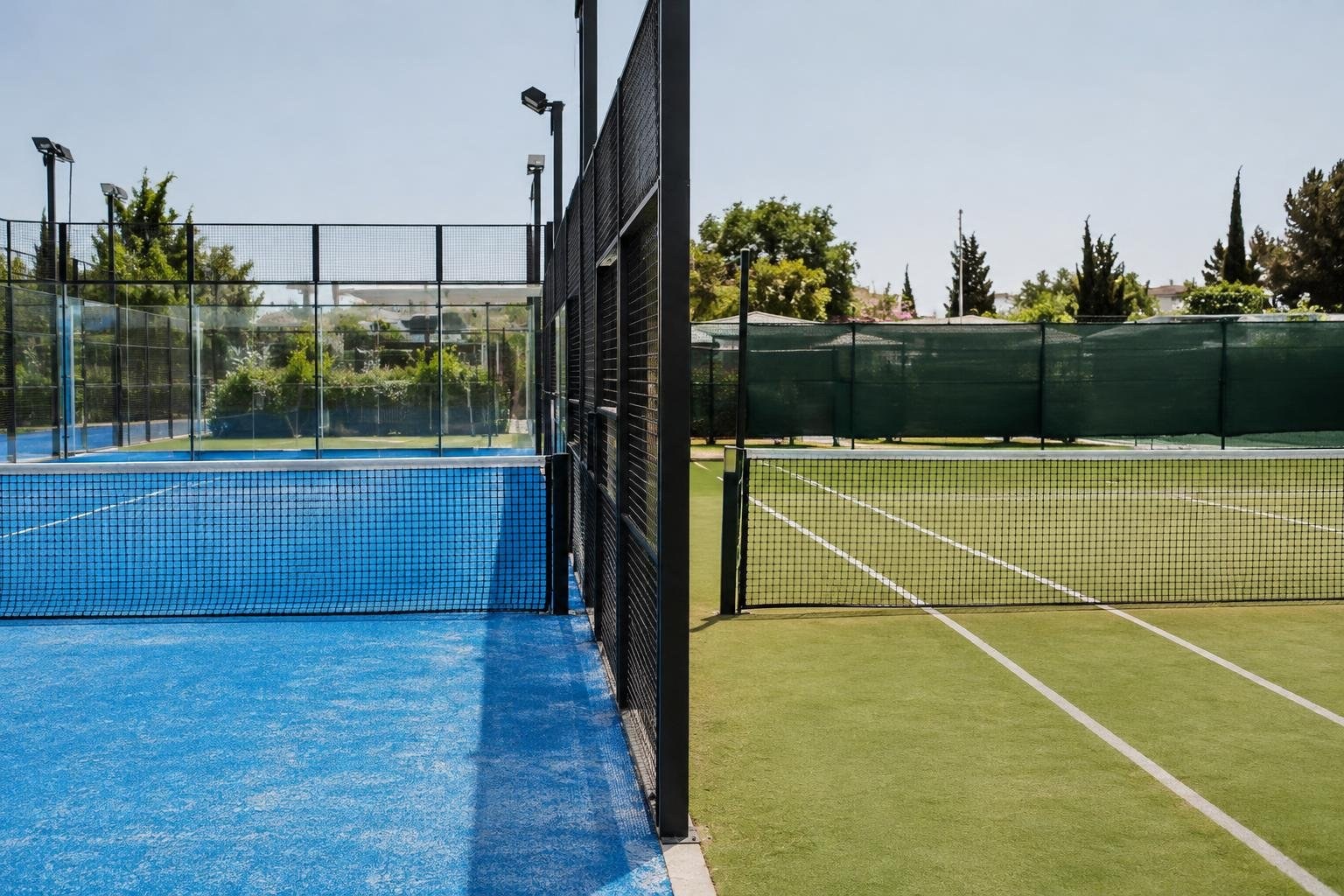
Padel vs tennis: the differences at a glance
Both sports reward anticipation, control and placing the ball where an opponent has difficulty returning it. The biggest practical contrast is that padel’s enclosure is part of the game: the ball can rebound off the walls and remain playable. Tennis has no playable surrounding walls. Padel is normally played in pairs, while tennis offers singles and doubles.
That distinction affects more than the court. Padel asks players to interpret rebounds and coordinate with a partner; tennis asks players to cover an open court and use a stringed racket. Neither is simply a smaller version of the other.
Court size, walls and net: how the playing space changes the game
A padel court measures 20 by 10 metres, while the cited tennis court measurement is 23.77 by 10.97 metres. Padel’s court is enclosed, with glass among the walls that can be used during play. In tennis, the court is open and the surrounding area is not a playable wall surface.
On a smaller padel court, players have less ground to cover, but the rebounds create additional angles and timing decisions. A ball that has passed a player may still be recoverable after a wall rebound. In tennis, players must handle the ball before it gets past them and rely on their movement and racket to keep the rally going.
Net height differs too: the cited figures at the center are 88 cm for padel and 91.4 cm for tennis. The court and walls are more defining distinctions than this relatively small net-height difference.
Rackets and balls: what equipment do you need?
Padel uses a solid racket without strings, commonly described as made with materials such as carbon fibre or fibreglass. Tennis uses a longer racket with a string bed. The shape and construction are different enough that a tennis racket should not be treated as a stand-in for a padel racket.
The cited comparisons also describe padel balls as having lower internal pressure than tennis balls, which contributes to a lower bounce. That difference can make controlling the ball and sustaining exchanges feel different. Ball behavior is only one part of the experience, however: walls, court size and partner coordination matter as well.
For a first session, ask the facility whether sport-specific rackets and balls are available to borrow or rent. If you buy equipment, make sure it is intended for the sport you plan to play rather than choosing by appearance alone.
Which sport might suit your preferences?
Padel may suit you if you like the idea of playing in pairs, coordinating with a partner and using rebounds as part of a rally. Tennis may suit you if you prefer open-court movement and the feel of a stringed racket. These are useful starting points for a decision, not rules about who can enjoy either sport.
Think about what you want from a session. Do you want to learn how to read a rebound and move with a partner, or focus on covering an open court and building confidence with a tennis racket? The lower-bouncing padel ball is described as supportive of control, but padel’s walls add their own learning challenge.
If you already play one sport, some general racquet-sport skills may feel familiar. Still, allow time to adjust to different equipment, ball behavior and court decisions rather than expecting immediate transfer.
What a first session includes and how to compare the process
Try both sports before investing in equipment if access allows. A practical first step is to ask a local facility what its introductory options include: court access, equipment, instruction, session length and whether you need to bring a partner. These questions help you compare like with like without assuming that every venue offers the same arrangement.
For padel, check whether the session is designed for newcomers and whether it introduces wall rebounds. For tennis, ask what equipment is needed and whether the session is focused on first-time players. If you are comparing a group session with a private lesson, confirm the format, who supplies equipment and what is included before you book.
After trying each, compare how comfortable you felt with the racket, court and pace of decision-making. A short experience can reveal more about your preferences than choosing based only on the sports’ appearance.
Signs you may benefit from a lesson or introductory session
Consider a trial session if the sport’s basic demands appeal to you but you are uncertain about its feel. For padel, a particular sign that you may want an introduction is uncertainty about how to respond when the ball reaches the wall. For tennis, you may prefer initial guidance if you are unfamiliar with a longer stringed racket or open-court movement.
These are learning needs, not signs that someone is unsuited to a sport. Padel’s walls can be confusing at first, while its rebounds also give players another way to respond to difficult shots. If you already have experience in one sport, pay attention to the parts that feel new rather than assuming that all the skills transfer directly.
Ask for an appropriate beginner session if you want the fundamentals explained before joining a more competitive game.
Cost and pricing: what to compare before booking
There is no supported universal price comparison for padel and tennis in this guide. Costs depend on the options available where you play, so compare the actual terms offered by local facilities rather than relying on a generic estimate.
Check the total for the experience you want: court use, equipment if needed, coaching, and any other clearly stated charges. Ask whether the price is per player, per court or for a group, and whether a quoted session includes a racket and balls. If you are weighing a one-off trial against a series of lessons, confirm the full commitment and cancellation terms first.
Compare equivalent offers. A court-only booking and a coached session are not the same service, even if both are advertised as a chance to play.
What affects the session, venue and expected experience?
Several practical factors shape what you get from a session: court type, whether the venue has the sport you want, the equipment supplied, whether instruction is included, and whether the format is individual or group-based. Padel’s enclosed court and playable walls mean that a padel session is not simply tennis played in less space.
For padel, ask whether the court enclosure and wall surfaces are part of normal play and whether a beginner can learn their use. For tennis, ask about the court format and whether the lesson covers the basics of handling a stringed racket. Also check access, session length and the stated terms before committing.
If you have a specific preference, such as borrowing equipment or playing with a partner, confirm it directly with the venue. Availability and arrangements vary, so do not assume that one facility’s offer applies elsewhere.
What to expect from a first session, including timing
Expect to adjust to the sport’s equipment and playing space rather than master everything in a single visit. In padel, the walls create rebounds that players must learn to read; in tennis, the open court and stringed racket create a different set of movement and contact decisions.
Use a first session to notice what feels unfamiliar. In padel, watch how the ball behaves after reaching the wall. In tennis, pay attention to the feel of the longer racket and the way you cover open space. If you take a lesson, ask the instructor what the session will cover and what to practise next.
Before booking, confirm the session start time, duration, arrival expectations and equipment arrangements. These details are set by the venue, not by a universal rule of either sport.
How to choose a qualified coach or suitable provider
Choose a coach or venue by checking whether the offering matches your needs, not by relying on a broad claim that one sport is easier. Ask about the instructor’s experience teaching beginners, the session format, group size, equipment and what you will learn. Confirm the booking terms and whether the lesson is specific to padel or tennis.
For padel instruction, ask if the coach will explain how wall rebounds affect play. For tennis, ask whether the lesson is appropriate for someone new to the stringed racket and open court. A clear answer should help you understand what the session covers and whether it fits your current experience.
Compare providers on the same points and read the terms before paying. Avoid assuming that a title, testimonial or promotional claim is proof of a specific qualification unless the provider can explain it.
Rules, credentials, warranties and safety checks
If you are booking a session, ask the facility which rules apply there, what it expects players to bring and what its booking or cancellation terms cover. If you are considering building or modifying a court, check local requirements with the relevant authorities and qualified local professionals before proceeding.
Before playing, follow the venue’s instructions for the court and equipment. Check that the racket is intended for the sport, and ask for guidance if you are unsure how to move around the enclosure or use the walls. This is especially relevant in padel, where the walls are part of play.
Do not treat general information about the sports as a substitute for location-specific rules or the facility’s own guidance.
Ways to keep costs down without choosing unsuitable equipment
You can avoid unnecessary spending by trying a session before buying specialist equipment. Ask whether the venue supplies or rents the correct racket and balls, and compare the complete cost of that option with buying your own. Padel and tennis use different rackets and balls, so confirm what equipment is included rather than assuming your current gear will work.
Save safely by comparing equivalent offers and checking all terms before booking. A lower headline price may not include the same equipment or instruction as another option. Do not choose an unsuitable racket solely because it is available or inexpensive; first establish that it is designed for the sport you plan to play.
Once you know which sport you prefer and how often you expect to play, you can make a more informed equipment decision.
Mistakes, red flags and a booking checklist
Common comparison mistakes include treating padel as tennis on a smaller court, assuming the same racket works for both, or choosing a session without checking what it includes. Padel’s walls are active parts of play, and its solid racket differs from tennis equipment. Those are practical differences, not minor details.
- Confirm which sport and court the booking covers.
- Ask whether equipment, instruction and court use are included.
- Check session duration, total price and cancellation terms.
- For padel, ask how newcomers are introduced to wall rebounds.
- For tennis, confirm whether a stringed racket is available if you need one.
- Compare equivalent session formats before choosing.
Pause if a provider will not explain what is included or makes promises about results without clarifying the lesson plan. A clear, sport-specific description makes it easier to decide whether the offer suits you.
Frequently asked questions
What is the main difference between padel and tennis?
Padel is played on a smaller, enclosed court where walls can keep the ball in play. Tennis is played on a larger open court, and players use a longer stringed racket. Padel rackets are solid and unstrung.
Is padel easier than tennis for beginners?
Comfort with either sport depends on the player, and padel’s wall rebounds may take practice to read.
How big is a padel court compared with a tennis court?
Padel courts are 20 by 10 metres. The cited tennis court dimensions are 23.77 by 10.97 metres. These are court measurements, not a complete comparison of the space needed around each court.
Can I use a tennis racket to play padel?
Padel rackets are solid and have no strings; tennis rackets have strings and a longer frame. The sports also use different balls, so use equipment made for the sport you plan to play.
Can you use the walls in padel?
Padel uses walls as part of play, while tennis is played on an open court without playable surrounding walls. That changes how players defend, anticipate rebounds and choose shots.
Is padel always played in doubles?
The sources describe padel as a pairs game. If you are choosing a sport, check the format available at nearby facilities and whether you want to play with a partner or in a group.
People Also Ask
How is padel different from tennis?
Padel is played inside an enclosed court, and the walls can be part of a rally. Tennis is played on an open court. Padel also uses a solid, unstrung racket rather than a stringed tennis racket.
Is a padel court smaller than a tennis court?
The cited court measurements are 20 by 10 metres for padel and 23.77 by 10.97 metres for tennis. Padel’s smaller footprint changes court coverage, while playable walls also affect how rallies unfold.
Why does padel use a different racket?
Padel players use a solid racket without strings. Tennis players use a longer racket with strings. The racket designs affect handling, so a tennis racket is not a substitute for padel equipment.
Are padel balls different from tennis balls?
Padel and tennis balls have different pressure and rebound specifications. That can support controlled exchanges, though the feel of a ball also depends on the conditions and the player.
Should I learn padel or tennis first?
Padel may appeal to players who enjoy doubles, compact court coverage and using wall rebounds. Tennis may suit people who prefer an open court and a stringed racket. Try both if you can before deciding.
Is the net lower in padel than tennis?
The cited comparison gives the padel net height at the center as 88 cm and the tennis net height at the center as 91.4 cm. The difference is small, but it is one of several court distinctions.
Padel and tennis share a net, a ball and many familiar shots, but they create different playing experiences. Tennis offers open-court movement and a stringed racket; padel uses an enclosed court, playable walls and a solid racket, with doubles central to the game. If you are deciding between them, consider whether you prefer open space and longer striking mechanics or compact teamwork and learning to read rebounds. Then try each sport, compare local access and costs, and choose the one you are more excited to play regularly.
Your next step
Explore padel apparel and the Major League Padel community.
Last reviewed and updated October 8, 2026 by the Major League Padel Editorial Team.
Sources
- Padel vs Tennis: Key Differences Explained (2026 Guide)
- The Differences Between Padel and Tennis | Padel39
- Differences between Padel and Tennis – Padel by WSBSPORT
- Learn the Differences between Padel, Tennis and Paddle Tennis – Mypadellife.com
- Differences Between Padel and Tennis – Reform Sports
- Padel vs tennis: What’s the difference between padel and tennis?
- Padel or tennis : which racquet sport should you choose ?
- Padel vs tennis | Key differences explained