
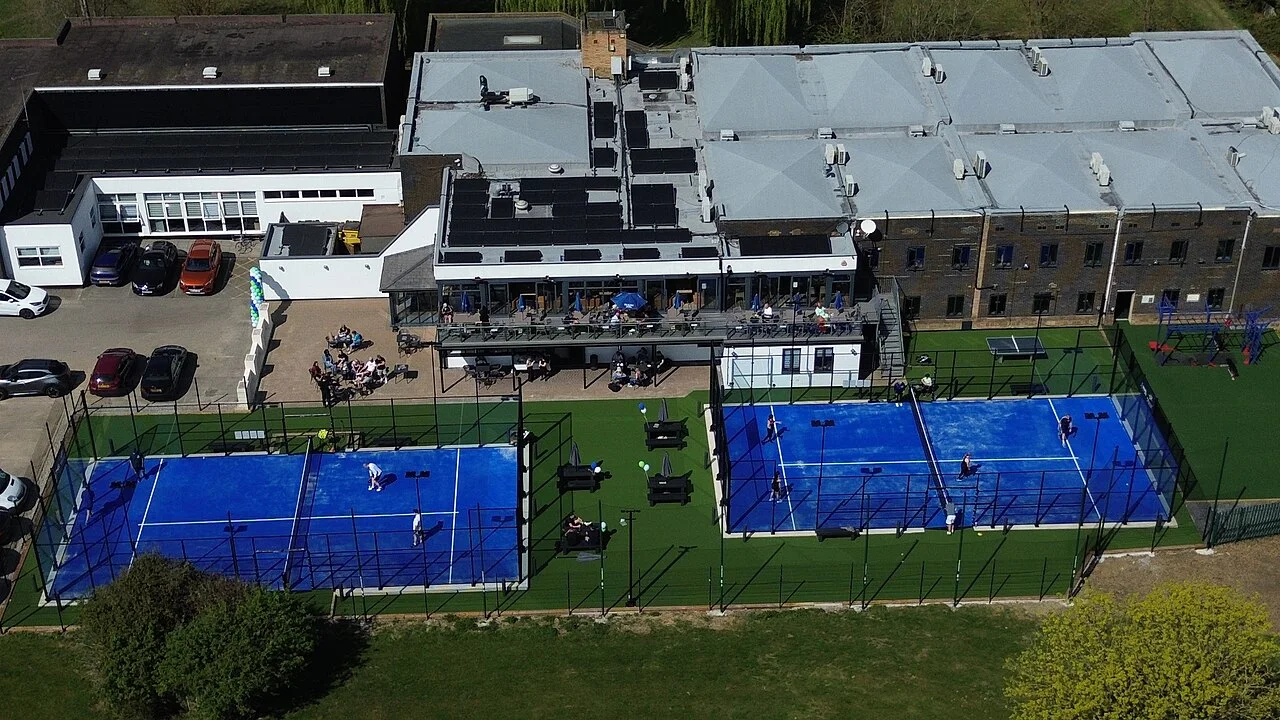
Padel can feel like a game first and a workout second, but how many calories does padel burn? There is no reliable single number for every player. Published estimates range widely because session length, effort, body weight, fitness, and movement during play differ. Use the figures below as planning guides, not as a promise from a match or fitness tracker. The more useful question is what kind of session you actually play and whether it is a routine you can enjoy consistently.

How many calories does padel burn in an hour?
For a one-hour session, one published estimate gives a broad range of about 250 to 600 calories. Another estimates roughly 370 calories for light play, 515 for moderate play, and 625 for a demanding session for a 70 kg player. Those numbers differ because estimates depend on the person and the session, so use them to understand the scale rather than predict your own exact result.
| Example estimate | Reported calories | How to interpret it |
|---|---|---|
| 60 minutes, broad estimate | About 250 to 600 | A wide range, not a personalized reading |
| 60 minutes, 70 kg player, light play | About 370 | An example tied to a stated body weight and intensity |
| 60 minutes, 70 kg player, moderate play | About 515 | A practical estimate, not a measurement |
| 60 minutes, 70 kg player, demanding play | About 625 | A higher estimate for a more demanding session |
Other articles cite still higher totals for intensive play. Because their methods and assumptions are not consistent, do not treat the highest number as the typical outcome.
What counts as a padel workout?
Think of a padel session as the whole time you set aside to play, not as a guaranteed block of continuous effort. A match or booked session can include active rallies and periods when play slows or pauses. The available calorie estimates do not establish a single standard session format, so compare like with like: the duration, the effort, and the assumptions behind each estimate.
Padel is commonly played as a racquet-sport session, and the supplied estimates describe calorie use in terms of playing time and intensity. For a practical comparison, note when you start and finish, whether the session felt light or demanding, and whether you played steadily. That gives you more context than a headline number alone.
If you are new to padel, focus first on getting comfortable with the activity and enjoying the session. A calorie total is only one possible way to describe exercise; it does not capture whether you enjoyed playing or want to return.
What changes the number of calories you burn?
Calorie estimates are affected by several factors, and the sources do not offer a formula that can turn them into an exact result for an individual. The most useful factors to consider are:
- Session duration: A longer session gives you more time to play, although breaks and changes in pace affect the overall session.
- Intensity: The cited estimates distinguish lighter, moderate, and demanding play, with higher estimates for harder sessions.
- Body weight: One estimate is specifically based on a 70 kg player, which shows why a figure tied to one body weight should not be applied to everyone.
- Fitness and movement: A published breakdown identifies fitness and how much a player moves during rallies among the factors that affect its estimate.
These factors help explain why two players can report different numbers after what sounds like the same match. They also explain why a single calorie figure is not a fair way to compare players or judge how hard someone worked.
When might you want to pay attention to calorie estimates?
There is no sign that a particular calorie number means you need a coach, a special program, or a different kind of exercise. Instead, consider what you want from playing. You may want an enjoyable way to be active, a regular social activity, or a session that feels more demanding than your usual game. A published breakdown treats lighter, moderate, and demanding padel as meaningfully different levels of effort.
If you are unsure what an upcoming session will feel like, start by noticing your own experience: how long you play and whether the effort feels comfortable or challenging. Use those observations to choose a suitable next session, rather than trying to force a high calorie reading. If you have an individual health concern, seek appropriate professional advice instead of using online calorie estimates to answer it.
Calorie tracking may be useful to some people, but a number should not be the sole reason to continue, stop, or intensify a sport. The estimates available here are broad and do not prescribe a personal activity plan.
Padel calorie estimates compared with other activities
Padel calorie estimates should not be treated as interchangeable with estimates for other sports. One article reports that an intensive padel match can reach 700 to 800 calories for highly athletic profiles and compares that with roughly 300 to 400 calories for an hour of doubles tennis. These figures are the article's estimates, not a controlled, universal comparison between every padel and tennis session.
Other sources give a broad range for padel itself, including about 250 to 600 calories per hour and a separate set of estimates for a 70 kg player. These differences are a reason to compare the assumptions and type of play, not to declare that padel always burns more than tennis or another activity.
| Comparison question | Useful approach |
|---|---|
| Is the session duration the same? | Compare sessions of similar length. |
| Is the effort similar? | Distinguish light play from a demanding match. |
| Is the number presented as an estimate? | Check whether it is a general range or tied to a particular person or profile. |
| Does one sport always burn more? | Do not infer a universal winner from estimates with different assumptions. |
What to expect from session timing and calorie readings
There is no exact calorie total to expect from a set amount of padel time. One source gives a range for an hour, while another supplies example estimates for a 70 kg player across three levels of intensity. The sources also describe longer-session totals, but they vary and should not be converted into a promise for a particular match.
For your own planning, record the booked duration and how active the session felt. If comparing two sessions, use the same approach for both. A watch or app may display a number, but a discussion among padel players in the supplied research includes a caution about trusting calorie readings based on heart-rate and movement data alone. Treat that as a reminder to read device outputs cautiously, not as evidence that every device is wrong.
Do not extend a session or increase effort simply to reach a displayed calorie target. Published estimates cannot tell you what is appropriate for you personally.
How to choose a club, coach, or session
You do not need a provider to calculate whether padel burns a specific number of calories. If you want instruction, structured play, or help getting started, compare local clubs and coaches based on what they actually offer. Ask about session length, format, player level, and whether the coach or venue can accommodate your needs.
Look for clear information rather than a promise of a particular calorie burn. A coach can describe the session and its intended level, but an online calorie estimate is not proof that a provider can guarantee your personal result. If you are comparing group play with a private lesson, consider the format and cost as well as how much of the booked time you expect to spend playing.
Choose a provider whose arrangements are transparent and whose expectations are realistic. If an advertisement claims a precise calorie outcome for every participant, ask how that number was established and whether it accounts for individual differences.
Safety, qualifications, and claims to verify
Calorie estimates do not determine whether a venue, coach, or session meets your personal safety needs. Before taking part, check the venue's instructions and ask the provider about any practical concerns that affect your ability to play. If you have a health or injury question, a calorie article cannot assess your circumstances; consult a suitable health professional.
The research provided does not establish local permits, coach credentials, insurance requirements, venue warranties, or safety regulations. Do not infer those details from a calorie estimate. When evaluating a club or coach, ask what qualifications or policies apply in your location, and verify important claims with the relevant organization or authority rather than relying on marketing language.
Also be cautious of anyone presenting a calorie figure as a guaranteed outcome or as a substitute for individualized advice. The published estimates themselves vary by intensity and other factors.
Ways to reduce cost or save safely
To reduce costs, compare the actual prices and session details available to you before booking. Check that you are comparing sessions of similar length and format, and confirm what the quoted price includes.
- Compare the total price for sessions of similar duration.
- Check the format and what is included before you book.
- Choose a session that fits your needs rather than paying extra based on a promised calorie total.
Published calorie estimates vary with session length, intensity, body weight, fitness, and movement. A higher estimate alone does not show that a session offers better value. Treat calorie figures as rough context, and base your cost decision on the actual booking details.
Common mistakes and a practical checklist
Use this checklist before relying on a calorie estimate or booking a padel session:
- Check the time: Is the number for an hour, a longer match, or an unspecified duration?
- Check the effort: Does the estimate describe light, moderate, or demanding play?
- Check the assumptions: Is a body weight or athletic profile stated?
- Compare like with like: Do not compare a high-intensity match with a light session and assume the difference comes from the sport alone.
- Be cautious with devices: Treat a wearable reading as an estimate, not a precise result.
- Review provider claims: Ask for the basis of any guaranteed calorie promise.
- Compare the real booking: Confirm price, format, and duration directly with the venue.
Common mistakes include repeating the highest number as though it is typical, assuming skill level alone determines calorie use, and treating a wearable's display as a measured result. Published figures vary enough that context matters more than selecting one attractive number.
Frequently asked questions
How many calories does padel burn in an hour?
Published estimates vary. One source gives a broad range of about 250 to 600 calories for 60 minutes, while another estimates roughly 370, 515, or 625 calories for a 70 kg player during light, moderate, or demanding play. Treat these as rough estimates, not a personal measurement.
Does playing padel for 90 minutes burn more calories than playing for an hour?
It may, but the figure depends on factors such as session length, intensity, body weight, fitness, and how much you move during rallies. A 90-minute session will usually involve more playing time than a 60-minute session, but that does not make a precise calorie total predictable.
Does padel burn more calories than tennis?
It can, but no single answer applies to everyone. Some published estimates place demanding play at higher calorie totals than lighter play, yet the estimates use different assumptions. Compare the length and intensity of the sessions rather than relying on one headline number.
Do beginners burn fewer calories playing padel?
Not necessarily. Beginners may play at a lower intensity, but fitness, movement, session length, and rally activity all matter. Skill level alone is not enough to predict a player's calorie expenditure.
Can I trust my fitness watch to count calories during padel?
Use it as an estimate rather than an exact measurement. The supplied sources include a caution about calorie estimates from consumer devices, and their published padel estimates also vary substantially. Avoid treating a watch or app reading as a precise personal total.
What affects how many calories you burn playing padel?
Compare the session length, how actively you played, and the estimate's assumptions. A demanding match estimate is not directly comparable to a light session or a calculation based on a particular body weight.
People Also Ask
How many calories does a 70 kg person burn playing padel?
A published estimate for a 70 kg player gives about 370 calories during light play, 515 during moderate play, and 625 during a demanding one-hour session. Other sources give different ranges, so these figures are examples rather than a universal prediction.
Do advanced padel players burn more calories than beginners?
Published estimates are not consistent enough to give a universal beginner-versus-advanced figure. Playing intensity and movement matter, but so do session length, body weight, and fitness. A beginner's match can be active, while a more experienced player's session can vary in pace.
How many calories does a 90-minute padel match burn?
Longer play gives you more time on court, but the total depends on activity and breaks as well as duration. Sources estimate a wide range for one-hour play and also report broad totals for longer matches, so do not simply assume every extra minute has the same effect.
Can padel burn 700 calories in one hour?
Some articles report high totals for demanding play, including estimates of 700 to 800 calories. Those figures should be read as upper-end estimates for particular circumstances, not as a guaranteed one-hour result for every player.
Does padel burn more calories than doubles tennis?
The sources provide different estimates rather than one consistent comparison. One article gives an estimate of roughly 300 to 400 calories for an hour of doubles tennis and suggests intensive padel can be higher, but the comparison depends on the players and the session.
Is padel a good workout for weight loss?
A calorie estimate cannot by itself show whether a session suits your fitness goals. Consider the actual time you spend playing, how demanding the session feels, and whether the activity fits a routine you can maintain.
Padel can provide a substantial workout, but there is no single calorie figure that applies to every player or session. Treat published estimates as a rough guide, pay attention to how long and actively you play, and choose a sustainable routine you enjoy. Explore Major League Padel for more padel guides and club information.
Your next step
Explore Major League Padel for more padel guides and club information.
Last reviewed and updated October 15, 2026 by the Major League Padel Editorial Team.
Sources
- How Many Calories Does Padel Really Burn? – YouTube
- Sport and Health: How many calories do you really burn during a padel
- r/padel on Reddit: Calories when playing padel
- How Many Calories Does Padel Burn? 7 Honest UK Estimates
- How Many Calories Does Padel Burn? Fitness Benefits Explained | Padium
- Padel & Weight Loss: How Many Calories Can You Burn?
- How Many Calories Do You Burn Playing Padel? – PadelShop.com
- Padel Calories Burned Per Hour: Full Breakdown by Weight – CORTA PADEL