
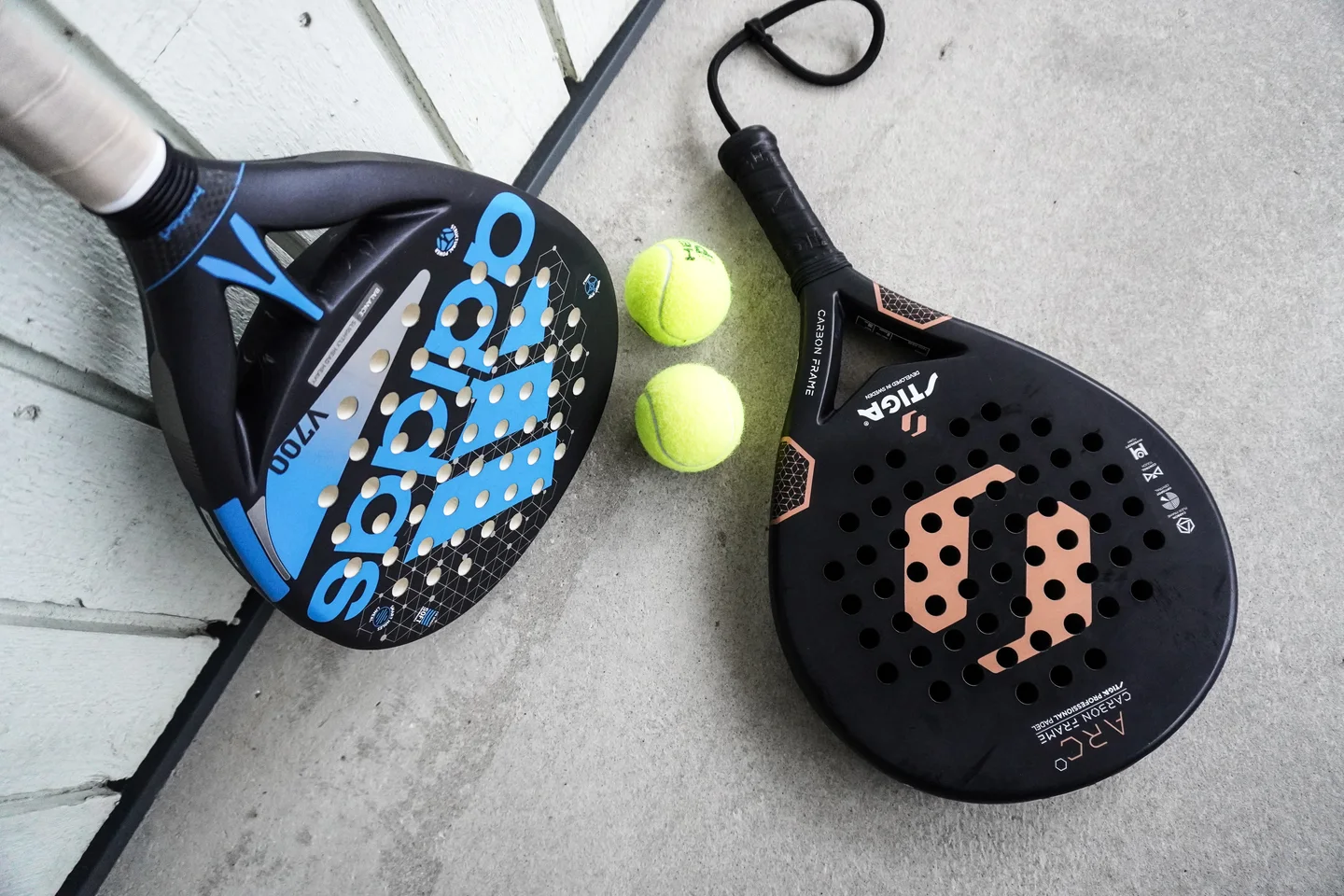
A padel racket can last from several months to a few years, but there is no dependable expiration date that applies to every player. Published estimates vary: some sources put regular use at roughly 6 to 18 months, while occasional use may extend a racket’s useful life. Playing frequency, playing style, storage, visible damage, and changes in how the racket performs all affect the decision. Use lifespan estimates as a reason to inspect your racket, not as a substitute for checking its condition.
How long does a padel racket last?
There is no standard service interval or fixed lifespan for every padel racket. Published estimates differ: one guide gives a range of 6 to 18 months for regular players who play two to five times weekly, and 1.5 to 3 years for occasional players. Another estimates around 12 to 18 months for players who play several times a week. These figures are general guidance, not a product warranty or guarantee.
In practical terms, check your racket’s condition regularly and consider replacement when damage or a noticeable performance change gives you a reason. Do not assume that every racket needs replacing at one year, or that every racket remains suitable until a particular month.
Why racket lifespan estimates differ
Different published ranges reflect that racket life depends on use and care, rather than a single countdown. One source describes an average of one to two years and points to playing style, frequency, and storage as relevant factors. Other sources give shorter estimates for regular play. These estimates are not a controlled comparison of every racket, player, or playing environment.
Think of lifespan as the period during which the racket remains intact and continues to feel suitable for your game. A number of months cannot tell you whether a particular face is cracked or whether you are still getting the control and response you expect.
What to know before deciding whether to replace it
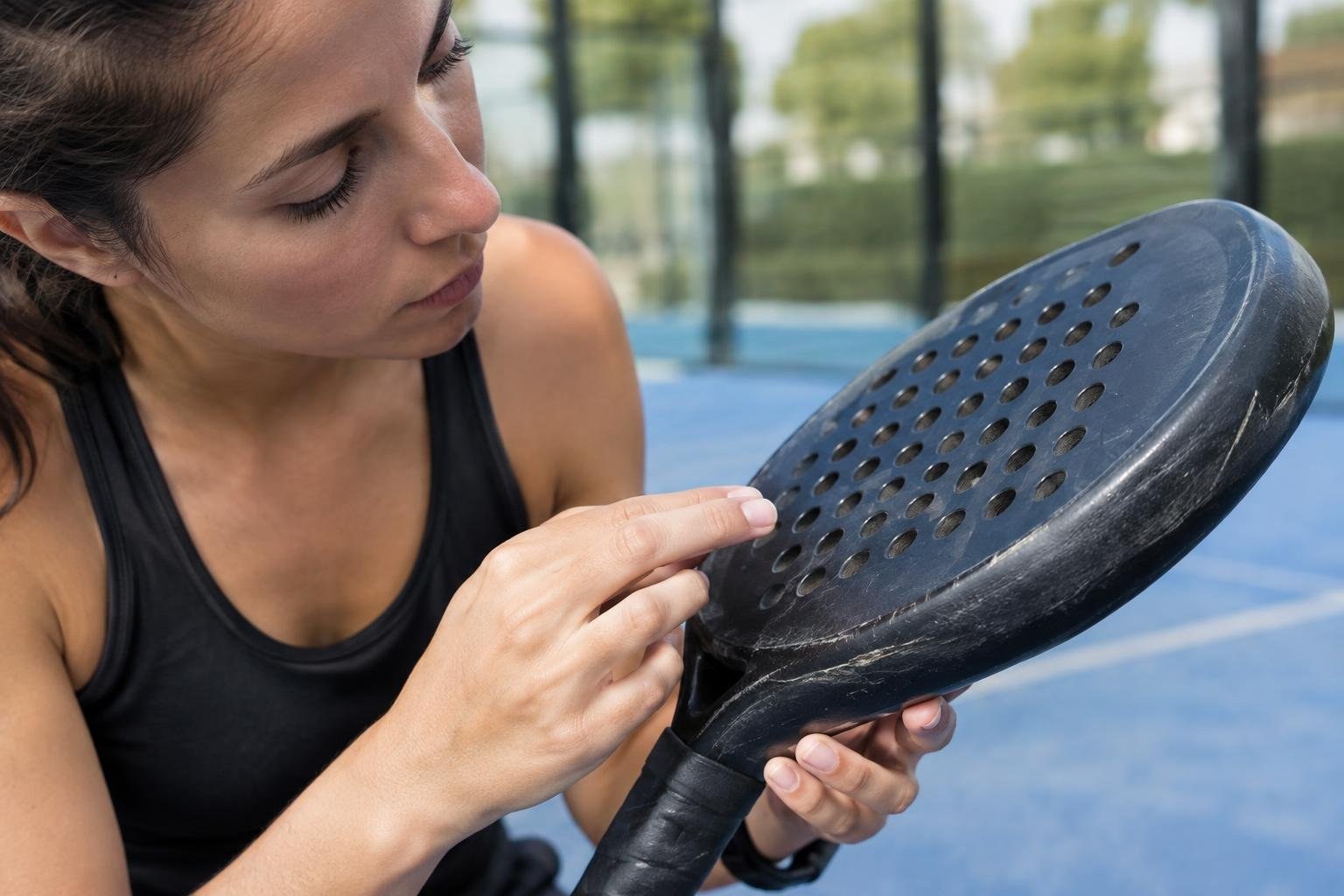
Racket wear matters because equipment condition can affect whether you are comfortable continuing to play with it. If your racket has a crack through its hitting face, one padel equipment guide advises replacing it. A calendar estimate should not override a visible sign of possible structural damage.
Less obvious changes deserve attention too. If the racket no longer feels or performs as expected, compare that experience with its previous condition and inspect it. The supplied guidance does not define a precise test for performance loss, so avoid treating one sound, scratch, or match as conclusive proof. When in doubt, ask the manufacturer or seller about the specific racket.
Signs your padel racket may need replacing
Use a quick check before or after play. Look over the face for cracks, including damage that appears to pass through the visible surface, and inspect the rest of the racket for changes you did not notice before. Pay attention to whether the racket feels different during play. Keep a note of when you began using it and roughly how often you play; that context can help you judge the estimates without mistaking them for a deadline.
- Visible crack: Treat a crack through the face as a strong reason to stop relying on the racket and seek replacement guidance.
- Changing performance: Consider whether the racket’s control, power, or overall response feels consistently different, not just different in one point.
- Wear and use: Factor in how often you play and whether your style involves frequent hard hitting.
- Storage: Consider how the racket is stored, since sources identify storage as one factor in lifespan.
What the replacement process includes
For a consumer, the replacement process is mainly an inspection and comparison, rather than a scheduled repair service. First, look for visible damage. Next, consider whether the racket’s performance has changed and how your play frequency compares with broad lifespan estimates. If the face is cracked, seek product-specific advice or move to a replacement rather than assuming a repair will restore it.
If you are considering repair, ask the manufacturer or seller whether the specific damage can be assessed and what options are available. The research here does not establish a general repair method or guarantee that a damaged racket can be restored. Get the answer for your model and damage before paying for any work.
Cost and price considerations
There is no single price supported by the available lifespan information. Your cost depends on the replacement product and the terms of the purchase, so compare actual options rather than relying on a generic estimate. Look at the total price, what comes with the racket, and the seller’s return and warranty terms before deciding.
Balance the cost against the condition of the racket you own. If it has a crack through the face, postponing replacement simply because you have not reached an assumed lifespan could be a poor tradeoff. If it remains intact and works as expected, an age estimate alone does not prove you need to buy another racket.
Factors that affect racket lifespan
Several factors can change how long a racket remains useful. Playing frequency is one: guidance gives shorter estimates for regular and intensive play than for occasional play. Playing style also matters; a source specifically notes that players who smash frequently may get a different lifespan from players with a different style. Storage is another factor identified in the available guidance.
These are influences, not a formula. A player cannot calculate an exact replacement month by adding sessions, and no source here establishes that one racket construction will last longer for every player. Compare your actual condition and experience with the general ranges instead.
What to expect and when to check again
The estimates are broad enough to help set expectations, but not precise enough to schedule a purchase with certainty. Regular players may see guidance ranging from about 6 to 18 months, while some sources describe an average around one to two years. Occasional-player estimates can extend to 1.5 to 3 years. Other sources offer different ranges, reinforcing that frequency alone does not settle the question.
Instead of waiting for a date, inspect the racket periodically and reassess when you notice damage or a consistent change in performance. If you are uncertain about a visible crack or a product-specific issue, contact the manufacturer or seller before making assumptions.
Options: keep playing, seek advice, or replace
Compare options by suitability and purchase terms, not by an unsupported promise that one type will last longest. If comparing replacements, choose options that fit your playing needs and budget, then consult the product’s own specifications and care guidance.
| Decision | When it may make sense | What to check |
|---|---|---|
| Continue using the current racket | It appears intact and still feels suitable | Keep checking for damage and changes in performance |
| Ask about an assessment | You are unsure whether visible damage is structural | Ask the manufacturer or seller about the specific model |
| Replace the racket | You find a crack through the face or have a persistent performance concern | Compare suitable products, price, return terms, and warranty conditions |
How to choose a qualified racket adviser or seller
Choose a seller or service provider who can answer questions about the particular racket, rather than making a broad promise about lifespan. Ask what an inspection can establish, whether the product manufacturer offers specific guidance, and what written terms apply to a purchase or assessment. Check that the model and damage being discussed match your situation.
Do not rely on a provider’s unsupported claim that every racket lasts a set number of months, or that a repair will definitely restore performance. The available sources give varied estimates and do not establish a universal repair qualification or approved repair process. If a provider cannot explain the limits of an assessment, compare another source of product-specific advice.
Safety, warranties, and product-specific terms
There is no permit process established for ordinary racket replacement in the supplied research. Safety and purchase protections are more relevant: if the face has a crack, follow product-specific advice instead of assuming the racket is sound. Before buying or paying for an assessment, read the actual warranty and return terms for the product and seller. Do not assume damage is covered; coverage depends on terms that are not established by general lifespan estimates.
Ask the manufacturer or seller to clarify any uncertain product or warranty question in writing. This gives you the applicable answer for your racket and purchase rather than relying on a general claim about all padel rackets.
Ways to reduce cost or save safely
Spend carefully without ignoring damage. If your racket is intact and still suits your game, do not replace it solely because it has reached an estimated age. Inspect it regularly and consider how often you play, your playing style, and how you store it. These factors can influence lifespan, but they cannot guarantee a specific number of extra months.
When replacement is warranted, compare suitable rackets by total price, product details, and seller terms rather than headline price alone. If considering a repair, ask the manufacturer or seller whether the specific damage can be assessed and what options are available before paying for work.
Mistakes, red flags, and a practical checklist
Avoid these common decision errors:
- Replacing by calendar alone: Published lifespans vary; inspect condition and performance too.
- Ignoring a face crack: One guide identifies cracks through the face as a replacement warning.
- Assuming a small mark proves failure: The available guidance does not define every surface mark as structural damage. Ask about uncertain damage.
- Trusting a universal lifespan promise: Estimates vary with use and care.
- Assuming a repair or warranty applies: Verify the terms and options for your model and purchase.
Before you decide: Check the face, consider how often and how hard you play, reflect on storage, assess any consistent performance change, and compare product-specific advice and purchase terms.
Frequently asked questions
How long does a padel racket usually last?
There is no universal replacement interval. Published estimates range from around 6 to 18 months for regular players, while some sources suggest occasional players may get 1.5 to 3 years. Treat these as broad estimates, not guarantees, and inspect the racket for damage and performance changes.
Can I keep playing with a cracked padel racket?
A small cosmetic mark alone does not establish that a racket is unsafe or worn out. A crack through the racket face is a more serious warning sign identified in padel equipment guidance. If you find one, do not assume the racket is still structurally sound; check with the manufacturer or replace it.
Does playing more often wear out a padel racket faster?
Playing more often, hitting hard, and storage conditions can affect how long a racket remains usable. The available lifespan estimates vary, so no single playing schedule guarantees a specific replacement date.
Should I replace my racket after one year?
Not necessarily. A racket can remain usable beyond a broad average estimate, and another may need replacing sooner if it is damaged or its performance has changed. Assess its condition and your experience with it rather than replacing it only because it has reached a particular age.
How much does it cost to replace a padel racket?
Compare the total price of suitable replacement rackets, check what is included, and confirm the seller's return and warranty terms before purchasing.
Which type of padel racket lasts the longest?
Compare rackets based on your playing needs, comfort, condition, and budget, and check product-specific information with the manufacturer or seller.
People Also Ask
How many months does a padel racket last?
Many published estimates place regular-use racket life in a range of roughly 6 to 18 months, but they differ. Your own racket’s condition matters more than a date on the calendar.
How long does a padel racket last if I play occasionally?
Some sources estimate 1.5 to 3 years for occasional players, but this is not a guarantee. Inspect the racket and consider whether its performance or structure has changed.
Do padel rackets wear out from playing?
Frequency is one factor, and sources associate regular or intensive play with shorter lifespan estimates. Playing style, storage, and racket condition also matter.
What are the signs that a padel racket needs replacing?
A crack through the face is a warning sign that one equipment guide says should prompt replacement. Do not use a calendar estimate to dismiss visible structural damage.
What should I budget for a new padel racket?
Compare suitable replacement products and check the seller’s return and warranty terms before buying.
How can I make my padel racket last longer?
Storage is one of the factors sources identify as affecting racket lifespan. Follow product-specific care instructions and check the racket regularly for damage.
A padel racket does not have a fixed expiration date. Use the calendar as a prompt to inspect it, not as the only reason to replace it. How often you play, how you play, how you store the racket, and whether its face or frame is damaged all matter. If performance has noticeably changed or you find a crack through the face, compare replacement options and stop relying on a racket whose structure may be compromised.
Your next step
Explore Major League Padel for more padel guides and club information.
Last reviewed and updated October 15, 2026 by the Major League Padel Editorial Team.
Sources
- So, how long does a padel racket last? – The Clubhouse
- How Long Does a Padel Racquet Last? Here’s the Answer
- How to Maintain a Padel Racket – Maintenance Guide | Padel Crush
- How long does a padel racket last? – Justpadel.com
- How long do padel rackets last and how to make your racket last longer? | Padel.fyi
- How Long Does a Padel Racket Last? Signs to Replace
- How long does a paddle racket last and how to extend its useful life? – Alkemia Padel
- How Long Does a Padel Racket Last? Clear Explanation! – PadelShop.com