
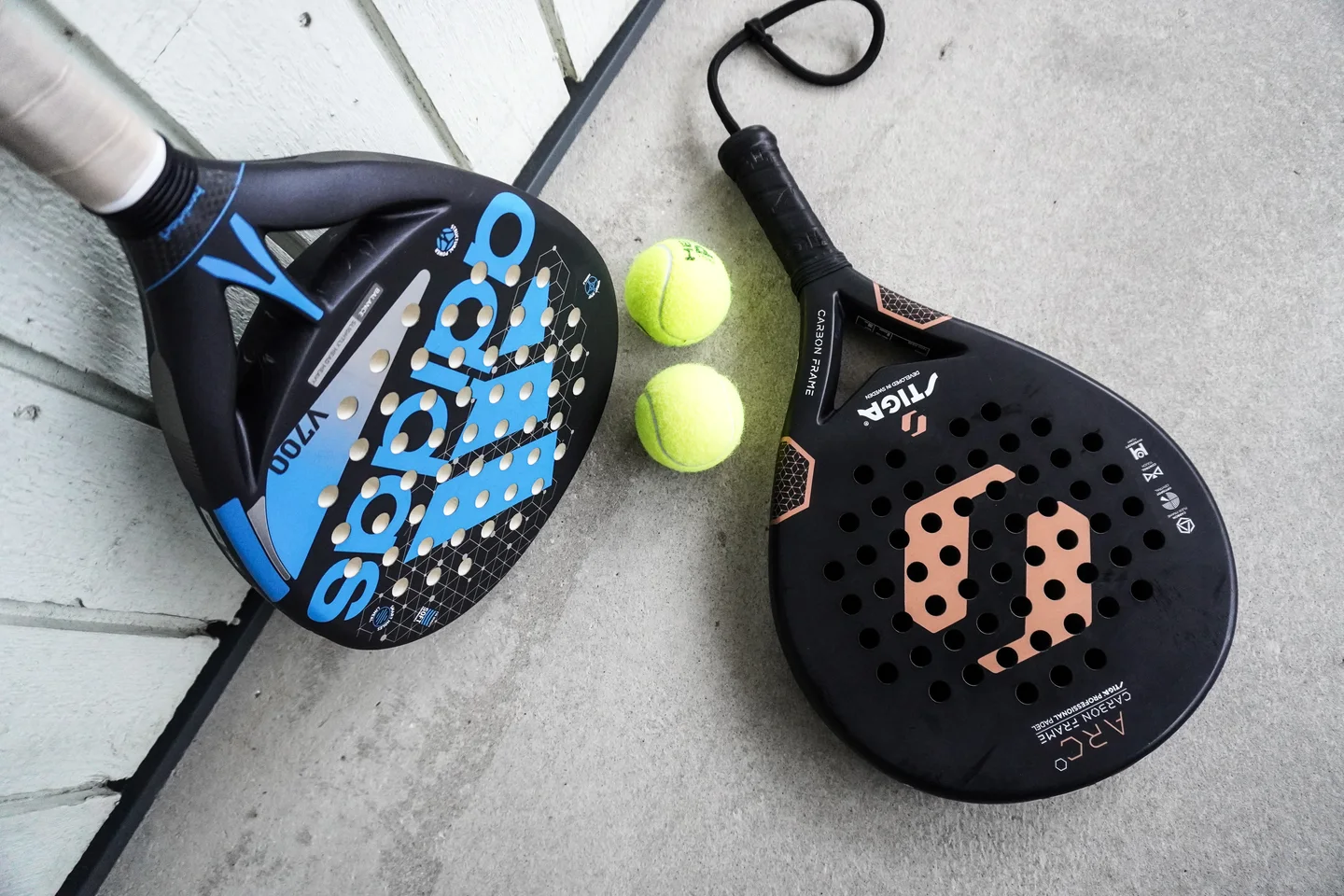
Choosing among the best padel rackets for advanced players is not simply a search for the most powerful frame or the model associated with a professional. At a high level, small differences in handling and feel can affect whether a racket supports your usual choices under pressure. The right shortlist starts with how you play: do you look to finish points with attacking shots, create pressure through placement, or switch between both? This guide explains how to assess those tradeoffs, compare current examples, think about price, and choose without assuming that a “pro” label guarantees a good fit.
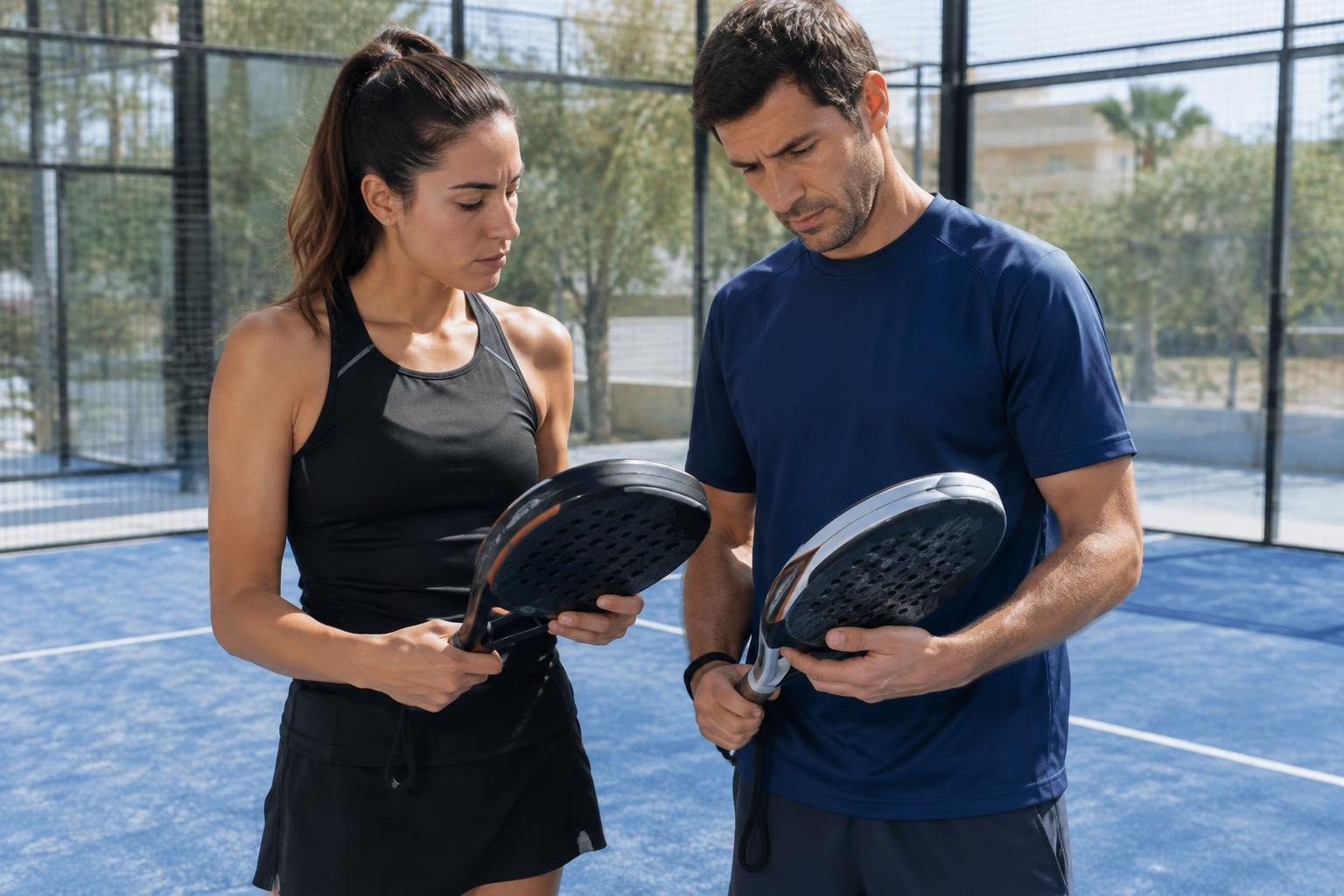
How to build a shortlist of advanced padel rackets
Start with the way you try to win points. An advanced player who regularly looks to attack may want to compare rackets presented as offensive options. A player seeking a blend of speed and placement may prefer a model described as balancing attack and control. Neither approach is automatically superior; the useful question is which tradeoff matches your game.
For example, current buying guides identify the Adidas Metalbone, Bullpadel Hack 04 Dale Candela LTD, and Babolat Technical Viper 3.0 as options to consider for advanced offensive play. These are examples for a shortlist, not independently verified winners or a guarantee that a particular frame suits every player.
Other published recommendations describe Tecnifibre’s Wall Breaker as suited to powerful baseline play and high-speed shots, and higher-end Volt rackets as balancing attack with placement. Treat those descriptions as starting points. Check the model and year carefully because specifications and availability may differ between versions.
Signs your current racket may not fit your game
A racket change may be worth considering when your current frame consistently feels poorly matched to the shots you want to play. Ask whether you want more support when attacking, better confidence placing the ball, or a different balance between those priorities. These are useful selection questions, not proof that a new racket will fix a technical or tactical problem.
Notice when the mismatch appears. Do you feel confident with your attacking shots but uncertain when you need to control placement? Does the racket feel demanding when you have to react quickly? Are you considering a new frame only because an online list calls it the best? Write down the specific issue before shopping, then check whether a candidate is described as addressing that need.
Be especially deliberate with demanding offensive models. One review says the Vertex 04 requires strong technique and timing and may be less forgiving than balanced or control-oriented options. If consistency is your priority, compare those alternatives rather than assuming an advanced rating makes the racket suitable for you.
Cost and pricing: what to compare before you buy
There is no dependable universal price for an advanced padel racket in the available examples. One listing gives an approximate price for a specific racket, but a single listing should not be treated as a market average or a current price across countries. Prices, stock, and model versions can change, so check the exact item and total cost at the time you intend to buy.
Compare like with like: identify the exact model year and version, confirm what is included, and note delivery or other charges before comparing totals. A more expensive frame is not automatically a better match. Consider whether its described playing characteristics address a real need in your game.
When setting a budget, leave room for a practical decision rather than choosing solely by a “top racket” label. If a cheaper candidate better matches your preferred balance of attack and control, it may be the more sensible option for you. The useful measure is fit for purpose, not price in isolation.
What factors affect racket fit and performance?
Several considerations shape how an advanced racket feels and whether its strengths suit you. The source material specifically discusses playing style, weight, racket shape, stability, and the balance between control and attack. Check the current specification for the exact model rather than assuming that a feature described for one version applies to every version.
- Playing pattern: Decide whether you prioritize powerful baseline play, attacking transitions, finishing at the net, or a mix of those situations.
- Attack and control: Some racket descriptions emphasize punch, while others emphasize a balance of accelerated ball speed and placement. Choose the emphasis that supports your decisions on court.
- Weight and handling: A source describes heavier rackets as providing more momentum for smashes and volleys. That potential benefit should be weighed against whether you can maintain your timing and control.
- Shape and stability: One example combines a round shape with a stated weight range, while another source describes a heavier Viper as stable. Those are model-specific details, not universal rules about all rackets of that shape or weight.
Use these factors to ask better questions, not to reduce the choice to a single specification. A number or category matters only in relation to how you play and what you can confidently handle.
Options and tradeoffs: power, control, or a blend
Compare options by the job you want the racket to do, and be cautious about rankings that place unlike frames in a single best-to-worst order. A roundup may describe models for offensive play, high-speed baseline shots, all-court performance, or point finishing. Those labels are useful only if you connect them to your own priorities.
| Choice to compare | What the available descriptions emphasize | Useful buyer question |
|---|---|---|
| Offensive models such as Metalbone, Hack 04 Dale Candela LTD, and Technical Viper 3.0 | Suggested for advanced offensive players | Is an attacking focus central to your game? |
| Tecnifibre Wall Breaker | Powerful baseline play and high-speed shots | Do those situations match the shots you want to support? |
| Higher-end Volt options | A balance of attack and placement | Do you want to combine accelerated ball speed with placement? |
| Balanced or control-oriented alternatives to the Vertex 04 | Presented as potentially more forgiving than the demanding Vertex 04 | Would a less demanding choice better serve your consistency? |
This is a comparison of reported positioning, not a controlled test. It does not establish that one model produces better results than another for a particular player.
How to choose a racket: a practical buying process
Buying a racket involves more than choosing a name from a list. First define your playing priority, then find the exact current model and compare its description and specifications with that priority. If possible, handle or try the same version you plan to purchase; do not assume that a different year or variant will feel identical.
- Write down the goal. Choose a specific priority such as attacking shots, baseline pace, placement, or a mix.
- Choose a small comparison set. Select a few rackets whose published descriptions correspond to that goal.
- Verify the exact version. Check model name, year, and listed specifications against the seller’s item page.
- Assess the tradeoff. Ask what the racket emphasizes and what you may give up by prioritizing that quality.
- Review purchase terms. Confirm the final price, delivery details, return conditions, and warranty information before paying.
If you cannot try the racket, treat published descriptions as incomplete information. A careful comparison can reduce guesswork, but it cannot guarantee that a frame will feel right in play.
What to expect: research, purchase, and timing
Allow time to verify the listing and compare alternatives rather than buying under pressure because a roundup calls a racket a top pick. Selection time depends on whether you already know your priorities, whether the exact version is available, and whether you can assess it before purchase. Delivery timing is set by the seller and destination, so confirm it directly instead of relying on a general estimate.
For a cleaner comparison, keep a short record for each candidate: the exact model and version, its stated playing emphasis, listed specifications, total price, and purchase terms. Then compare the same points across every option. This prevents an attractive product description or a familiar player association from overshadowing the practical details.
After choosing, give yourself room to evaluate whether the frame supports your intended style. If the retailer has a return or exchange policy, understand its conditions before use. Do not assume that a trial, return period, or delivery schedule is available unless the seller confirms it.
How to choose a trustworthy racket provider
For a racket purchase, a qualified provider is a retailer or specialist able to explain the specific product and clearly state the terms of sale. The supplied model guides do not establish an official credential for racket sellers, so do not treat an “expert” label as a formal qualification by itself.
Ask practical questions: Is this the exact model year shown? What are the listed specifications? What does the seller mean by “power,” “control,” or “stability” for this particular racket? Can you handle or try it, and under what conditions? What are the return, exchange, and warranty terms? A clear response should help you compare the product without promising that a racket will transform your game.
Compare more than one source of product information, especially when a model is being recommended as a “best” choice. Look for descriptions that explain who the racket may suit and what tradeoffs it presents. A recommendation is more useful when it gives reasons rather than relying only on a ranking or promotional phrase.
Warranties, seller claims, and safe buying checks
For a consumer racket purchase, verify the seller’s terms rather than assuming that a particular warranty, return right, trial, or certification applies everywhere. Check the terms displayed by the seller and the rules that apply where you live if you need a definitive answer.
Before ordering, confirm the racket’s condition, exact version, total price, delivery information, and any conditions that affect returns. Save the order confirmation and the product description so you can refer to what was offered. If you are comparing a heavy frame, consider whether you can handle it comfortably and maintain your usual control; a published performance description is not a personal fit or safety assessment.
Do not rely on a seller’s use of “professional,” “advanced,” or “tour” as proof of a formal credential or guarantee. Ask what the label means for that product and make the decision using verifiable details.
How to save money without compromising the decision
You can reduce the chance of an expensive mismatch without choosing a racket on price alone. Set a budget before browsing, compare a few candidates with similar intended uses, and check the full price rather than a headline figure. If a less expensive option supports the same priority you have identified, there may be no reason to pay more simply for a top-list position.
Use no-cost steps to improve the decision: read descriptions for intended player and style, verify the exact model version, ask the seller questions, and compare written purchase terms. If a demo or trial is offered, check its conditions before treating it as part of the deal. Never assume an offer exists when it is not stated.
Be wary of urgency that discourages checking the model, total cost, or return conditions. Saving money safely means understanding what you are buying, not skipping the checks that would reveal whether the racket is a poor match.
Common mistakes and a final buyer checklist
A frequent buying mistake is choosing maximum power because it sounds like the obvious advantage for an advanced player. Published guidance also points to placement, control, stability, and the balance between attack and control. Choose from the qualities your game actually needs, rather than assuming more of one quality is always better.
Another mistake is treating weight or an advanced-level label as a guarantee of fit. Research describes heavier frames as providing more momentum for smashes and volleys, but a demanding model may require strong technique and timing. Compare handling and the potential tradeoff before committing.
Use this checklist before paying:
- Have I identified a specific playing priority?
- Have I compared at least two rackets aimed at that priority?
- Have I checked the exact model year and listed specifications?
- Do I understand the stated tradeoffs, not only the advertised strengths?
- Have I confirmed the total price, availability, and seller terms?
- Am I choosing because it fits my game, rather than because a list calls it the best?
If you cannot answer these questions, pause and gather the missing product details before buying.
Frequently asked questions
What is the best padel racket for an advanced player?
No single racket is best for every advanced player. An offensive player looking to finish points may prioritize an attack-oriented model, while someone who values placement or a more versatile feel may prefer a balanced or control-focused option. Match the frame to the shots you use most and the tradeoffs you can manage.
Should advanced players use a heavier padel racket?
Not automatically. A heavier racket can provide more momentum for smashes and volleys, but it is only a sensible choice if you can swing it with your usual timing and control. Compare handling as well as the potential for added power.
Is the Bullpadel Vertex 04 suitable for all advanced players?
The available research describes the Vertex 04 as demanding strong technique and timing, and potentially less forgiving than balanced or control-oriented rackets. That makes it a model to compare carefully, not a universal recommendation for every advanced player.
Who should consider the Tecnifibre Wall Breaker?
It can be worth considering if powerful baseline play and high-speed shots are important to your game. Compare its intended feel with your actual needs, especially if your priority is a different balance of control and attack.
How do I choose between two advanced padel rackets?
Start with the racket you currently use. Note what you want to improve, then compare a small number of alternatives on handling, the balance of power and control, and price. Avoid choosing by model name or a single specification alone.
People Also Ask
What does an advanced padel racket category mean?
It is a way to organize potential choices by how you want the racket to play, such as prioritizing attacking shots, a balance of attack and control, or a more control-led feel. These categories help create a shortlist, but do not replace checking the model’s details and deciding whether its tradeoffs suit you.
How can I tell if my racket does not suit my playing style?
Look for a mismatch between the racket’s intended strengths and the parts of your game you want to support. For example, an attack-oriented choice may not be the best fit if your priority is consistent placement. Consider both your preferred shots and how confidently you can handle the frame.
How much should an advanced padel racket cost?
The cited guides include examples at different price points, but prices and availability can vary by model, retailer, and date. Compare the current total price and the racket’s fit for your game rather than treating an online list price as universal.
Which racket models are suggested for advanced offensive players?
First decide which tradeoff matters most to you, then compare examples within that category. Research mentions the Adidas Metalbone, Bullpadel Hack 04 Dale Candela LTD, and Babolat Technical Viper 3.0 among options for advanced offensive players. Check current specifications and local availability before deciding.
Does racket weight affect smashes and volleys?
Weight is one factor, not a shortcut to performance. A source notes that heavier frames can provide more momentum for smashes and volleys, but whether that is useful depends on your ability to control the racket and time the shot.
How long does it take to choose a new padel racket?
Allow time to check specifications, compare the racket with your current one, and review the purchase terms before ordering. The amount of time depends on availability and whether you can handle or try the exact model; no fixed selection or delivery timeline applies to every buyer.
The best padel racket for an advanced player is the one that supports your strongest patterns without making your less reliable shots harder. Offensive players may prefer a frame built around attack, while players who value placement and adaptability should compare options emphasizing control or balance. Treat model recommendations as a shortlist, not a verdict: check current specifications, compare the racket in your hand, and weigh performance against price, comfort, and confidence. Explore Major League Padel for more padel guides and club information.
Your next step
Explore Major League Padel for more padel guides and club information.
Last reviewed and updated October 15, 2026 by the Major League Padel Editorial Team.
Sources
- Best Advanced Padel Rackets of 2026 — Updated Guide – Best Padel Life
- Top 5 Padel Rackets for Advanced Players | Padel-Point – YouTube
- Padel Rackets for Advanced and Pro Players 2026 – Padelspeed
- Best Padel Rackets 2026: Complete Guide to Choosing the Right Option f – Padel Market
- Expert Padel Racket Reviews & Ratings 2026
- Best Padel Rackets for Advanced Players 2026
- Best Padel Rackets for Advanced Players – Racket Central
- Best Padel Rackets for Advanced Players (2026 Guide) – PADDIK™