
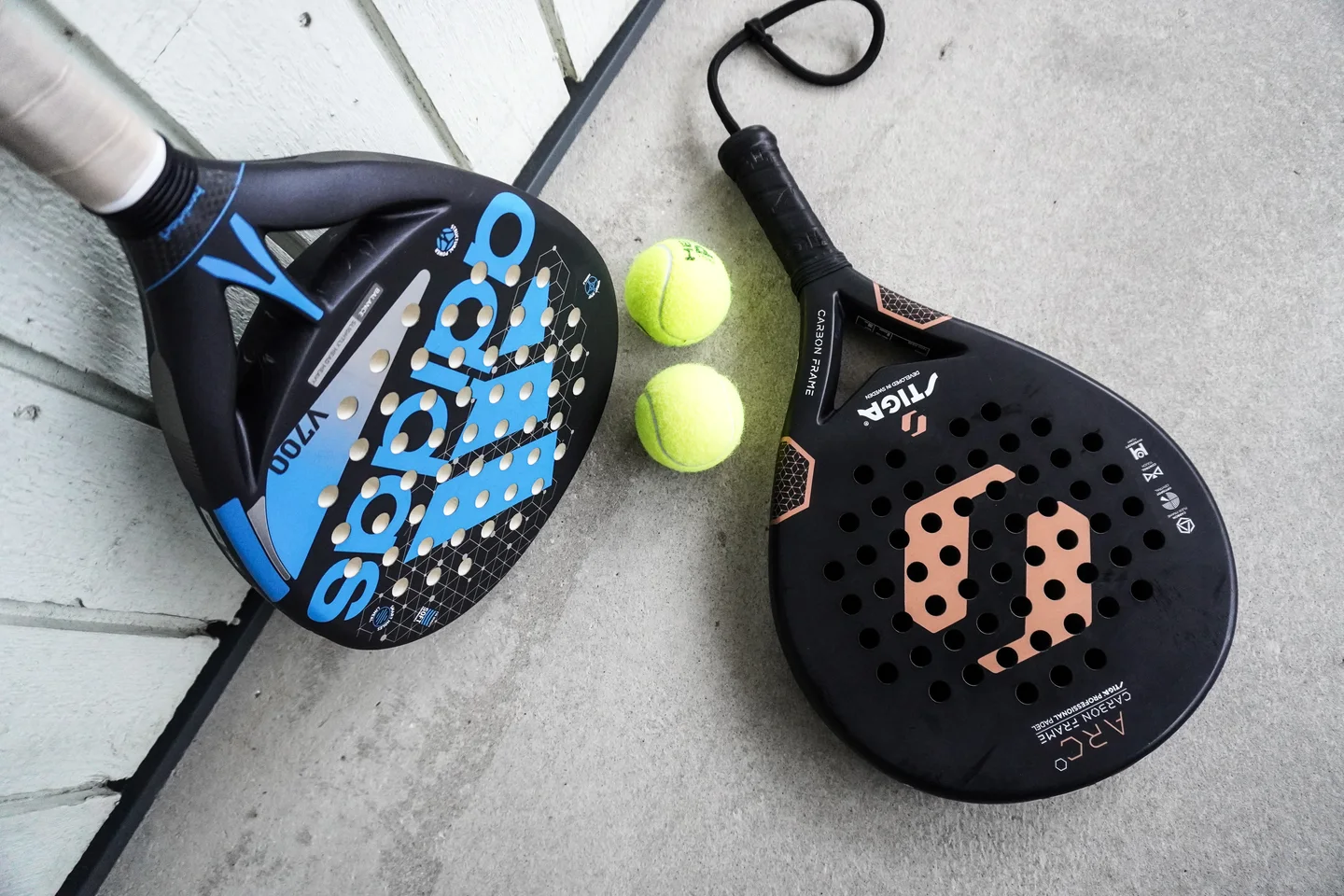
A lightweight padel racket can feel quicker to move, especially when you are learning, returning to the sport, or want less effort during fast exchanges. But “lightweight” is not a universal specification, and the lightest option is not automatically the best. Weight, balance, shape, comfort, and the way you generate power all affect how a racket feels in play. This guide explains how to compare lightweight padel rackets, what tradeoffs to expect, and how to check a model before spending your money.
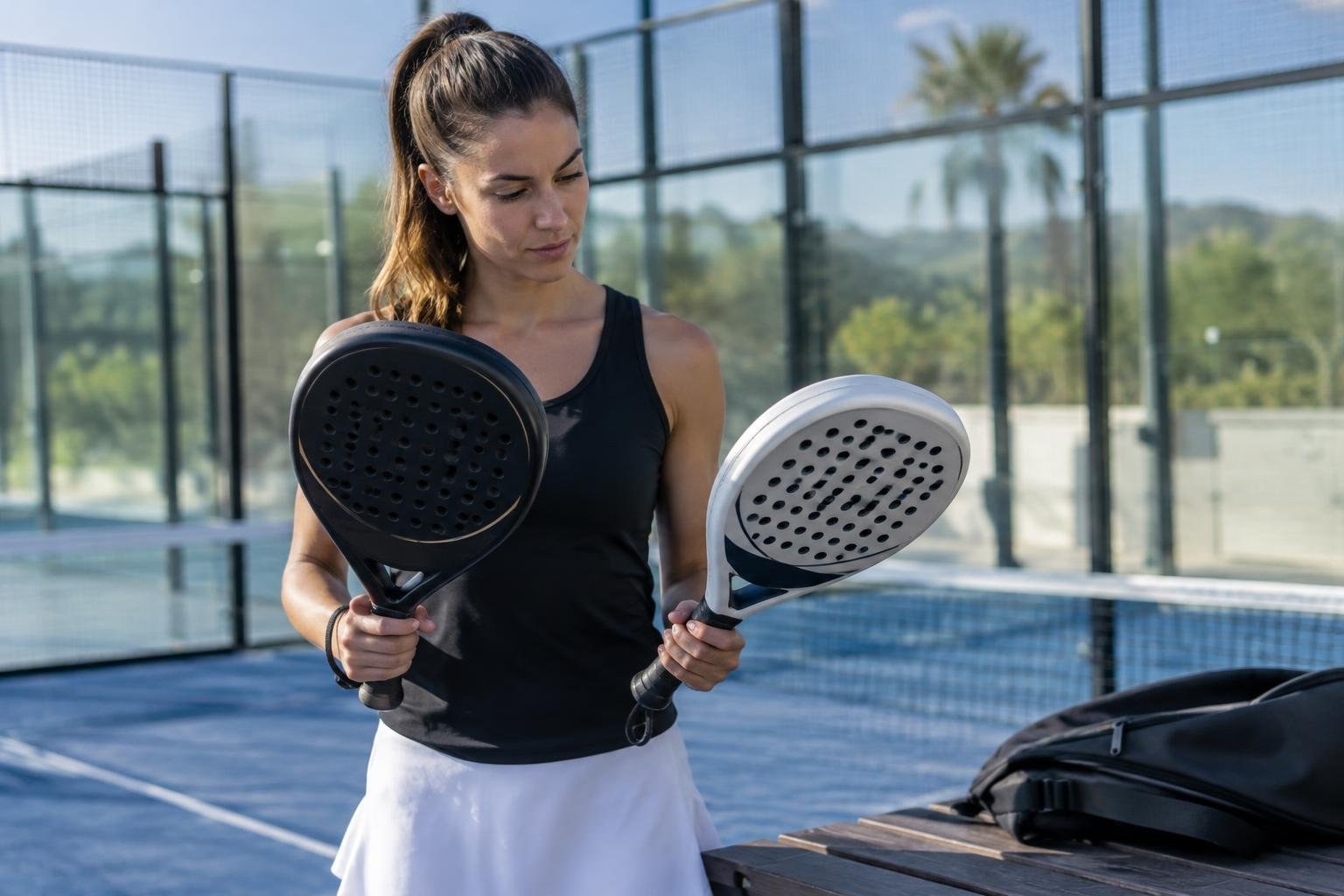
What the buying process for a lightweight racket should include
A useful lightweight-racket purchase is a process, not simply selecting the smallest number on a product page. Start by deciding what you want to improve: quicker handling, a more comfortable-feeling swing, easier control, or a racket that supports your development. Then compare a small group of models, check their current specifications, and test their feel if a demo is available.
Guides use different weight cutoffs. One guide describes under 355 grams as lightweight and under 340 grams as very light; another notes that there is no universal industry definition and that listings can vary by configuration or market. Treat the term as a starting point, not a standardized category.
- Set a realistic budget and identify the handling quality you want.
- Shortlist rackets based on current manufacturer or retailer specifications.
- Compare shape and balance as well as listed weight.
- Try a demo where possible, especially if you are unsure about stability or comfort.
- Before purchase, confirm the exact model, configuration, return terms, and warranty.
Signs you may want to try a lighter racket
A lighter racket may be worth exploring if your current one feels slow to reposition, tiring to swing, or awkward during quick exchanges. It may also be a sensible option if you are beginning your first season or are returning to play and want to compare easier-handling equipment. These are reasons to test alternatives, not proof that a lighter racket will solve a physical problem.
Pay attention to how the racket feels during ordinary swings, volleys, and defensive preparation. If you have ongoing pain, have recently been injured, or are unsure whether playing is appropriate, ask a qualified health professional rather than treating a racket change as medical advice. A product guide identifies an especially light model as an option for some people returning from injury, but that is a buying perspective, not clinical evidence.
One practical warning sign is choosing only by the word “light.” A racket that is easy to move but feels unstable or lacks the response you want may not suit you. Compare it with your present racket and assess the whole experience.
Cost and pricing considerations
There is no single price that defines a good lightweight racket. Cost varies by model, retailer, country, availability, and the exact product configuration. The available research includes a particular 300-gram model listed at $199.95, but that is one listing, not a reliable current market average or a promise of today’s price.
Compare the total purchase cost rather than the headline figure. Check whether delivery, taxes, replacement grips, or other required items are included, and read the retailer’s return conditions before ordering. If the racket is expensive for your budget, consider whether you can test it first or find a current model that meets your needs at a lower price.
Do not pay extra solely for a “light” label or a technical-sounding material claim. First identify what the racket offers that matters to you, then compare its specification, construction details, and seller support with alternatives. Confirm current prices and stock directly with the seller because online listings can change.
Factors that affect how a lightweight racket performs
Weight is only one part of how a racket moves and feels. Its balance, shape, construction, and your own swing all affect whether it feels manageable, stable, or powerful. Two rackets with similar listed weights may not feel interchangeable in your hand. Market guides also warn that listed weights and availability can vary by production batch, market, or configuration, so verify the specific product you intend to buy.
- Weight: Check the stated figure and the seller’s explanation of what it includes.
- Balance and handling: Hold or demo the racket. Notice whether it feels easy to position without feeling too insubstantial.
- Shape: Lightweight examples include round, teardrop, and hybrid designs. Compare the actual feel rather than assuming shape alone decides suitability.
- Construction and features: Some buying guides describe brands as using lighter materials, aerodynamic designs, low-density cores, or vibration-related systems. These are product-guide descriptions, not proof that a feature will produce the same feel for every player.
- Your playing level and style: A beginner may prioritize manageable handling; a more athletic or improving player may want to preserve a performance feel. Guides identify the Blade LS V3 as a lightweight performance-category choice for athletic beginners planning to improve, rather than a pure beginner racket.
Lightweight options and tradeoffs to compare
Lightweight rackets are not one uniform type. Compare the tradeoffs you can feel and the kind of player each option is meant to serve. The following models are examples appearing in racket guides, not a ranked or independently tested verdict.
| Example or category | What the available guide says | Useful question to ask |
|---|---|---|
| Head One Ultralight | One guide lists it at 300 grams, with a round shape and beginner-level positioning. | Does this very light feel still provide the stability and response you want? |
| Wilson Blade LS V3 | A guide calls it lightweight in the performance category and presents it for athletic beginners planning to improve. | Do you prefer a more performance-oriented feel over the easiest possible handling? |
| RS Padel Rialto Pro Light 3.0 | A ranking page identifies it as a teardrop model and highlights control among its ratings. | How does its shape and balance feel compared with a round option? |
| Oxdog Pure Court Light | A ranking page describes it as hybrid and notes maneuverability among its stronger ratings. | Does its handling suit your swing without compromising the contact feel you prefer? |
| Adidas Cross It Team Light | A ranking page lists it as round and includes maneuverability in its ratings. | Does the racket feel comfortable and consistent when you try it? |
Guide ratings and product descriptions are not a substitute for a personal test. Another guide compares several rackets for beginners and arm comfort, but its published selections should also be treated as a shortlist rather than a universal answer.
What to expect when testing and buying
Expect the decision to take longer than a quick glance at a product page if you want a confident fit. Allow time to compare specifications, handle a few rackets, and read the purchase terms. There is no single timetable for choosing, and trying rackets depends on whether a local club, retailer, or other provider offers demos.
During a demo, use consistent swings and compare each racket under similar conditions. Notice whether it feels easy to prepare, whether you can control the face, and whether contact feels stable enough for you. If no demo is available, gather the exact model and configuration details in writing and check the return policy before purchase.
Do not assume that a very light racket will immediately improve your results. One product guide notes that a 300-gram racket may suit someone who wants exceptional maneuverability but may feel limiting to players who already generate their own pace. Consider that a model-specific assessment, and test whether the same tradeoff applies to your game.
How to choose a knowledgeable seller or adviser
When buying online or in person, choose a seller that can clearly identify the exact racket and explain its current specifications. A knowledgeable staff member or coach can help you compare feel and intended use, but no recommendation should replace your own assessment. Ask what the listed weight refers to, whether the racket can be demoed, and what happens if it does not suit you.
Look for transparent answers rather than broad promises. If a seller claims a racket is ideal for every beginner or will prevent arm problems, ask what evidence supports the statement. Guides differ in how they define lightweight and describe model benefits, so a responsible recommendation should explain tradeoffs and acknowledge that feel varies.
There is no need to treat a particular credential as a universal requirement for selling a racket. Instead, assess whether the advice is specific to your needs, whether the product details are verifiable, and whether the seller’s policies are clear. If you consult a coach for equipment guidance, distinguish their playing advice from formal product testing or medical advice.
Safety, returns, and warranty checks
For consumer protection, focus on seller policies and product information: confirm the racket’s identity, the applicable return period, warranty coverage, and any exclusions before you pay. Do not assume that a warranty covers wear, accidental damage, or dissatisfaction unless its terms say so.
For comfort and safety, do not use a racket change as a diagnosis or treatment for pain. If pain persists or you are returning from injury, seek appropriate professional guidance. Test a new racket gradually and stop if it causes discomfort. Product guides discuss lightweight rackets for arm comfort or return-to-play contexts, but those descriptions do not establish medical benefits.
Because product weights and availability may differ across configurations and markets, use the current manufacturer specification and the seller’s written terms as your final check.
Ways to save without sacrificing a suitable fit
You can make a better-value purchase without chasing the lowest price. First decide what features matter, then avoid paying for characteristics you do not need. A lighter label or a premium-sounding material is not enough on its own to justify a higher cost.
- Ask whether a demo or trial racket is available before committing.
- Compare the exact model and configuration, not just the brand or product-family name.
- Check current prices from legitimate sellers, including delivery and return costs.
- Consider a prior-season or less expensive model only after verifying its condition, specification, and warranty.
- Do not buy an unsuitable racket simply because it is discounted; fit and comfort matter more than a short-lived saving.
Mistakes, red flags, and a purchase checklist
Avoid these common buying errors:
- Choosing by grams alone: Compare balance, shape, and actual handling as well as stated weight.
- Assuming “lightweight” has one official meaning: Guides use different thresholds, and some specifically caution that no universal definition exists.
- Expecting a light racket to create power automatically: One guide cautions that a very light model may feel limiting for a player who already generates pace.
- Treating marketing claims as guarantees: Brand materials or guide ratings do not prove that a feature will suit every player.
- Ignoring variation in listings: Verify the exact model, market, configuration, and current specification.
- Assuming a racket prevents or treats injury: Product advice is not a substitute for medical guidance.
Before buying, check: the exact model and stated weight; shape and balance; how it feels in your hand; whether you can test it; the total price; return conditions; warranty terms; and whether the seller can confirm the product details. If any answer is unclear, pause and ask before paying.
A practical shortlist by player need
For a first racket: Start with manageable handling and control, but do not automatically select the lightest model. A guide describes the Head One Ultralight as a 300-gram round beginner option; compare it with other rackets to see whether its very light feel works for you.
If you are athletic and improving: A lightweight performance-category racket may be a better comparison than a model positioned purely for beginners. The Blade LS V3 is presented in one guide for athletic beginners who plan to improve quickly. Treat that as a useful category distinction, not an automatic recommendation.
If maneuverability is the priority: Compare models that guides highlight for handling, but check how each feels yourself. A ranking page notes maneuverability for the Oxdog Pure Court Light and Adidas Cross It Team Light; those guide ratings are not a guarantee of personal fit.
If arm comfort is the priority: Do not infer that a low weight or a named vibration feature will prevent pain. Compare comfort during a cautious demo, and get professional health advice for ongoing symptoms.
Frequently asked questions
What weight is considered lightweight for a padel racket?
There is no universal definition. Some guides describe rackets under 355 grams as lightweight and under 340 grams as very light, while other market guides use mid-300-gram ranges and note that definitions vary. Check the racket’s current specification and configuration rather than relying on the label alone.
Are lighter padel rackets better for beginners?
Not necessarily. A lighter frame may be easier to move, but a very light racket can feel less substantial at contact or provide less pace for a player who relies on racket mass. Choose based on handling, stability, control, and the shots you need to play.
Can a lightweight padel racket help with arm comfort?
A light racket may feel easier to maneuver, but that alone cannot prevent or treat an injury. If you are returning after an injury or have ongoing pain, ask a qualified health professional for advice and test equipment cautiously.
Which shape is best for a lightweight padel racket?
Shape is one factor to compare, not a guarantee of performance. The available examples include round, teardrop, and hybrid lightweight designs. Handle each option and compare its balance, sweet-spot feel, and response before deciding.
What is the lightest adult padel racket?
The research includes the Head One Ultralight at a listed weight of 300 grams and describes it as a round beginner option. Treat that as a model-specific listing, not a universal recommendation; verify current specifications, availability, and suitability before buying.
What is the best lightweight padel racket for beginners?
There is no single best model for everyone. A beginner who values easy handling may prioritize a different balance of maneuverability and stability than an improving player who wants more performance. Try several rackets if you can.
People Also Ask
Do lighter padel rackets improve maneuverability?
Light frames can be easier to reposition quickly, but feel and performance depend on the whole racket, including balance and shape. Try a racket rather than choosing by weight alone.
Is a 340-gram padel racket lightweight?
Some racket guides use under 340 grams as a marker for very light rackets, while definitions vary. Check the model’s listed weight and whether that figure includes any accessories.
Can an adult padel racket weigh 300 grams?
A 300-gram adult racket appears in the available product guides, but it is an unusually light example. Confirm that the current model and specification match the listing before buying.
Should beginners choose a round lightweight padel racket?
Compare round, teardrop, and hybrid options by their actual feel and balance. The shape label alone does not tell you whether the racket suits your game.
How much should I spend on a lightweight padel racket?
Check the complete price, including any shipping or return costs, and compare it with the racket’s current specification and warranty terms. Prices and stock depend on the retailer and market.
How do I check a padel racket’s weight before buying?
Check the manufacturer’s current specification and the retailer’s return or demo policy. Market guides caution that stated weights and availability can vary by market, production batch, and configuration.
The best lightweight padel racket is the one that feels easy to maneuver without leaving you short on control, stability, or confidence. Compare actual racket weight and balance, consider how you play, and try a demo if possible. Use model guides as a shortlist, not a substitute for checking current specifications and handling the racket yourself. Once you know what matters to you, compare options and make an informed choice with the padel guides on mlpadel.com.
Your next step
Compare padel racket options and explore more practical buying guides.
Last reviewed and updated October 8, 2026 by the Major League Padel Editorial Team.
Sources
- Best Lightweight Padel Rackets for Comfort (2026) – Racket Life
- Best Lightweight Padel Rackets for Beginners – 2026 Guide
- Top 10 Lightest Padel Rackets of 2026 | Best Light Models
- Best Lightweight Padel Rackets 2026: Tested & Ranked | PadelRacketReviews.com
- Best Lightweight Padel Rackets in 2026 – Padel Guide
- Best lightweight padel rackets for agile play
- Best Lightweight Padel Rackets 2026: Control & Comfort
- Best Lightweight Padel Rackets (2026) – Top Picks for Speed & Comfort – PADDIK™