
Choosing among the best padel rackets can feel harder than it should. Product descriptions often emphasize shape, balance, materials, and power, but none of those labels alone tells you whether a racket will suit your game. The useful question is not simply, “Which racket is best?” It is, “Which racket gives me a comfortable, manageable feel for the way I play now?” This guide explains the main buying factors, how common racket shapes are generally positioned, what to compare before spending, and how to make a sensible shortlist without relying on a price tag or a professional player’s endorsement.
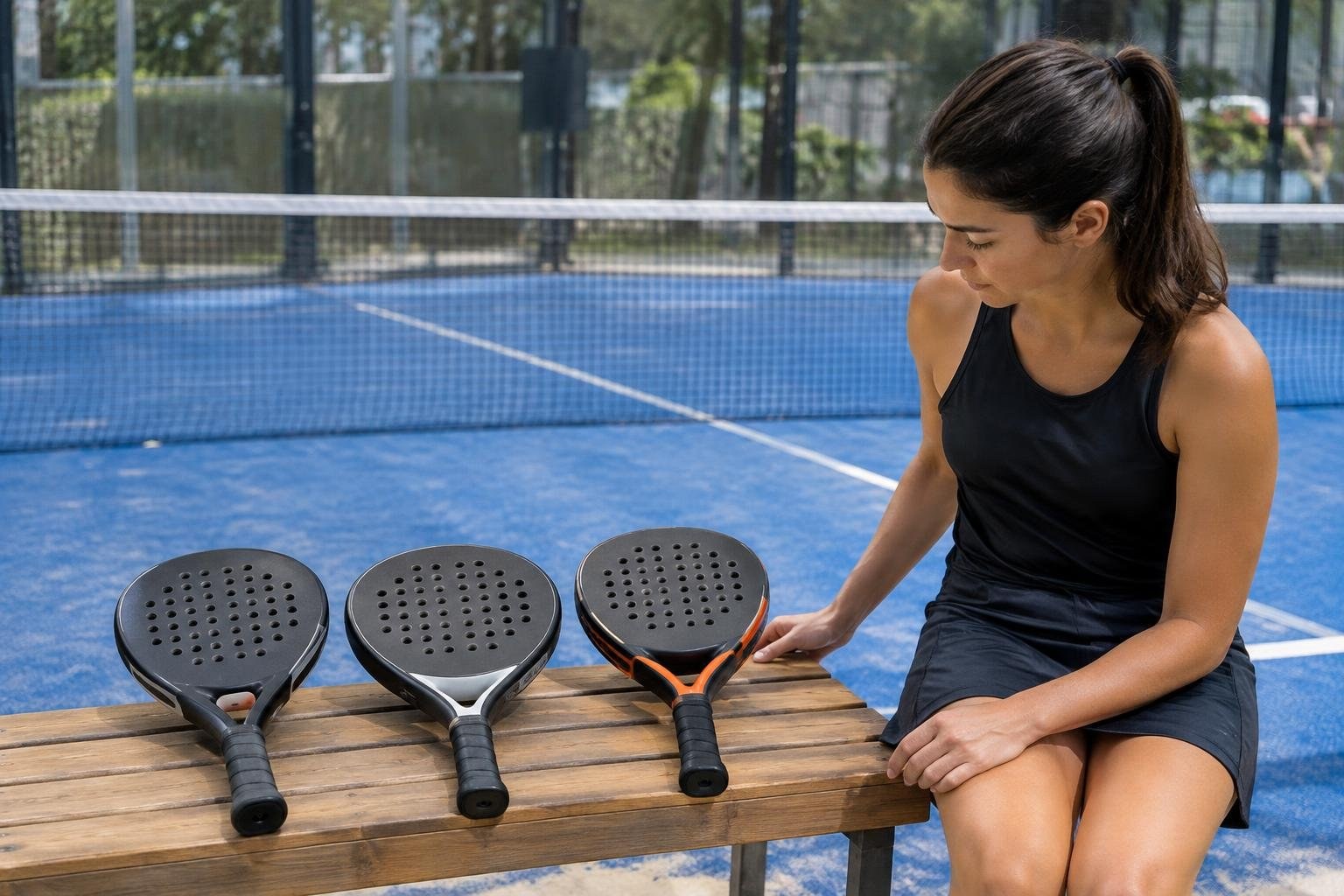
What a padel racket buying guide should help you do
A padel racket is the main piece of equipment you use to direct the ball, defend from the back of the court, and attack at the net. A buying process is straightforward: identify what you want from the racket, choose a few candidates, compare their construction and handling, check the seller’s terms, and select the option that feels manageable for your current level.
Guides commonly organize rackets by shape and intended playing style, and discuss balance, materials, sweet spot, and size as further selection factors. These categories help you make a shortlist; they do not replace evaluating the complete racket. A model described as powerful may not be the best fit if you cannot comfortably control it, while a control-oriented option may be less appealing if you specifically want a more attacking feel.
Think of a product page as a set of clues, not a verdict. Translate each label into a question: Will this balance feel easy to move? Does the stated style match the shots I want to play? Can I handle the racket comfortably? Those answers are more useful than a ranking alone.
Signs it may be time to consider a different racket
A new racket may be worth considering when your current one no longer fits your experience, preferred style, or comfort priorities. You may be trying to move beyond a basic beginner option, looking for a different balance between control and attacking play, or discovering that your current racket does not feel comfortable to handle. These are reasons to compare alternatives, not proof that you need the newest model.
Before shopping, identify the problem as specifically as possible. “I want a better racket” is too vague. Try statements such as “I want a racket that feels easier to control,” “I want a more versatile feel as I improve,” or “I want to compare options that put more emphasis on power.” Buying guides use skill level and playing style to frame recommendations, so relating your needs to those categories makes the search more focused.
Also ask whether a change in equipment is actually the solution. A new racket cannot automatically correct technique or decision-making. If you are unsure what is holding you back, talk through your preferences with a coach or knowledgeable retailer before treating a purchase as the answer.
Cost and pricing: compare value, not just the tag
Racket costs vary by model and seller, and the supplied buying information does not establish a single price that applies across countries or dates. Treat any listed price as specific to that product, retailer, and point in time. Avoid using a price from an old article as a current budget benchmark.
Set a comfortable spending limit first, then compare options within it. Ask what the extra cost represents in the specific racket: a different construction, materials, or intended playing profile? Do not assume that a higher price automatically means better fit or better results. A buying guide’s “best overall” pick is not a substitute for deciding what you need.
When comparing offers, check the complete purchase terms as well as the ticket price. Confirm what is included, the delivery or collection arrangements, and the seller’s return or exchange conditions before ordering. If two rackets meet your needs, the one with clearer terms or a chance to try it may be the more sensible purchase, even if it is not the most heavily promoted.
What affects which racket is right for you
Several factors shape how a racket may suit you: shape, balance, materials, sweet spot, size, and the way the racket feels when you move it. Buying guides often describe round rackets as beginner-friendly and control-oriented, teardrop rackets as a versatile middle ground, and diamond rackets as more power-focused. Those broad associations can help narrow a search, but the design of an individual model matters too.
Skill level is relevant, but it is not the only filter. A recreational player who values comfortable handling may make a different choice from an experienced player prioritizing an attacking feel. Physical comfort matters as well: a specification that sounds impressive is not useful if the racket feels difficult for you to manage. If you have a particular comfort concern, make it part of your shortlist criteria and seek qualified advice rather than assuming one shape or material will solve it.
Use a simple ranking exercise. Mark each factor as essential, preferred, or unimportant. For example, you might treat manageable feel as essential, a versatile profile as preferred, and a specific material as unimportant unless you can explain why it matters to your choice.
Racket options compared: round, teardrop, and diamond
Racket shapes are useful shorthand for comparing playing profiles, but they are not a ranking from worst to best. A round shape is commonly associated with control and beginner use. A teardrop shape is often described as a balance between control and power. A diamond shape is generally presented as a more power-oriented option. These are buying-guide categories, not guarantees about every racket or player.
| Shape | Common buying-guide association | Useful question to ask |
|---|---|---|
| Round | Control-focused and often recommended as a starting point | Does this model feel easy to handle and direct? |
| Teardrop | A versatile middle ground | Does its blend of playing characteristics suit my current game? |
| Diamond | More power-focused | Can I manage its balance and feel comfortably? |
Do not buy a shape just because it is associated with a particular level. Beginners can have different preferences, and improving players may still value control. Compare shape alongside balance, materials, and feel, and read descriptions of the actual model rather than relying on the category alone.
How to shortlist rackets by playing level and style
There is no universally best racket for every beginner, intermediate player, or advanced player. A practical starting point is to identify the playing profile you want, then compare models that offer it. For a new player, buying guides commonly point toward round shapes and priorities such as control, comfort, and a generous usable hitting area. A player developing an all-court game may compare teardrop options. A more experienced player seeking an attacking profile might investigate diamond shapes, while still checking whether the racket feels manageable.
Level labels should guide, not dictate, the decision. Two people with similar experience may value different things. One may want easier handling and confidence on routine shots; another may be willing to trade some of that familiar feel for a more power-oriented profile. Your own preferences are more useful than selecting a racket because a product page says it is “for advanced players.”
For each candidate, write down one reason it might suit you and one question you still need answered. If you cannot explain why a model made your shortlist beyond its popularity or price, compare it again against your priorities.
How to compare materials, balance, and feel
Product descriptions commonly mention racket materials and construction, but a material name alone does not tell you whether a racket is right for you. Compare the complete model: its shape, balance, stated playing profile, and any details about the racket’s feel. Buying guides also discuss sweet spot and size, so look for clear explanations of those points rather than relying on technical-sounding labels without context.
When available, handle the racket before committing. Notice whether it feels comfortable to hold and move through a swing. If you can try a demo, focus on whether the racket feels manageable across the kinds of shots you usually play. A short trial may not predict every performance outcome, but it can help you reject an option that immediately feels wrong.
If you are shopping online, ask the seller for the exact model information and confirm the return or exchange terms. Product pages and model names can be similar, so verify that the racket you receive matches the description and year you selected. Do not infer feel, durability, or comfort from a material label alone.
What to expect from the buying process and timing
Buying and fitting a racket can be a quick online comparison or a longer try-before-you-buy process. Timing depends on how many options you want to assess and whether a shop, club, or coach can help you handle or test them. There is no need to rush simply because a new model has been released or a product page calls a racket a top pick.
Use a short sequence: define your priorities, select a small group of candidates, compare their specifications and purchase terms, then make a decision once you understand the tradeoffs. If a detail is unclear, ask before ordering. If you have the chance to handle more than one model, compare them under similar conditions rather than relying on a vague memory of how a different racket felt.
After purchase, allow yourself time to get used to the racket before judging it on one session. Pay attention to comfort and manageability as well as whether its intended playing profile suits you. If the racket causes concern or does not match the listing, contact the seller promptly and follow the terms that applied to the purchase.
How to choose a knowledgeable retailer or adviser
A qualified provider for a racket purchase may be a knowledgeable specialist retailer, a club professional, or a coach who can explain the tradeoffs without treating one product as right for everyone. Ask how the recommendation relates to your experience, playing style, and comfort priorities. A useful adviser should be able to explain why a racket made the shortlist and what its tradeoffs may be.
Look for clear, model-specific information rather than a generic claim that a racket is “best.” Ask whether you can handle or try it, whether the product is the exact version described, and what the seller’s exchange or return process covers. If advice comes from a product guide, check its date and how it makes recommendations. Commercial product lists can be useful for discovery, but they should not replace your own comparison.
Be cautious if someone pushes you toward the most expensive model without asking how you play, dismisses comfort concerns, or cannot explain the difference between the options. You are entitled to compare choices and take time to decide. A trustworthy recommendation should help you make an informed choice, not make the decision for you.
Safety, product condition, returns, and warranty checks
Before buying, check the product description, the seller’s stated terms, and the condition of the racket you will receive. Confirm the racket has the listed features and comes with any items the seller says are included. Buying guides note that padel rackets have holes and a wrist strap; check that the racket and strap are present and that the equipment is in the condition represented by the seller.
Warranty coverage, return rights, and consumer protections depend on the seller’s terms and the rules that apply where you shop. Do not assume that a warranty covers every type of damage or that an opened or used racket can automatically be returned. Read the applicable conditions before purchase and keep the confirmation and product information.
If a racket appears damaged, has a loose or compromised strap, or differs from the listing, pause before using it and contact the seller. For advice about an injury or a specific medical concern, consult an appropriate health professional; racket descriptions are not medical guidance. Avoid modifying a racket in ways the manufacturer does not recommend.
Ways to save without choosing blindly
You can control spending without compromising your priorities. Set a maximum budget, compare more than one model within it, and decide which features genuinely matter to you. A beginner who wants a comfortable, controllable option may not need to pay for a racket marketed around advanced attacking play. Equally, do not choose an unsuitable racket just because it is the cheapest option.
Consider a previous-season model if the seller confirms its exact specifications and the price and terms make sense. Do not assume older automatically means poor quality or that a current-year label guarantees a better fit. Look for an opportunity to handle or demo a racket through a club or retailer, and ask whether the price includes the product described and any stated accessories.
Compare the total purchase conditions, not only a headline discount. Check delivery charges, returns, and warranty terms where applicable. Avoid pressure-based promotions that prevent you from verifying model details. Saving safely means finding a suitable racket at a sensible price, not skipping checks that help you avoid an unsuitable or misrepresented purchase.
Mistakes, red flags, and a final buying checklist
Common buying mistakes include treating shape as a strict skill-level rule, assuming a more expensive racket is automatically better, and choosing a product because a professional player uses it. A racket can be popular or highly rated and still fail to match your handling preferences. Recommendations are starting points, not a substitute for understanding your own needs.
Another mistake is focusing on one specification while ignoring the rest of the racket. Shape, balance, materials, sweet spot, and feel should be considered together. Avoid comparing products from different descriptions without checking exact model names and versions. Finally, do not buy under pressure if you cannot confirm the product details or the seller’s terms.
Before you order, use this checklist:
- Have I identified what I want to improve or prioritize?
- Does the racket’s stated profile fit my current game?
- Have I compared shape, balance, materials, and feel together?
- Can I handle or try the racket, or have I checked the model carefully?
- Have I verified the exact product, seller terms, and total cost?
- Am I choosing for my needs rather than a ranking, endorsement, or discount?
Frequently asked questions
What shape padel racket is best for a beginner?
Round rackets are commonly recommended as a starting point because buying guides associate them with control and a larger usable hitting area. The right choice still depends on how a particular racket feels to you.
Is an expensive padel racket better?
Not necessarily. Price alone cannot tell you whether a racket suits your skill, preferred feel, or physical needs. Compare its features and comfort against your own priorities before paying more.
Are teardrop padel rackets good for intermediate players?
A teardrop shape is often presented as a middle ground between control and attacking potential. It can suit players who want a versatile feel, but shape is only one part of the decision.
Should I buy a diamond-shaped racket for more power?
A diamond shape is commonly associated with power-oriented rackets. Consider one only if its balance and feel remain manageable for your swing and the situations you play.
What should I compare when buying a padel racket?
Compare the racket's shape, balance, weight, materials, comfort, and intended playing style. A useful shortlist is based on how those factors work together, not on one specification or a recommendation label.
People Also Ask
Does racket shape matter in padel?
Racket shape is a useful starting point, not a complete buying rule. Compare how the racket feels in your hand and whether its balance and intended style suit your game.
How do I choose a padel racket?
Start by deciding what matters most: comfortable handling, control, versatility, or a more attacking feel. Then compare rackets within your budget against those priorities.
Which padel racket is easiest to control?
Buying guides often associate round shapes with control and beginner-friendly use, but the best option depends on the individual racket and whether you find it easy to handle.
Do racket materials make a difference in padel?
Materials are one factor in a racket’s construction and feel. Compare the full model rather than assuming a material name alone guarantees comfort, durability, or performance.
When should I replace my padel racket?
There is no universally correct replacement interval established by the available guidance. Inspect the racket’s condition and reassess if damage or changes in feel affect your confidence or comfort.
What is a powerful padel racket best for?
A racket described as powerful may fit a player seeking a more attacking option, but power is not the only buying criterion. Check its balance and manageability too.
The best padel racket is the one that helps you play comfortably and make the shots you intend, not automatically the most expensive or powerful option. Start with your experience, playing style, comfort needs, and budget. Compare shape, balance, feel, and construction as a complete package, then check the specific model and purchase terms before buying. If you are unsure, shortlist a few rackets and seek a chance to handle or try them before deciding.
Your next step
Explore more padel guides and compare your racket options on MLPadel.
Last reviewed and updated October 8, 2026 by the Major League Padel Editorial Team.
Sources
- What Padel Racket Should I Buy? Complete Buying Guide for All Levels
- Best Padel Rackets 2026, Top 10 for Every Level and Budget
- Best Padel Racket for Beginners 2026: The Complete Buying Guide – Padel Market
- Padel Buying Guides – Expert Equipment Reviews & Recommendations | Padel.fyi
- The Complete Padel Racket Buying Guide | Net World Sports
- Best Padel Rackets: A Complete Buying Guide – Betmok Blog
- Expert Padel Racket Reviews & Ratings 2026
- Best Padel Rackets 2026: Complete Guide to Choosing the Right Option f – Padel Market