
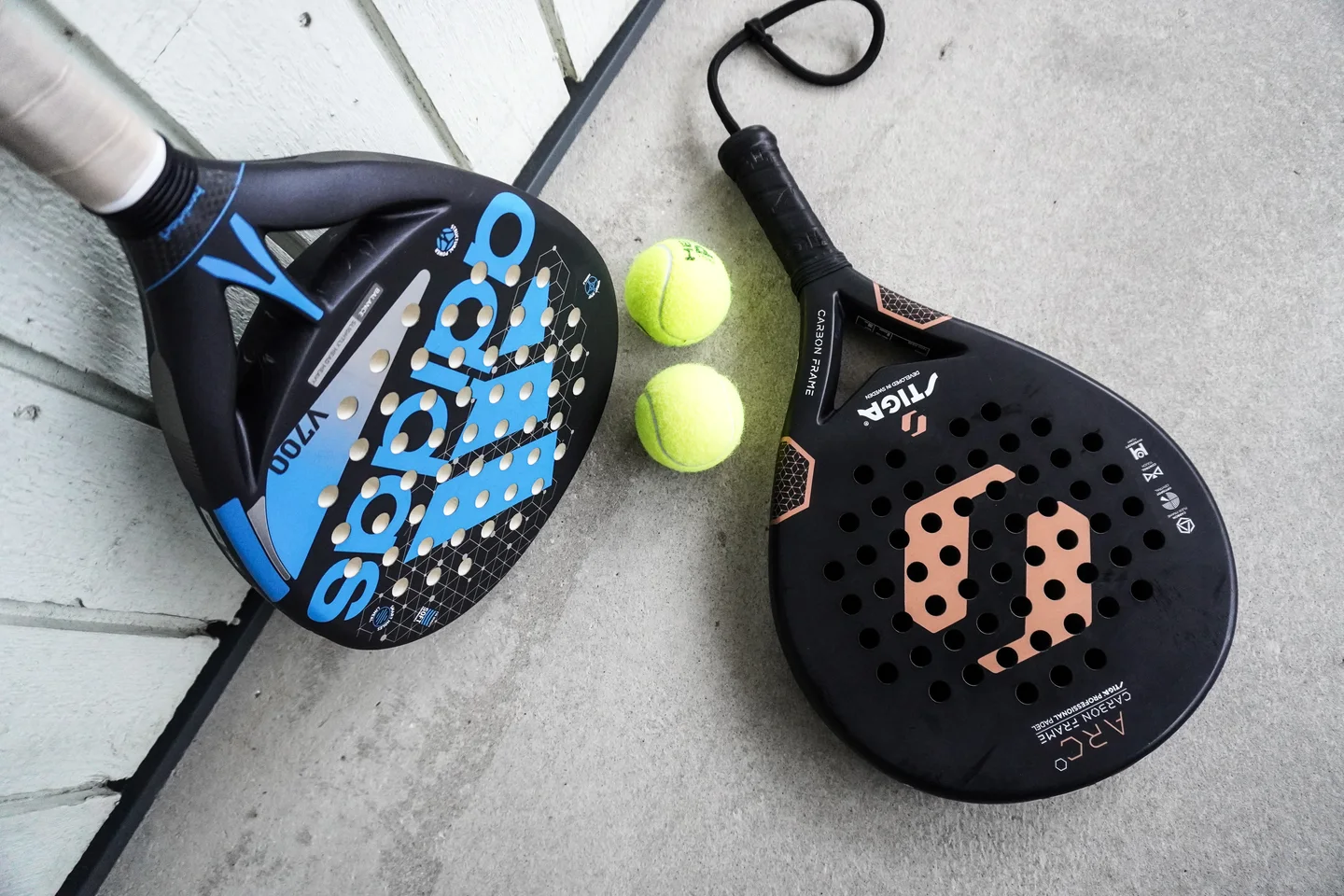
Searching for the best padel rackets for control can quickly turn into a confusing list of rankings, materials, and model-year names. A control label is a useful starting point, but it cannot tell you whether a racket will feel comfortable in your hand or suit the way you play. The practical choice is the model whose touch, maneuverability, and reach match your priorities. This guide explains how to compare those qualities, assess shortlists and prices, and avoid buying on a ranking alone.
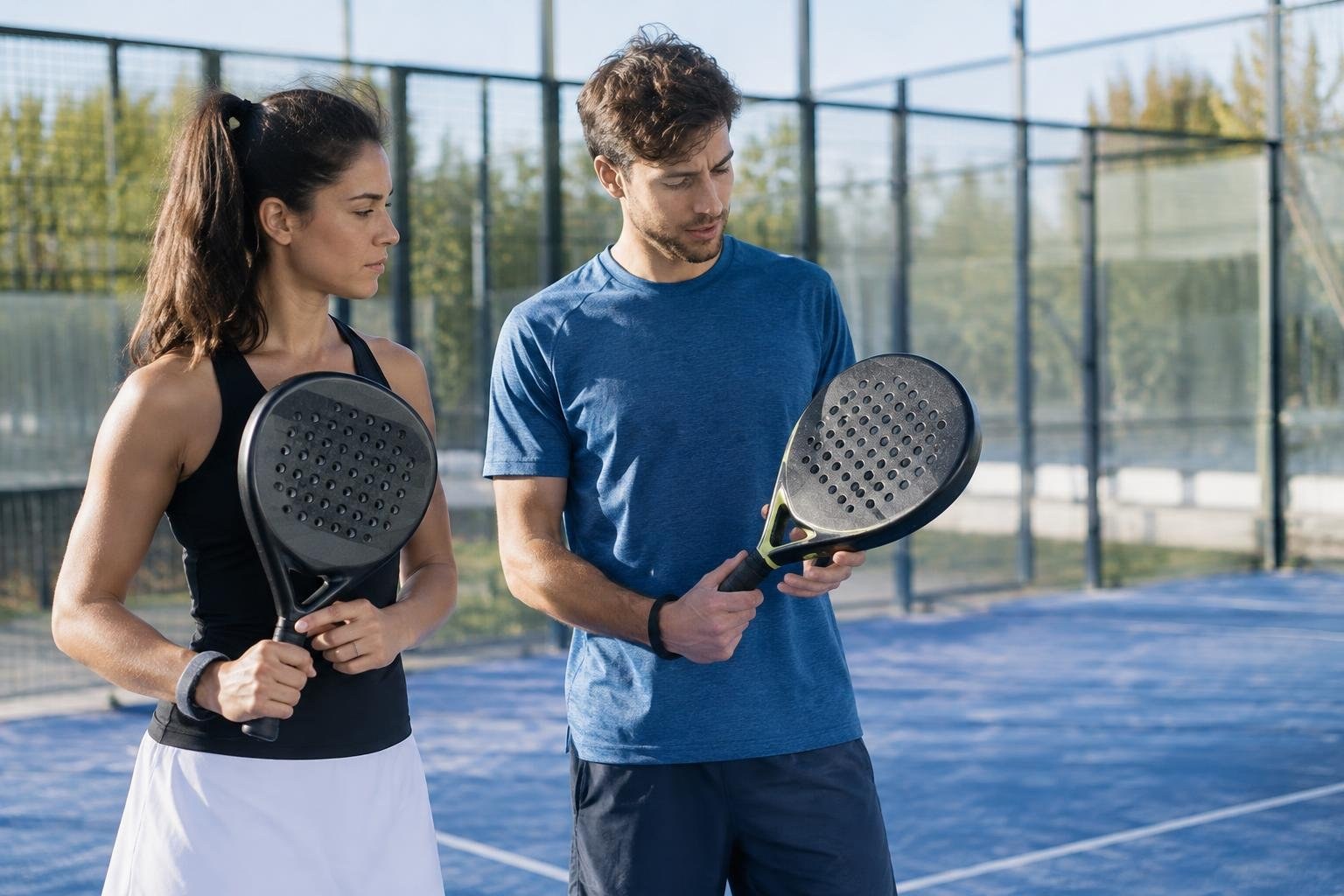
What a control padel racket includes and how to assess it
A control racket is intended to make the ball’s response easier to manage so you can prioritize placement and touch. “Control” is not a single technical specification, and a label on a product page cannot tell you exactly how a racket will feel to you.
Start by identifying what you want to control: a quick defensive reaction, a softer touch, a compact attacking shot, or the direction and depth of the ball. Then compare rackets according to those needs. Round rackets are commonly presented as an easy-to-handle starting point, while some teardrop rackets are also described as control options with extra reach.
That distinction matters because a racket should support your decisions, not make every shot for you. Product ratings and rankings can help you identify models to investigate, but they should not replace a check of current specifications and personal fit.
Signs you may benefit from comparing control rackets
You may want to compare control-focused rackets if you find that your current option feels too explosive on off-center contacts, or if you would rather emphasize touch and precision than power. These are reasons to investigate a different feel, not proof that a particular racket will fix a technical or physical problem.
Think about the situations that prompt the search. Do you want to place the ball more deliberately? Are you looking for a racket that feels easier to handle, or do you want a sharper response for compact shots? Write down the two or three outcomes that matter most before reading rankings. Otherwise, a long list of features can distract from the reason you started shopping.
If comfort is a concern, do not treat a product description as medical advice or as a guarantee that a racket will prevent or resolve pain. Choose cautiously and seek appropriate professional advice if discomfort continues.
Price and cost considerations
Control is about choosing a response you can use consistently, not buying the most expensive racket on a ranking. A comparison guide for 2026 lists five control-racket options across a stated range of $89 to $272. Treat that as the range reported by that particular guide, not as a promise of current local prices.
Before comparing prices, make sure you are looking at the same model name and year. Ask whether the price is for the racket alone and check the seller’s terms for delivery, returns, and warranty coverage. These details can change the real value of an offer, even if two listings appear to name the same model.
Set a budget before browsing and compare options within it. Do not assume that a higher price means a better fit or that a lower-priced racket will lack the feel you want. Confirm today’s price with the seller because listings and model availability may change.
What affects fit and expected performance
Several design and fit questions affect which racket makes sense: shape, feel, firmness, reach, and how confidently you can handle it. The available comparisons describe round shapes as a usual starting point for control, but note that some teardrop rackets can combine control with more reach.
Core feel is another comparison point. One guide describes firmer cores as having a sharper touch suited to compact, efficient shots. A separate product overview describes the Royal Padel M27 Poly 2025, which has a polyethylene core, as soft-touch and vibration-absorbing. Those descriptions apply to the cited products and should not be generalized to every racket using the same material or shape.
Look at each factor as a tradeoff rather than a guarantee. A specification can help narrow the shortlist, but the useful question is whether the resulting feel suits your intended game and remains manageable across the situations in which you play.
Options and tradeoffs: shape, feel, and model
Compare the type of control you want rather than treating every control racket as interchangeable. Use this quick framework to decide which models deserve a closer look:
- Round shape: A common starting point when ease of control is the main priority.
- Teardrop shape: Worth comparing if you want a control-oriented option with more reach.
- Firmer feel: Consider it if a sharper touch and compact shots are priorities.
- Soft polyethylene-core feel: Investigate this type if you prefer the soft touch described for the Royal Padel M27 Poly 2025, while verifying the actual model and feel for yourself.
For example, a supplied comparison presents the Babolat Counter Viper 2.5 as a more suitable choice for higher-level players seeking compact, efficient shots. That is a specific recommendation, not evidence that it will suit every advanced player. Another guide ranks the Nox AT10 Genius 12K ALUM Xtreme highly for control, but a numerical rating from a ranking is not a universal measure of your personal fit.
Shortlist models by use case, then compare current product details. Avoid selecting a racket only because it appears first in a “best” list.
How to compare shortlisted rackets
A shortlist is more useful than a single winner. Choose three or four candidates and note the reason each one made the list: shape, stated feel, reach, or price. Several current-looking buying guides compare models from brands including Nox, Babolat, Wilson, Head, and Stiga, but the model mix and rankings are specific to those guides and can change over time.
For each candidate, record the exact product name and model year, then check the manufacturer or seller’s current description. Compare claims only when they refer to the same feature. For instance, a review’s control score should not be treated as directly comparable to another site’s comfort score unless both explain the method behind the rating.
If the choice remains close, prioritize the racket that feels manageable and suits your stated needs. The point of comparison is to make a reasoned purchase, not to find a ranking that removes the need to decide.
What to expect and how long the buying process takes
Allow time for research before you buy. Product guides can help you identify candidates, but they do not establish that a specific model will suit you or that its specifications are unchanged. A practical process is to define your priorities, build a shortlist, verify current details, and then check whether you can handle or try the racket before committing.
- Write down the main reason you want a control racket.
- Choose a few candidates based on relevant shape and feel descriptions.
- Confirm the full model name, model year, and listed specifications.
- Compare current prices and seller terms.
- If possible, handle or test the shortlist before buying.
There is no evidence in the available comparisons for a standard adjustment period or a guaranteed time to improve. Give yourself room to evaluate the feel in ordinary play rather than expecting a new racket to produce an immediate result.
How to choose a qualified racket adviser or provider
If you want advice in person, speak with a racket retailer or club equipment specialist and explain how you play and what you want to change. Ask them to compare the actual models on your shortlist rather than simply recommending the latest or most expensive one.
Useful questions include: What is the exact model year? What information supports the control claim? How does this option differ in feel from the alternative? Can I handle or try it before purchase? What are the return and warranty terms? A helpful adviser should be able to distinguish a product description from a personal recommendation and encourage you to check the relevant details.
There is no supplied evidence establishing a particular professional qualification for selling padel rackets. Focus on transparent product knowledge, clear answers, and terms you can review in writing rather than accepting an unsupported claim of expertise.
Product details, warranty terms, and comfort considerations
For a racket purchase, the practical checks are product identity, seller terms, and safe expectations. There are no permit requirements for choosing a racket in the available research, and the supplied sources do not set out a universal warranty or return policy. Ask the seller for the applicable terms before paying.
Confirm the exact model and year on the listing and check that any claimed material or construction detail refers to that same version. Do not assume that similarly named rackets share specifications. If a racket is described as vibration-absorbing or suitable for someone with an injury, treat that as a product claim rather than a medical guarantee. Ongoing pain warrants advice from an appropriate health professional.
Keep the purchase confirmation and the product information provided at sale. This makes it easier to check what was promised if the delivered item or its terms do not match your understanding.
Ways to save without taking unnecessary risks
You can shop carefully without paying for features you do not need. First identify your priorities, then compare only rackets that address them. A guide-specific price range can help you establish a rough comparison point, but check current local listings before treating any figure as a budget benchmark.
- Compare the same model year and exact name across listings.
- Ask about the return policy before buying, especially if you have not handled the racket.
- Consider whether a demo or a chance to handle the racket is available before committing.
- Do not pay extra for a claimed benefit unless you understand what it means for your own priorities.
- Keep the purchase documentation and read warranty terms rather than assuming they are identical across sellers.
Saving safely means reducing uncertainty, not skipping checks. A low price is not useful if the listing does not clearly identify the product or if the seller’s terms are unclear.
Buying mistakes, red flags, and a final checklist
Common buying mistakes include treating a ranking as an objective verdict, assuming all round rackets feel alike, and choosing from a material label alone. Rankings may provide a useful starting list, but their ratings and order are specific to the guide. Product descriptions also apply to particular models, not every racket with a similar shape or core.
Use this final checklist before purchase:
- Have I identified the specific game-related reason I want more control?
- Have I compared shape and feel rather than relying on a single label?
- Have I confirmed the exact model name, year, and current specifications?
- Have I compared current prices and checked the seller’s return and warranty terms?
- Have I considered handling or testing the racket if that is available?
- Have I avoided treating an injury-related marketing claim as a medical promise?
If you cannot answer these questions, pause and verify the details. A short delay is preferable to buying a racket based on a headline that does not explain how it fits your needs.
Frequently asked questions
What makes a padel racket a control racket?
A control racket is designed to make placement and touch the priority. The term does not guarantee that every player will find a racket easy to control; the shape, feel, balance, and player’s own preferences all matter. Round rackets are often presented as an accessible control option, while some teardrop rackets also combine control with more reach.
Is a round padel racket always best for control?
Round shapes are commonly recommended as an easy starting point for control. Teardrop shapes can also offer control while providing more reach, so shape alone should not decide your purchase. Compare how the racket feels in defense and at the net if you can.
Can a teardrop padel racket offer good control?
Not necessarily. Some teardrop rackets are also described as control-oriented. If you want a balance between precision and reach, compare the racket’s shape and feel rather than assuming every teardrop model is power-focused.
Should I choose a soft or firm core for control?
There is no universal ideal core firmness in the available comparisons. A firmer core is associated with a sharper touch and compact, efficient shots, while a softer polyethylene-core example is described as offering a softer touch and vibration absorption. Decide which feel suits you, and verify the exact model specification.
How much does a control padel racket cost?
One 2026 control-racket guide lists models across a price range of $89 to $272. That is a guide-specific range, not a guaranteed current price in every country or shop. Check the current price, model year, and included items before buying.
Who should buy a control padel racket?
A control-focused racket may suit a player who prioritizes touch and placement, but it is not automatically the right choice for every player. Consider your preferred feel, the shots you want to play, and whether you can handle the racket comfortably in both defense and attack.
People Also Ask
What does control mean in a padel racket?
A control racket emphasizes manageable response and placement rather than maximum explosive power. Compare shape and feel as well, because control labels do not guarantee the same experience across models.
Which padel racket shape gives the most control?
Round is often described as the easiest shape for control, but some teardrop rackets can also offer control and more reach. Your preferred feel and handling should guide the choice.
Are round padel rackets better than teardrop rackets?
Not always. A round shape can be a sensible place to start, but a teardrop model may suit a player seeking control with additional reach. Compare the specific racket rather than relying on shape alone.
Does a firmer padel racket core improve control?
A firmer core is associated with a sharper touch and compact shots in one control-versus-power guide. Another listed control option uses a polyethylene core and is described as soft-touch and vibration-absorbing. Confirm the exact model details before deciding.
What is a reasonable price for a control padel racket?
One guide to control rackets for 2026 lists a range from $89 to $272. Prices vary by shop, country, and model year, so use that as a guide-specific reference and check current local listings.
Is the Babolat Counter Viper 2.5 good for control?
The supplied comparisons include the Babolat Counter Viper 2.5 as an option for higher-level players seeking compact, efficient shots. That does not make it a universal best buy; compare it with other options for feel, fit, and current specifications.
The best padel racket for control is the one that lets you place the ball reliably without making it difficult to defend or move into position. Start by deciding how much maneuverability, reach, touch, and firmness you want, then compare those priorities against the racket’s shape, feel, and price. Treat product rankings as a shortlist, not a substitute for checking current specifications or trying a racket when possible.
Your next step
Explore padel apparel and the Major League Padel community.
Last reviewed and updated October 8, 2026 by the Major League Padel Editorial Team.
Sources
- Control vs. Power in padel: which racket fits your game the best? – Padel USA
- Best Control Padel Rackets in 20026 | Mypadellife.com
- Best Control Padel Rackets | Precision, Defense, and Comfort
- Best control padel rackets 2025: definitive ranking of round padel rackets – Zona de Padel | News
- Best control padel rackets 2026 (pro ranking)
- Best Padel Rackets for Control 2026: 10 Accuracy Picks – Racket Fits
- Control Padel Rackets | Padelreference
- Best Control Padel Rackets (2026) — Top 5 for Precision & Comfort | Padel Courts Finder