
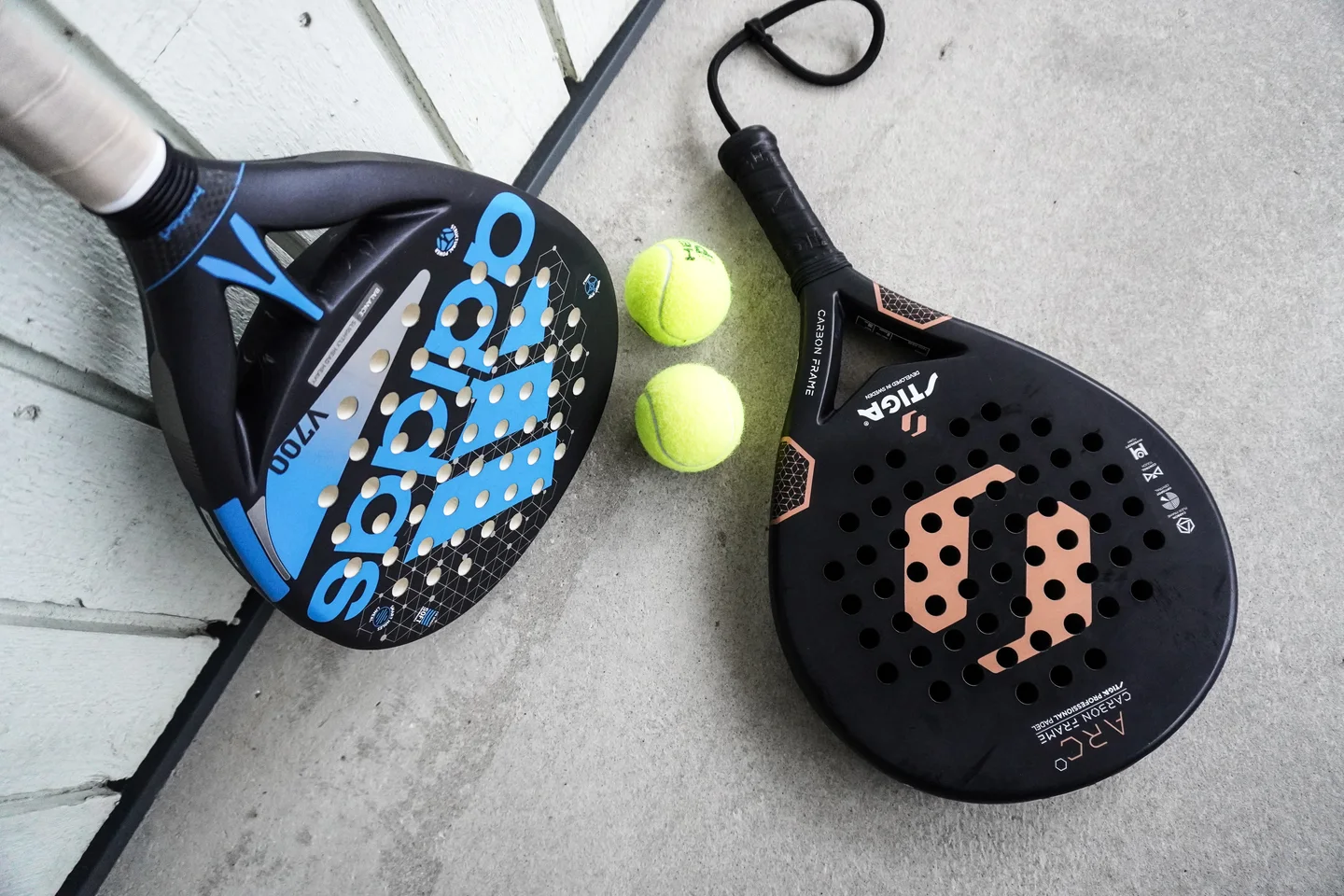
Searching for the best padel rackets for men can lead straight to tournament-player models and bold power claims. But a racket that works for a professional or an aggressive attacker may not feel right in your hands. The useful question is not simply which model ranks first; it is which racket helps you play your own game with control, comfort, and confidence. This guide compares notable options from available racket roundups, explains how to assess fit and cost, and gives you a practical checklist for choosing without relying on hype.
Quick answer: Which padel rackets are worth comparing?
There is no single best padel racket for all men. A suitable choice depends on the feel you prefer, the shots you want to support, and the price you are comfortable paying. Current racket guides offer useful comparison candidates, but their labels are starting points rather than proof that a model will suit every player.
- All-court comparison: The Nox AT10 Genius 18K Alum is described as a versatile racket for players who value tactical placement and consistency as well as power.
- Power-oriented comparison: The Bullpadel Hack 04 is presented as a power-focused model in a racket review.
- Balanced comparison: The Nox ML10 Pro Cup is characterized in one expert roundup as well balanced and durable.
- Player-signature options: The Babolat Viper Juan Lebrón 2.5 is identified as Juan Lebrón's signature racket; the Adidas Cross It Light 3.4 is described as a lightweight, control-oriented model associated with Martita Ortega.
- Value comparison: The Head Flash Pro is described in one review as balanced and wallet-friendly.
Before buying, compare the exact model generation, current product information, seller terms, and how the racket feels to you. A title such as “best” is an editorial judgment, not a personal-fit guarantee.
What should you know about the racket shortlist?
Racket roundups are most useful when you treat them as a shortlist, then test their descriptions against your own priorities. The available guides group models by playing level, value, and playing style, but their selections and evaluations are not identical. Use more than one source of opinion and verify product details with the manufacturer or seller before you order.
The Nox AT10 Genius 18K Alum is one candidate if you want an all-court comparison point: a review describes it as adaptable and suited to players who value consistency and tactical placement. If you want to compare an explicitly power-focused choice, the Bullpadel Hack 04 appears in a racket review framed around power. The Nox ML10 Pro Cup is called well balanced and durable in an expert roundup, although that characterization should not be treated as a guarantee of service life.
For a player-signature model, compare what the label actually tells you. A product collection identifies the Babolat Viper Juan Lebrón 2.5 as Juan Lebrón's signature racket and describes the Adidas Cross It Light 3.4 as a lightweight, control-oriented racket developed with Martita Ortega. An association with a professional does not establish that the model is the right match for your level or preferences.
The Head Flash Pro is another useful comparison candidate because a review describes it as balanced and wallet-friendly. These descriptions help define a shortlist; they do not replace checking current model information or trying the racket.
How does the racket-buying process work?
Choosing a racket is a small decision process: define your needs, shortlist models, check details, compare buying terms, and decide whether to test before committing. You do not need to start by selecting a professional player's racket or the most advanced-looking option.
- Describe your priority. Decide whether your main goal is an adaptable feel, controlled placement, a power-oriented response, or a lower-cost starting point.
- Choose a few comparisons. Use descriptions from more than one roundup to find contrasting models, such as the Nox AT10 Genius 18K Alum, Bullpadel Hack 04, and Head Flash Pro.
- Confirm the exact version. Model names can appear in different years or collections. Ask the seller for the precise version and check its current manufacturer information.
- Try if practical. If a club, retailer, or player offers a test racket, use familiar shots and assess whether the racket feels controllable and comfortable to you. A brief trial is an aid to judgment, not a guarantee of future performance.
- Compare the full purchase terms. Check total cost, delivery or collection arrangements, return conditions, and any written warranty information before paying.
This approach turns “best racket” into a more useful question: which available option fits your priorities and the terms of the purchase?
What signs suggest your current racket may not suit you?
It may be time to reconsider your racket if its feel no longer suits the way you want to play, you struggle to control ordinary shots with it, or you are choosing a new model after gaining experience. Those are reasons to compare options, not proof that you need to replace equipment immediately.
Look for a mismatch between the promise and your actual priority. For example, if a power-oriented description attracts you but your main goal is dependable placement, compare it with a versatile or control-oriented alternative before deciding. If you bought a racket because a professional uses a related model, ask whether that was a personal fit decision or simply an endorsement-driven purchase.
Notice how you feel during a test, but do not diagnose discomfort or assume a different racket will solve it. If you experience persistent pain, stop playing and seek appropriate professional advice. For a purchase decision, focus on the exact model, its stated characteristics, and your ability to use it comfortably and confidently.
What factors affect which racket is right for you?
Fit is personal, so compare rackets against the qualities you care about rather than using a single label as your decision rule. The available reviews describe models as versatile, power-focused, balanced, wallet-friendly, or control-oriented. Those descriptions can help organize a test, but they do not provide a standardized guarantee of how a racket will feel in your hand.
- Playing priority: If you want an all-court option, include a model described as versatile. If you specifically want to compare power, include a power-focused candidate. If placement and a control-oriented profile matter more, add a model described that way.
- Comfort and manageability: If testing is available, pay attention to how the racket feels during the shots you commonly play. Do not assume a professional player's preference transfers to you.
- Level and experience: Beginner-focused and elite-player recommendations appear in racket guides, but a category label alone cannot tell you whether a particular model is suitable. Check the intended-player description and seek a trial when possible.
- Version and condition: Verify the precise model year or generation and whether the item is new, used, or a test model.
- Value: Compare the full price and purchase protections, not just a headline discount or an editorial “best value” label.
These factors matter because the best comparison is not the model with the strongest marketing claim; it is the option that meets your needs at an acceptable cost and can be purchased on terms you understand.
Which racket options should you compare?
Compare racket categories by the job you want them to do, while remembering that category descriptions are editorial summaries and model details can change. This table offers a way to create a shortlist, not a ranking for every player.
| Comparison point | What the available review says | Who may want to investigate it |
|---|---|---|
| Nox AT10 Genius 18K Alum | Described as adaptable for players who value placement and consistency as well as power. | Players seeking an all-court comparison. |
| Bullpadel Hack 04 | Presented as a power-focused racket. | Players who specifically want to compare a power-oriented option. |
| Nox ML10 Pro Cup | Characterized as well balanced and durable in an expert roundup. | Players who want another balanced-profile candidate. |
| Babolat Viper Juan Lebrón 2.5 | Identified as Juan Lebrón's signature model. | Players curious about a professional-associated option who will still assess personal fit. |
| Adidas Cross It Light 3.4 | Described as lightweight and control-oriented in a product collection. | Players who want to investigate a control-oriented candidate. |
| Head Flash Pro | Described as balanced and wallet-friendly in a review. | Players comparing a value-oriented option. |
Before treating any comparison as decisive, confirm the model version and current product description. Where possible, try more than one category rather than testing only the racket you already expect to buy.
How much do padel rackets cost?
Racket prices vary by seller, market, model, and current availability, so compare live listings rather than relying on an old guide. The supplied 2026 roundup describes a beginner option listed at £51, but that figure is a snapshot tied to that guide and market. It should not be treated as a current price in every country or as a price for the named models in this article.
For a practical comparison, record the exact racket version and the total you would pay from each seller. Ask whether the listed amount includes delivery or other charges, and check whether you are comparing the same model and condition. A lower price on a previous-generation model may be relevant if you have verified that it meets your needs, but do not assume a discounted listing is identical to the latest version.
Also consider the value of a trial, clear return terms, and written warranty information. These do not make a racket inherently better, but they can affect how comfortable you feel making a purchase. Avoid treating “premium,” “pro,” or “best value” as a substitute for comparing actual terms and fit.
What should you expect, including timing?
There is no supported universal timeline for choosing or receiving a racket. The decision can be quick if you already know what feel you want and the seller has the exact model available. It can take longer if you want to test several options, compare different generations, or confirm return and warranty conditions.
Build time into the process for the checks that matter: confirm the version, read the current product information, ask the seller about availability and delivery or collection, and review the purchase terms before ordering. If you can test rackets through a club or retailer, arrange that before committing rather than assuming that an online description will settle the question.
After purchase, give yourself time to play with the racket in ordinary sessions before judging whether it suits you. A short trial can reveal an initial preference, but it cannot guarantee that a racket will improve results. Keep the receipt and warranty details, and follow the manufacturer's care guidance.
How do you choose a qualified retailer or adviser?
If you want advice in person, choose a retailer, club, or knowledgeable racket adviser who can explain the basis for a recommendation without pushing one model as right for everyone. The aim is not to find an official “padel racket qualification” from the available evidence; it is to assess the quality and transparency of the advice.
Ask the adviser to compare at least two distinct profiles, such as a versatile candidate and a power-focused or control-oriented one. Ask which version is being recommended, what player priorities it is meant to suit, whether you can test it, and what the seller's return and warranty terms are. A clear answer should distinguish a product description from a personal recommendation.
Be cautious if advice relies only on a professional's name, an unsupported promise that a racket will fix your game, or pressure to buy immediately. Reviews can help you form questions, but a retailer should be able to give you current product details and purchase conditions for the item actually offered.
What should you check about warranties and safety?
Before paying, check the seller's written return policy, warranty terms, and any instructions for inspecting or caring for the racket. These terms are specific to the seller, manufacturer, product, and place of purchase, so do not assume they are identical across stores or regions.
Ask what the warranty covers, how to make a claim, and whether you need to keep proof of purchase. If you are considering a used or test racket, ask about its condition and whether the same protections apply. Inspect the product when it arrives and contact the seller promptly if it does not match the description.
Use basic purchase safeguards: buy from a seller that identifies the product accurately, provides clear contact and transaction information, and states its policies in writing. Follow manufacturer guidance for use and care, and do not continue using equipment that appears damaged.
How can you save without taking unnecessary risks?
You can save sensibly by comparing more than one seller, checking current and previous model versions, and deciding which racket qualities matter before looking at discounts. A 2026 guide includes a beginner racket listed at £51, while a separate review calls the Head Flash Pro wallet-friendly; neither is a guarantee of the current price or best value in your market.
- Compare the exact model and generation, not just the brand or product family name.
- Ask whether a demo or test is available before paying full price.
- Check the total cost and seller terms, including any delivery charges or return restrictions.
- Consider a previous-generation model only after checking its details and condition.
- Set a budget first, then compare options within it instead of paying extra for a professional endorsement you do not need.
Do not save money by ignoring damage, buying a product whose identity or condition is unclear, or assuming that a discounted model is covered by the same policies as a new one. Savings are worthwhile only when the racket and transaction still meet your needs.
What mistakes and red flags should you watch for?
Use this checklist before you order or leave the store:
- Have I described what I want from the racket, rather than choosing only by a “best” label?
- Have I compared options with different descriptions, such as versatile, power-focused, balanced, or control-oriented?
- Have I confirmed the exact model version and checked current product information?
- Have I considered how the racket feels, ideally through a test or demonstration?
- Have I compared the full price and confirmed the item's condition?
- Do I understand the seller's return policy and written warranty terms?
- Am I choosing the racket for my own preferences rather than assuming a professional player's model is right for me?
Common mistakes include buying on a professional association alone, treating a review's “best” label as a guarantee, comparing different generations as if they were the same item, and focusing on a headline discount without reading the terms. Pause if the seller cannot identify the exact model, will not explain the purchase conditions, or uses pressure instead of answering questions.
Frequently asked questions
How do I choose the right padel racket for me?
Start by identifying what you want from a racket, such as versatility, power, balance, or a control-oriented feel. Then compare models described that way, check the exact version, and try one if possible. For example, the Nox AT10 Genius 18K Alum is described as versatile, the Bullpadel Hack 04 as power-focused, and the Adidas Cross It Light 3.4 as lightweight and control-oriented.
What is a good padel racket for an intermediate player?
Consider a model described as versatile or control-oriented if you want to prioritize placement and consistency. The Nox AT10 Genius 18K Alum is presented as an all-around option in one buying guide, while the Adidas Cross It Light 3.4 is described as lightweight and control-oriented in a product collection. Check current model details before purchase.
Should beginners buy a powerful padel racket?
Not necessarily. A racket marketed around power may suit a player who can use that response consistently, but a control-focused or versatile option may be a better match for someone prioritizing placement or all-court reliability. Compare models in person if possible.
Which padel racket is best for men?
No single model is best for everyone. The Nox AT10 Genius 18K Alum is positioned as versatile, the Bullpadel Hack 04 as a power option, and the Head Flash Pro as a wallet-friendly balanced option in the supplied reviews. These are editorial characterizations, not a guarantee that each will suit every player.
What should I check before buying a padel racket online?
Compare the exact model and generation, listed specifications, seller price, return policy, and warranty terms. If possible, try the racket before buying and ask whether the demonstration model matches the version being sold.
How often should I replace my padel racket?
The sources provided do not establish a universal replacement interval. Inspect your racket regularly and consult its manufacturer guidance if you notice damage or a change in feel. Ask the seller or manufacturer whether damage is covered before relying on a warranty.
People Also Ask
What is the best all-around padel racket for men?
A versatile racket is a sensible starting point if you are not sure what style suits you. Compare the Nox AT10 Genius 18K Alum, described as an all-court option, with control-oriented or power-focused alternatives, then consider how each feels in your own hand.
Which padel rackets are known for power?
Power-focused choices include the Bullpadel Hack 04 in one racket roundup and the Babolat Viper Juan Lebrón 2.5 in a collection of professional-player rackets. Those labels do not prove either will be the best choice for your game; check the exact model and try it if possible.
What is a good budget padel racket?
The Head Flash Pro is described as balanced and wallet-friendly in one review. A separate 2026 guide includes a beginner racket listed at £51, but prices depend on location, seller, and current availability. Compare the current total price and return terms rather than relying on an old listing.
Are pro-player padel rackets good for beginners?
A professional endorsement can identify a player's signature model, but it does not establish that the racket suits a recreational player. Compare your own needs and the model's current specifications rather than choosing by player name alone.
How can I test a padel racket before buying?
Try models from more than one category, if a demonstration is available. Pay attention to whether you can control routine defensive and attacking shots comfortably, and check that the demonstration model is the same version you plan to buy.
Do padel racket model years matter?
Sources in this guide include different model years, and racket names can be reused across generations. Confirm the precise version and its specifications with the manufacturer or seller before ordering.
The best padel racket is the one that matches your playing priorities, feels comfortable to you, and fits your budget. Use the models above as comparison points, confirm the exact version and purchase terms, and try options when possible.
Your next step
Explore padel apparel and the Major League Padel community.
Last reviewed and updated October 8, 2026 by the Major League Padel Editorial Team.
Sources
- The Best Padel Rackets of 2026: Expert Reviews & Buying Guide – Best Padel Life
- Best Padel Rackets of 2025
- 5 best padel rackets of all time, according to experts
- Best Players Pro Rackets – Padel Padel
- Best Padel Rackets 2026, Top 10 for Every Level and Budget
- Padel Is Gaining in Popularity. Here's How to Pick the Best Racket for You.
- Best Padel Rackets 2026: Complete Guide to Choosing the Right Option f – Padel Market
- Expert Padel Racket Reviews & Ratings 2026