
The best padel shoes are not simply the lightest, most expensive, or most popular pair. They are the shoes that fit your feet securely, feel stable during side-to-side movement, and provide an outsole suited to the courts where you play. This guide explains how to compare sole patterns, support, comfort, durability, and price, so you can make a practical choice whether you are new to padel or play regularly.
What to know before choosing padel shoes
The best padel shoe is the one that works for your feet and your regular court, not the one with the most features on its product page. Begin by checking fit, lateral stability, and outsole suitability. Then compare cushioning, reinforcement, durability, and price.
Padel involves quick changes of direction and movement across the court. Buying guides for dedicated padel shoes emphasize cushioning, support, and lateral stability as relevant design considerations. They also describe dedicated outsoles and reinforced structures as features intended to serve court movement. Those features do not guarantee that a shoe will prevent an injury, and a poor fit can undermine an otherwise attractive specification.
Keep the decision grounded in your own use: where you play, how often you play, how the shoe feels, and whether you can exchange it if the fit is wrong. A clear comparison of those factors is more useful than a universal “best shoe” ranking.
How to choose padel shoes: a practical buying process
Buying padel shoes means matching four things: the court surface, the outsole, the shoe's fit and support, and your budget. A sensible process is:
- Identify your usual surface. Check whether you mostly play indoors, on a harder court, or on sandy artificial turf.
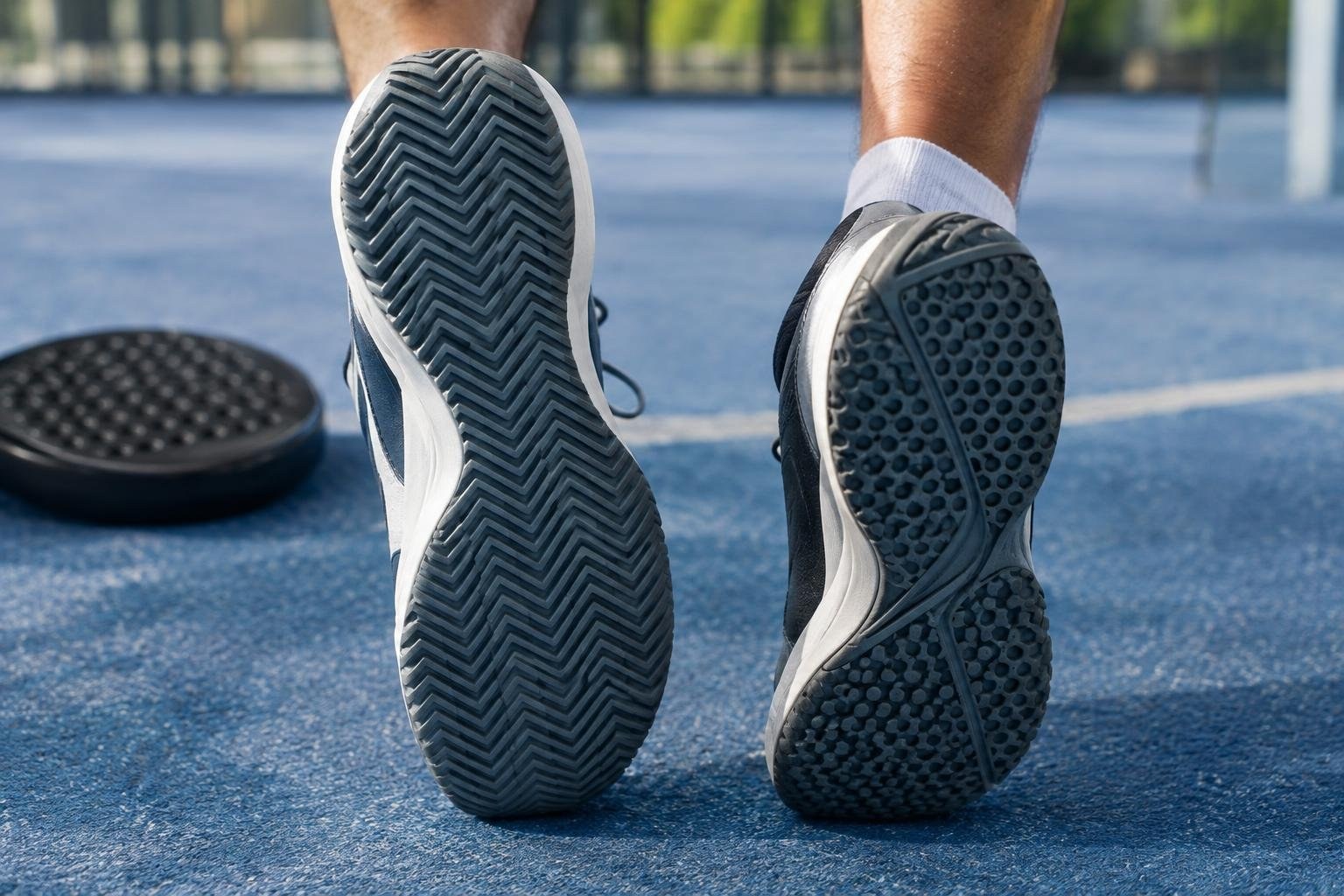
- Compare outsole patterns. Herringbone is described as a blend of grip and durability for indoor or harder surfaces. Omni may offer extra bite on sandy artificial turf.
- Check fit and stability. The shoe should feel secure as you move sideways. Compare the cushioning and reinforcement as well as length and width.
- Set a realistic budget. Use published price tiers as a starting reference, then check the actual model and local price.
- Review exchange terms. If buying online, understand the seller's return policy before wearing the shoes on court.
For someone who plays on several types of court, prioritize the surface used most often and consider whether a single outsole is a practical compromise. Do not buy based on a surface description alone if your club can clarify the court's actual condition.
Signs your current shoes may not be right for you
It may be time to reconsider your footwear if your current shoes feel unstable during side steps, do not feel comfortable through a normal session, or have an outsole that seems poorly matched to the court. Treat these as reasons to inspect fit and condition, not as a diagnosis or proof that a particular shoe will solve a problem.
Padel shoe guidance highlights comfort and lateral stability because players make fast movements across the court. Dedicated models may also include cushioning systems and reinforced structures. If you notice discomfort or a persistent concern, stop using footwear that feels unsafe and seek appropriate professional advice rather than assuming a shoe change will address a medical issue.
Before replacing a pair, check whether the issue is the fit, the surface, or wear. A shoe that feels fine while standing still may feel different when you move. Try controlled side steps and changes of direction in a safe setting, and pay attention to whether the foot feels held securely.
Cost and pricing considerations
Price depends on the shoe and where and when you buy it. Published buying guides place some options in a $70 to $100 tier, describe options around $100 to $140, and cover products from about $70 to more than $160. These are guide-reported ranges, not a current price list or a guarantee of local availability.
Think about total value rather than the ticket price alone. A lower-priced pair may be sufficient if it fits and suits your court. A more expensive option is worth considering only if the features, comfort, or durability matter to your use. Check whether a listed price is for the current version, whether shipping or taxes apply, and whether the seller accepts returns.
As prices and product ranges change, compare current listings in your location before deciding. Do not treat a model's placement in a guide or a higher price as evidence that it will fit your foot better.
Factors that affect your choice
Several factors affect which shoe is a good fit for your needs. The most useful are the court surface, foot shape and fit, how secure the shoe feels in lateral movement, comfort, and how frequently you play. Cushioning and reinforcement are additional features worth comparing because padel footwear guides identify them as part of shoe support and movement design.
- Surface: Outsole choice should reflect the courts you use most.
- Fit: A shoe that pinches, slips, or feels uncomfortable is a poor choice even if its feature list looks strong.
- Movement: Consider lateral stability and whether the shoe feels secure through side steps and direction changes.
- Use: Regular players may give durability more weight; occasional players may prioritize comfort and value.
- Budget: Decide what you can spend before comparing features, and check current prices rather than relying on old guide tiers.
These are decision factors, not a formula that ranks every shoe for every player. Your own fit test should carry more weight than a generic recommendation.
Sole options and footwear comparisons
For outsole, compare herringbone and omni-style patterns according to your court. The cited footwear guide describes herringbone as a versatile balance of grip and durability for indoor or harder surfaces, while omni can offer extra bite on sandy artificial turf. This is a starting point, not a guarantee of performance on every court.
| Choice to compare | May suit | What to check |
|---|---|---|
| Herringbone outsole | Indoor play or harder surfaces | Whether the court surface and your movement feel compatible |
| Omni-style outsole | Frequent play on sandy artificial turf | Whether the surface is actually sandy and the shoe fits securely |
| General court shoe | Players comparing alternatives to dedicated padel footwear | Lateral stability, cushioning, outsole, and fit rather than category name alone |
Dedicated padel shoes are designed with court-specific outsoles and features for lateral movement, but that does not mean every dedicated model is right for every player. Compare actual construction and comfort instead of assuming that a category label settles the decision.
What to expect when trying and buying shoes
There is no evidence-based universal break-in period or replacement timetable in the material reviewed. Plan to try shoes on before an important match or event, and allow enough time to check fit and exchange them if needed. A careful trial reduces the chance of discovering an obvious comfort issue when you are relying on the shoes.
When testing a pair, wear the socks you expect to use for padel. Check that the fit feels comfortable while standing, then walk and make controlled lateral movements. Do not keep a pair that feels unstable or painful simply because a guide recommends the model. If ordering online, read the seller's return conditions before using the shoes on court.
Results are personal: two players may prefer different cushioning or fit, even when they play on the same surface. Use recommendations to create a shortlist, then let your comfort and the court conditions guide the final decision.
How to choose a trustworthy seller or adviser
For a footwear purchase, choosing a qualified provider means choosing a seller or specialist who can give accurate product information and clear buying terms. Look for a complete description of the outsole and intended surface, available sizes, return or exchange conditions, and a way to ask fit questions. If you try shoes at a padel club or specialist shop, explain which courts you use and ask how the options differ.
Be cautious of sales language that promises a shoe will prevent injury, guarantees a particular performance result, or is “best” for every player. Compare features such as fit, lateral stability, cushioning, reinforcement, and sole type. No single shoe suits every player.
When checking a product recommendation, ask what it is based on. A useful answer explains the intended court surface and who the fit or features may suit, while acknowledging that individual comfort varies.
Safety, warranties, and credentials to check
For a safe purchase, focus on fit, the court surface, product description, and the seller's exchange and warranty terms. Read the terms directly because coverage varies by seller and product.
For on-court comfort, compare lateral stability, cushioning, and the outsole. Shoe guides identify these as relevant design features, but no shoe should be treated as a guarantee against ankle sprains or other injuries. If a shoe feels unstable, causes pain, or seems unsuitable for your movement, stop and reassess rather than pushing through.
A warranty is not a substitute for checking fit or understanding how the seller handles defects and returns. Keep proof of purchase and review the applicable terms before removing tags or using the shoes on court.
How to save money without compromising the decision
To save without making a careless choice, start with your most common court surface and avoid paying for features you do not need. Compare several options in the same price range, check whether an earlier model still meets your needs, and compare the final price after delivery and taxes. Published buying guides include price tiers around $70 to $100 and $100 to $140, but these should not be treated as current offers.
Look for comfort and suitability before branding or appearance. A shoe that fits well and matches the surface may be a better value for you than a more expensive pair with features you will not use. If possible, try the shoe on or choose a seller with clear exchange terms.
Do not save money by choosing footwear that feels unstable or by ignoring a mismatch between the outsole and court. If your budget is limited, narrow the search to dependable fit and appropriate use rather than buying the cheapest pair without checking those basics.
Mistakes, red flags, and a buying checklist
Avoid common buying errors by using this checklist before checkout:
- Do not choose by appearance alone. Check fit, support, and outsole.
- Do not assume one sole suits every court. Match the pattern to the surface you play on.
- Do not equate price with fit. A more expensive shoe may still feel wrong on your foot.
- Do not rely on a stale price or model review. Confirm the current version, local price, and return conditions.
- Do not accept injury-prevention promises as guarantees. A shoe's features cannot promise that an injury will not happen.
- Do not ignore discomfort during a trial. Reconsider the fit before using the pair in a match.
Before buying, be able to answer three questions: Which surface do I play on most? Does this shoe feel secure and comfortable when I move laterally? Can I return or exchange it if the fit is wrong? If the answers are clear, you have a more reliable basis for choosing than a product ranking alone.
Frequently asked questions
Do I need shoes made specifically for padel?
Not necessarily. Dedicated padel shoes are designed with court movement in mind, including lateral support and outsoles intended for court traction. If you play often, compare them with other court shoes based on fit, stability, sole suitability, and comfort rather than the label alone.
Which sole is best for padel shoes?
Herringbone is a versatile option to consider, particularly for indoor courts or harder surfaces. An omni-style outsole may offer more bite on sandy artificial turf. Check the actual court surface and ask the venue what works well there before choosing.
How much should I spend on padel shoes?
Published buying guides place some options around $70 to $100 and others around $100 to $140, as well as guides covering shoes above those ranges. These are guide-reported tiers, not guaranteed current prices. Check local listings, model year, and return terms before buying.
What should I look for when buying padel shoes?
Prioritize a secure, comfortable fit, lateral stability, and an outsole suited to your court. Cushioning and reinforced areas may also matter for your comfort and movement. Try the shoes on if possible and compare them by how they feel, not just by feature lists.
Can I use tennis shoes for padel?
They can be an option, but suitability depends on the shoe's fit, stability, outsole, and the surface you play on. Compare those features with dedicated padel shoes instead of relying on the tennis label by itself.
How often should I replace padel shoes?
The evidence here does not establish a fixed lifespan. How long shoes remain comfortable and suitable will depend on use and wear. Check the outsole and upper regularly, and reassess grip, fit, and support if the shoes no longer feel secure.
People Also Ask
What are the best shoes for a beginner in padel?
A comfortable court shoe with suitable grip, secure fit, and lateral stability is a sensible starting point. Compare dedicated padel footwear with other court shoes and prioritize how the shoe feels on your foot.
Are herringbone soles good for padel?
Herringbone soles are presented as a versatile choice for indoor courts and harder surfaces. On sandy artificial turf, an omni sole may provide extra bite. Match the sole to the specific court you use.
Are omni soles better for sandy padel courts?
Omni-style outsoles may be worth considering if you play mostly on sandy artificial turf. Court conditions vary, so confirm the surface and ask the facility what footwear performs well there.
What features matter most in padel shoes?
Look for a secure fit, side-to-side stability, comfortable cushioning, and an outsole appropriate to your court. Reinforcement around areas that experience movement may also be a useful feature to compare.
Are expensive padel shoes worth it?
Some buying guides reviewed list entry options around $70 to $100, with another tier around $100 to $140. Actual current prices vary by location, model, and retailer, so treat those guide ranges as reference points rather than quotes.
Can I play padel in tennis shoes?
A court shoe may work if it fits well and provides suitable grip and lateral support for the surface. Compare its outsole and structure with dedicated padel shoes, and do not assume that every tennis shoe is interchangeable.
How do I choose a sole for padel shoes?
Use the surface you play on most often as a starting point: compare herringbone for indoor or harder courts with omni for sandy artificial turf. Then choose based on fit, stability, and comfort.
The best padel shoes are the ones that fit securely, feel comfortable through lateral movement, and suit the surface you play on. Start with fit and stability, then compare outsole, cushioning, durability, and price. Try options where possible, check the return policy, and do not assume the most expensive or most heavily promoted shoe is right for you. A considered choice can help you move confidently and enjoy your time on court.
Your next step
Compare your priorities, explore more padel equipment guidance, and make an informed choice before you buy.
Last reviewed and updated October 8, 2026 by the Major League Padel Editorial Team.
Sources
- The Ultimate Guide to Choosing the Best Padel Shoes in 2025 – Padel Market
- Best Padel Shoes (2026): Buyer's Guide – Padelmarket USA
- The padel shoes buying guide
- Best Padel Shoes 2025: Complete Buying Guide for Every Court Surface | Rulo Blog
- Best Padel Shoes 2026: Complete Buying Guide
- PADEL SHOES HUB: Reviews, Rankings & Buying Guides – Best Padel Life
- Best Padel Shoes 2026: Buyer's Guide & Top Models – Padel Market
- Best Padel Shoes 2026: Complete Buying Guide & Top 10 Reviewed | padellog