
Choosing a padel racket can feel complicated because product descriptions emphasize shape, weight, balance and materials, while none of those features matters in isolation. The right choice is the one you can move comfortably and control across the shots you actually play. For many beginners, a round shape is a forgiving place to start; players with more consistent timing may prefer the feel of a teardrop or diamond model. Use this guide to compare the practical tradeoffs, assess comfort, and make a confident buying decision without assuming that the most expensive or powerful racket is automatically right for you.
What choosing a padel racket involves
Choosing a racket means matching its handling and feel to your needs, rather than picking a model based on a single feature. Compare the shape, balance, weight, materials and handle, then consider how those choices might affect the shots you play most. Shape and balance can influence control and maneuverability, while weight has no universal ideal and should be judged against your own build, style and comfort.
A useful process is to set a budget, identify what you want to improve, narrow the options to a few suitable models, and test them if possible. A racket is a tool, not a shortcut: the aim is a comfortable, dependable feel that supports practice and match play. Guides from racket brands and padel resources consistently recommend considering multiple characteristics together rather than treating any one as decisive.
Signs your current racket may not suit you
You may want to compare rackets if your current one feels hard to maneuver, uncomfortable in the hand, or difficult to control consistently. Those experiences do not automatically mean that the racket is at fault: technique, timing and familiarity also affect shot quality. Treat them as prompts to investigate fit, not proof that you need a more expensive model.
Ask yourself what happens across different situations. Does the racket feel manageable on volleys and defensive shots as well as overheads? Can you prepare comfortably, and does the handle feel secure? If the discomfort or difficulty persists, try a different weight, balance or shape and consider seeking coaching advice. Handle comfort and racket dimensions matter to precision and ease of use, so they belong in that assessment.
Compare round, teardrop and diamond shapes
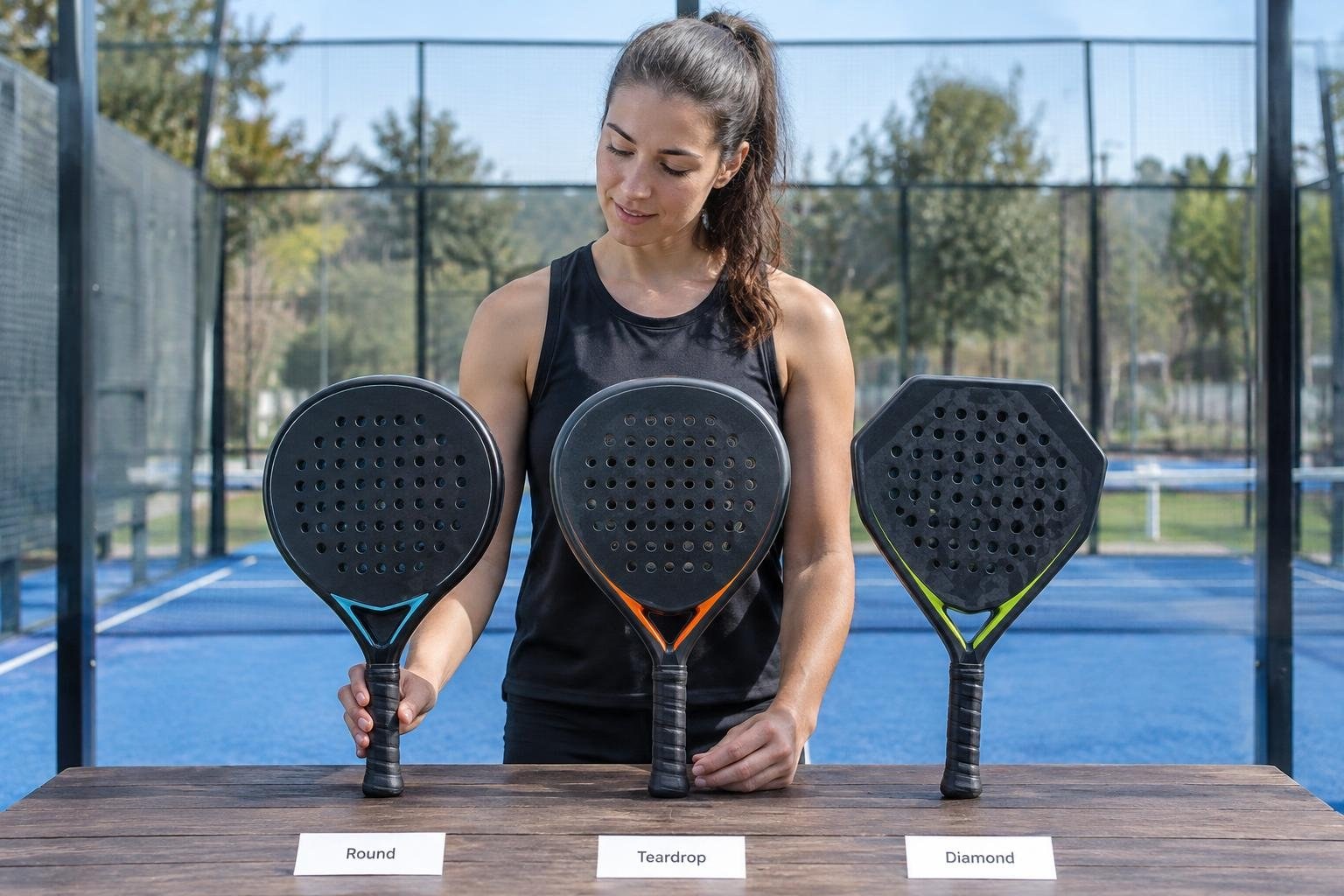
Shape is a helpful first filter, but the label alone does not determine how a particular racket will play. The broad comparison is about sweet spot and balance: round rackets tend to favor control, teardrop rackets often occupy a middle ground, and diamond rackets tend to place the sweet spot higher and can feel more demanding to control.
| Shape | General feel to consider | Who might investigate it |
|---|---|---|
| Round | Larger sweet spot and lower balance are commonly associated with control and a more forgiving feel. | Beginners or players who prioritize control and maneuverability. |
| Teardrop | Often described as a middle-ground shape, though sweet spot and balance can vary by model. | Players looking for an all-round feel who are comfortable testing the specific racket. |
| Diamond | Higher sweet spot and head momentum may make precise timing and control more demanding. | Players who already feel confident controlling their racket and want to assess a more head-heavy feel. |
For a new player, a round racket is a practical starting point because its larger sweet spot and lower balance are associated with control. A teardrop can also be worth trying; descriptions of its sweet spot and technical demands vary, so do not assume every model in that category feels the same. If you are still developing timing and control, test a diamond model carefully rather than choosing it only for its power-focused image.
Assess weight, balance and maneuverability
Racket weight has no universally correct setting. A player’s physical comfort and style both matter, so compare the way a model moves rather than treating its listed weight as a score. One source describes 340 to 375 grams as a common range for adult rackets, but that is a broad reference range, not a recommendation for every person.
Balance describes how the racket’s weight is distributed and contributes to how it feels during a swing. A lower balance is associated with a more maneuverable, control-oriented feel; a higher balance can create more head momentum but may feel harder to move quickly. An even balance is commonly positioned as a middle ground for adaptable players.
When comparing options, make several relaxed practice swings and imagine handling quick exchanges as well as overheads. If your arm or shoulder feels strained, do not assume that more weight or head momentum is a benefit. Comfort and control should remain part of the decision.
Compare materials and secondary design features
Materials influence how a racket feels, but a material label cannot tell you whether a model is right for you. Fiberglass is described as lighter and more flexible, qualities that may appeal to players seeking comfort and control. Carbon fiber is described as stiffer and durable, and is commonly used in higher-end rackets. These are general material characteristics, not guarantees about every racket’s performance or quality.
Consider materials after narrowing your choice by handling and playing needs. If you prefer a more flexible feel, compare fiberglass options. If you want to assess a stiffer response, compare carbon-fiber models. A racket’s overall construction and your own preferences also matter, so avoid buying based on the face material alone.
Hole patterns are another product detail that may affect feel, but the available guidance does not support a universal rule that one pattern is best. Treat it as a secondary comparison after shape, balance, weight and comfort.
Check the handle and grip fit
Handle comfort deserves a place on your shortlist. Handle size and length can affect comfort and precision, so hold a racket before buying if you have the opportunity. A grip that feels awkward or insecure can undermine confidence even if the shape and balance look suitable on paper.
Check that you can hold the handle comfortably and make a relaxed swing without gripping excessively. Compare how the handle feels when preparing for a volley and when moving the racket overhead. This is a practical fit check, not a medical test; if using a racket causes persistent pain, stop and seek appropriate professional advice rather than trying to solve the problem through equipment alone.
Understand cost and compare value
There is no supported single price that applies to every market, seller or model, so compare the actual options available where you shop. Look at the total value and fit, not just the ticket price. A lower-cost racket that feels manageable may be a better purchase than a more expensive model whose balance or shape is difficult for you to control.
Compare like with like: note shape, weight, balance, materials, handle comfort and the seller’s terms. If a price difference is being justified by a particular material or design feature, decide whether that feature addresses a real preference. Carbon fiber is commonly used in higher-end rackets, but that fact alone does not establish that the racket will suit your game.
Before paying, check what the seller says about returns, exchanges and warranty coverage. Policies can differ, so confirm the terms for the specific item and location rather than assuming that a racket can be returned after use.
Factors that should guide your choice
Several factors combine to determine whether a racket feels like a good match. Use these as a comparison checklist, not as independent rules:
- Experience and timing: a player still building control may prefer a more forgiving feel over a demanding shape.
- Preferred balance: decide whether a lower, even or higher balance feels manageable to move.
- Physical comfort: consider whether the racket’s weight and handle feel comfortable over repeated swings.
- Playing style: think about the balance of control and attacking shots you want to develop.
- Materials and construction: compare the feel rather than assuming a material guarantees a result.
- Budget and seller terms: compare the total purchase conditions alongside the racket’s features.
These factors interact. For example, a shape that sounds appropriate may still feel awkward if the racket is poorly balanced for you or the handle does not fit your hand. A complete assessment is more useful than choosing by skill label alone.
What to expect when testing rackets
To compare rackets efficiently, use the same simple sequence with each model. First, hold it and check handle comfort. Next, make gentle swings to assess balance and maneuverability. If you can test rackets on court, try a range of ordinary shots instead of judging from a single hard hit: include controlled groundstrokes, volleys, defensive contact and an overhead movement.
- Write down what you want the racket to help with, such as control, comfort or a more attacking feel.
- Choose a small group of options with different shapes or balances that remain within your budget.
- Handle each option and note whether the grip feels secure and the racket easy to move.
- Where possible, test them using comparable shots and conditions.
- Choose the model that feels comfortable and repeatable, then confirm the seller’s terms.
There is no fixed amount of time required to make a good choice. If you cannot test rackets on court, avoid rushing: compare specifications, handle the models in person where possible and ask about a demo or return option before committing. Product descriptions can help narrow a shortlist, but they cannot substitute for your own comfort assessment.
How to choose a qualified racket adviser
A qualified provider for racket advice is someone who can explain the differences between options and connect those differences to your needs without insisting that one model suits everyone. A specialist retailer or knowledgeable coach may help you compare shape, balance, weight, materials and handle fit. The key is clear, practical advice, not a claim that a particular racket will automatically transform your game.
Tell the adviser your playing experience, what feels uncomfortable about your current racket, what you want to improve and your budget. Ask why they recommend a model, what tradeoffs it has and whether you can handle or try it. A useful recommendation should make those tradeoffs understandable and leave room for your preferences.
Be cautious if advice focuses only on a brand, a high price, a professional player’s equipment or a promise of more power. A racket should be selected for your own comfort and style, not borrowed from someone with different needs.
Safety, condition and warranty checks
A racket purchase does not involve a general permit or professional credential in the information available here. The practical checks are product condition, safe handling and the seller’s written policies. Inspect the racket for visible damage before use, and confirm how the retailer handles returns, exchanges and warranty claims. Do not assume that coverage applies to damage from normal play or that a used racket has the same terms as a new one; read the conditions for the exact purchase.
For comfort, check that the handle feels secure and the racket is manageable through a relaxed swing. Handle size and length can affect comfort and precision. If you experience persistent pain or discomfort, pause play and consult a suitable health professional rather than relying on a product description to diagnose or fix it.
Ways to save without compromising fit
Save money by getting the fit right the first time. Set a budget before comparing models, and shortlist rackets by useful features rather than by promotional language. If control and comfort are your priorities, start by handling suitable round or balanced options instead of paying more for features you may not value.
Ask whether a retailer or club offers a racket demo, trial or a clear exchange policy. Confirm any conditions before relying on them. If you have access to a coach, ask for an assessment of your needs before shopping, rather than buying a new racket to address a technique issue. Comparing materials and balance across several options can help you decide whether a premium feature is worth the extra cost to you.
Avoid saving money by purchasing a damaged or poorly fitting racket without understanding the risks and seller terms. The goal is a good-value racket you can use comfortably, not the cheapest listing.
Mistakes and red flags to avoid
Common buying mistakes are usually shortcuts in the decision process. Avoid these:
- Choosing only by shape: models within a shape category can differ. Check balance, weight and feel too.
- Assuming heavier means better: there is no universally optimal weight; comfort and playing style matter.
- Buying for power before control: a high sweet spot and head momentum may be harder to manage while timing is still developing.
- Overlooking the handle: grip comfort and dimensions affect how the racket feels in use.
- Treating a material as a guarantee: fiberglass and carbon fiber describe broad properties, not a personalized performance result.
- Skipping seller terms: check return and warranty conditions before purchase, especially if you cannot test the racket.
- Expecting equipment to replace practice: racket choice supports play but does not guarantee better technique or results.
When a recommendation sounds absolute, ask what tradeoff is involved and whether it applies to your level, comfort and playing style. A sound decision should be explainable in those terms.
A final checklist before you buy
Before buying, make sure you can answer these questions:
- Does the racket feel comfortable in my hand?
- Can I move it easily through the shots I use most?
- Does its shape and balance suit my current control and timing?
- Have I considered weight and materials alongside the shape?
- Have I compared the price with genuinely similar options?
- Do I understand the seller’s return, exchange and warranty terms?
- Am I choosing for my own game rather than a professional’s or a marketing claim?
If several answers are uncertain, delay the purchase, ask for clarification or compare another model. A short, deliberate check can be more valuable than chasing a specification that sounds impressive.
Frequently asked questions
What is the best padel racket shape for a beginner?
A round racket is a sensible starting point for many beginners because its lower balance and larger sweet spot can make controlled contact more forgiving. A manageable weight and comfortable grip matter just as much. Try the racket in hand if you can, and do not choose a demanding model only because it promises more power.
How heavy should a padel racket be?
There is no single ideal weight. Your strength, comfort, timing and playing style all matter. One guide gives 340 to 375 grams as a common range for adult rackets, but that range is not a personal prescription. Compare how a racket feels during repeated swings and overhead preparation.
What is the difference between round, teardrop and diamond padel rackets?
A round racket typically places more emphasis on control, with a larger sweet spot and lower balance. A teardrop racket often sits between round and diamond shapes, but models differ. Diamond rackets tend to have a higher sweet spot and can feel more demanding to control, especially for players still developing timing.
Is a carbon-fiber padel racket better than a fiberglass one?
Not necessarily. Carbon fiber is often used in stiffer rackets, while fiberglass is more flexible. Those material descriptions do not make one universally better: comfort, playing level, racket construction and personal feel all affect whether a model suits you. Test a racket if possible rather than buying by material label alone.
When should I replace or change my padel racket?
If your racket feels uncomfortable, difficult to maneuver or poorly matched to the shots you are trying to play, compare alternatives before replacing it. A different shape, balance, weight or handle feel may help. A racket alone cannot correct technique, so consider whether lessons or practice would address the issue better.
People Also Ask
Which padel racket shape offers the most control?
Round rackets generally prioritize control and have a larger, more forgiving sweet spot. The best choice still depends on the model and how it feels to you.
Should I choose a lighter or heavier padel racket?
No. Weight should be considered alongside balance, handling comfort, strength and playing style. A racket that feels comfortable through repeated swings is more useful than a number chosen in isolation.
Can a beginner use a teardrop padel racket?
Often, yes: many players still developing timing may find a round racket easier to manage. Some teardrop models can also suit developing players, so compare actual balance and feel rather than relying on the shape name alone.
What does balance mean on a padel racket?
A higher balance point can make a racket feel more head-heavy, while a lower balance can feel easier to maneuver. Test how the racket behaves during your normal shots before deciding which sensation you prefer.
How should a padel racket grip feel?
Check that the handle feels secure and comfortable, and that you can move the racket without straining. Handle size and length can affect comfort and precision, so treat grip fit as part of the selection rather than an afterthought.
What should I check before buying a padel racket?
Compare the racket’s shape, balance, weight, materials, grip comfort and seller terms. If you can, handle or test it before purchase and decide based on a range of shots, not one swing.
Choosing a padel racket is a fit decision, not a search for one universally best model. Start with control, comfort and reliable contact, then compare shape, balance, weight, materials and grip against your current level and preferred style. If possible, handle or try several rackets before buying, and check the seller’s return and warranty terms. A racket that feels manageable through volleys, defensive shots and overheads is a more useful choice than one selected for a single impressive specification.
Your next step
Compare your racket options and keep learning with the padel guides on ML Padel.
Last reviewed and updated October 8, 2026 by the Major League Padel Editorial Team.
Sources
- How to choose a padel racket: Expert guide – Macron International
- How to Choose a Padel Racket: The Ultimate Guide (2023)
- How to choose your padel racket
- How to Choose the Right Padel Racket – Racket Central
- How to choose a padel racket | STIGA Sports
- Guide on how to choose a padel racket | Playtomic
- How to Choose A Padel Racket | Wilson Sporting Goods
- How to choose the right padel racket: The ultimate guide