
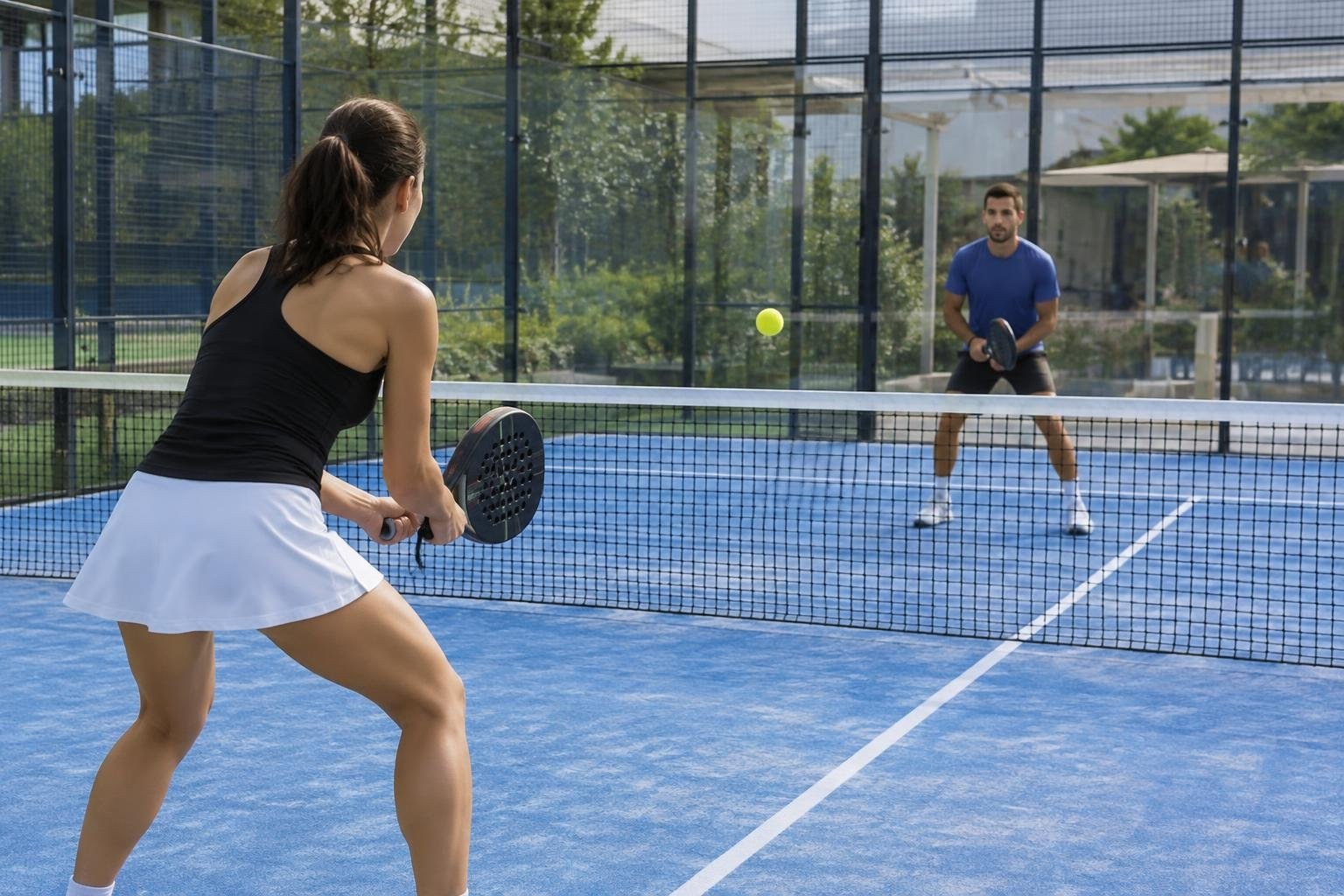
Padel is a doubles racket sport played on an enclosed court where walls can keep a rally alive. If you are learning how to play padel, start with three ideas: serve underarm into the diagonal service area, return the ball over the net, and move with your partner rather than chasing every shot alone. You can begin with a club session and rental gear, then build your understanding of the walls, scoring, and tactics through play.
What to know before your first padel game
Padel is a racket sport that combines familiar rally and scoring ideas with an enclosed court and playable walls. Beginner guides commonly cover the court, equipment, basic rules, scoring, serving, and wall play. You do not have to master every shot before your first game: learn the basic sequence, then improve through short, manageable practice sessions.
The most useful beginner mindset is to keep the ball in play. Aim for a controlled return, notice where your partner is, and treat the walls as part of the rally rather than a barrier. This makes the game easier to follow and gives you time to learn.
How the padel court and walls work
Padel is generally played as doubles on an enclosed court divided by a net. Each side has service areas, and the surrounding glass or mesh can affect the ball’s path. The enclosure is what makes the sport feel different from a conventional open-court rally.
After the ball lands on your side, it may rebound from a wall and still be playable. Letting it pass can give you a more comfortable contact point, but waiting too long can leave you without a good return. Watch the ball through its bounce, decide early whether to play it before or after the wall, and avoid turning your back on the rally.
For a first session, focus on reading the ball rather than trying complicated wall shots. Ask the coach or club staff to explain any court-specific boundaries and booking rules before play.
Padel scoring explained
Padel uses tennis-style scoring: points are called 15, 30, 40, and game. A set is won by the first team to reach six games with a two-game lead; at 6–6, a seven-point tiebreak is played. Matches are often best of three sets, though formats can differ by club, event, or competition.
Before starting, agree who will call the score and confirm the match format. In a casual game, clear calls help both pairs stay on the same point and avoid disputes. If you are entering an organized event, follow its current rules rather than assuming every format is identical.
Serving and returning: the first skills to learn
A padel serve starts each point. In the standard beginner explanation, the server bounces the ball and hits it underarm toward the diagonal service box on the other side. The receiving pair then returns it, and the rally continues across the net.
Keep your first serves simple. Focus on a repeatable bounce and a controlled direction instead of trying to surprise your opponents with pace. If you are unsure whether a serve was legal, pause and check the current rules used by your club or competition. A coach can demonstrate the service motion and explain how faults are handled.
On the return, give yourself time. A safe, deep return is usually a more useful early goal than a risky attempt to hit a winner. After making contact, recover to a position where you and your partner can cover the next shot together.
Simple padel tactics: move together and value control
In doubles, court coverage is shared. Stay aware of your partner and adjust your position with them: if one player moves forward, the other should avoid leaving a large gap behind. Talk briefly and clearly, especially when both players could reach the same ball.
At the start, try to keep the ball in play with compact forehands and backhands. Use a lob, a higher shot that travels over opponents, when you need time or want to make opponents move back. Do not lob automatically: a short or predictable lob can give the other team an attacking opportunity.
When you are defending near the back, a wall rebound can give you another chance to return the ball. When you are closer to the net, prioritize a balanced stance and a controlled volley rather than swinging at full power. The aim is to choose a shot that suits your position, not to hit the hardest ball possible.
A practical first-session plan
- Start with the basics. Ask for a beginner introduction or read the club’s rules before you book. Learn how scoring, serving, and wall rebounds work.
- Try a short rally. Begin with gentle feeds or cooperative hitting so you can track the ball and get used to the court.
- Practice the serve and return. Repeat the sequence slowly, then play out a few points with relaxed goals.
- Add partner movement. Agree on simple calls and move as a pair between defense and attack.
- Play a short set or format offered by the club. Focus on applying the basics, not on winning every point.
Beginner guides describe padel as a sport new players can approach by learning the core rules, equipment, and court behavior. A gradual introduction can make the first game less confusing than trying to learn every stroke at once.
When a lesson or extra guidance may help
A beginner session or introductory lesson may help if you find the rules confusing, repeatedly misread wall rebounds, or feel unsure about where to stand with a partner. These are normal learning challenges, not signs that you are unsuited to the sport.
Consider asking for help if you are struggling to serve consistently, avoid collisions, or understand when to move forward and when to defend. A short explanation or demonstration can make practice more purposeful. If you have pain or an existing injury concern, do not treat a technique tip as medical advice; pause and seek appropriate professional guidance.
For equipment or court-access questions, staff at the facility can explain what is available there. For technique and tactics, look for an instructor who can observe your play and adapt explanations to your experience.
Equipment for beginners: what to bring and what can wait
You need a padel racket and a ball to play, but you may not need to purchase either before trying the sport. Ask whether your venue offers rental equipment and what the booking includes.
If you decide to buy a racket, consider comfort, ease of control, and how it feels during a few practice swings. Avoid choosing only by appearance or promises of extra power. If you already play another racket sport, remember that padel has its own court and wall-play demands, so a familiar style of play does not automatically make a particular racket the right fit.
Ask the venue what footwear is appropriate for its surface. For a first visit, bring water and comfortable clothing, and check whether the facility has any specific requirements before you travel.
Compare beginner lessons, group sessions, and casual play
There are several ways to start: book a beginner lesson, join an introductory group, arrange a casual game with friends, or attend a club session designed for new players. Availability and what each option includes depend on the venue, so compare details before paying.
| Option | May suit you if | Check before booking |
|---|---|---|
| Private lesson | You want individual feedback on serving, movement, or wall play | Instructor experience, session length, equipment, and cancellation terms |
| Group introduction | You prefer learning with other beginners | Group size, level, included equipment, and format |
| Casual game | You have players willing to keep the pace relaxed | Court access, booking arrangements, and whether rackets are available |
These are practical formats to ask about, not guarantees that every club offers them. Pick the option that matches how much instruction and structure you want.
Cost considerations: compare the full booking, not just the headline
There is no supported universal price for a padel lesson, court booking, or equipment rental. Costs depend on the venue and what is included, so check the total before confirming. Ask whether a quoted amount is for a full court or a participant, whether equipment is included, and whether there are extra charges or cancellation conditions.
If you are comparing lessons, look beyond the headline price. Consider session length, group size, coaching included, court access, rental gear, and whether the format is suitable for beginners. A cheaper option may not include the same services as another booking, so compare like with like.
For equipment, avoid treating a high price as proof that a racket is suitable for you. If rentals are available, trying the sport first can help you make a more informed purchase decision.
What to expect and how to plan your first visit
What you receive and how long a session takes depend on the club and booking type. A lesson may focus on instruction, while a court booking may simply provide access to play. Confirm the session duration, arrival time, equipment arrangements, and whether instruction or warm-up time is included.
For your first visit, allow time to check in, get familiar with the venue, and ask any equipment or rules questions. Do not assume that all clubs use the same lesson format or match length. If you are booking with other players, agree in advance on the session goal, such as practicing serves, learning wall rebounds, or playing a relaxed game.
How to choose a suitable coach or padel provider
Choose a coach or club that clearly identifies who will teach, what the session covers, and which level it is designed for. Ask how the instructor works with beginners and whether you will get time to practice the serve, scoring, wall play, and partner movement. A useful provider should be willing to answer these questions before you book.
Check current reviews or recommendations, but compare them with practical details: availability, location, equipment, group size, accessibility, and booking conditions. If credentials matter to you, ask what relevant coaching qualifications or experience the instructor holds and how you can verify them. Do not assume a particular certificate is required unless the applicable governing body or local rules confirm it.
If the provider cannot explain the session, fees, or cancellation terms clearly, compare other options. You are choosing an introduction that suits your goals, not simply the first available slot.
Safety, club rules, qualifications, and booking terms
Rules, facility policies, and competition requirements can differ, so check the current information for the venue or event you plan to use. Ask about court access, booking conditions, footwear, equipment, and any age or supervision requirements that apply to your group.
For safety, use equipment and court space as directed by the facility, stay aware of your partner and opponents, and stop if you feel unwell or develop pain. If you have a health concern, seek advice from an appropriate health professional rather than relying on general sports guidance. Before paying for a course or membership, read the written terms, including cancellation, rescheduling, and any refund policy.
Common beginner mistakes and a before-you-book checklist
- Hitting too hard: power is not a substitute for control. Use a comfortable swing and aim to keep the rally alive.
- Ignoring the walls: trying to play every ball before it reaches a wall can make you rush. Track the bounce and decide whether waiting gives you a better return.
- Moving alone: chasing the ball without checking your partner can open space. Communicate and recover together.
- Buying gear too soon: you may not yet know what feels comfortable. Ask about rental equipment before making a large purchase.
- Booking without checking details: unclear session length, equipment, cancellation terms, or skill level can lead to avoidable surprises.
Before you book: confirm the session is beginner-friendly, ask what is included, check equipment availability and venue requirements, and agree on a simple goal for your first game. Then focus on learning one skill at a time.
Factors that shape your first padel session
For a beginner, planning a first session that fits your experience and goals involves a few practical choices:
- Your familiarity with the basics: If serving, scoring, or wall rebounds are new to you, allow time to learn them before focusing on tactics.
- The session format: A lesson, group introduction, and casual game offer different amounts of instruction and structure. Check what the session includes before booking.
- Equipment and court arrangements: Confirm what you need to bring and whether the venue provides equipment. Facility rules and booking details can differ, so check them in advance.
- Your first-session goal: A session focused on practicing serves may feel different from one focused on rallies or learning wall play. Agree on a simple goal with your group so you can concentrate on one skill at a time.
These factors can shape how prepared you feel and which skills you have time to practice. Beginner guides cover the core rules, equipment, serving, scoring, court, and wall play, making those useful starting points when planning your introduction.
Ways to reduce cost or save safely
You can keep the cost of trying padel manageable without buying equipment before you know what suits you. Ask the venue whether racket rental is available and what is included, then compare the total booking cost across beginner lessons, group introductions, and casual play. Check session length, group size, court access, equipment, and cancellation terms so you compare like with like.
Save on optional extras first, not on understanding the basic rules or using equipment that feels comfortable. If you decide to buy a racket later, prioritize comfort and control rather than assuming a higher price means a better fit. Ask the club about its equipment and booking policies before paying.
Frequently asked questions
How do you play padel for beginners?
Padel is commonly played in doubles, with two players on each side. Teams take turns serving and returning the ball, and a rally continues until a team cannot return it legally. The walls can keep the ball in play after it bounces on the court.
What is the scoring system in padel?
Padel uses tennis-style scoring: 15, 30, 40, and game. A team generally needs six games with a two-game lead to win a set; at 6–6, a seven-point tiebreak is played. Matches are often best of three sets, but formats can vary, so check the format before play.
How do you serve in padel?
A padel serve is hit underarm after the ball is bounced, toward the diagonal service box. For exact serve requirements and local competition formats, check the current rules used by your club or event.
Do I need to buy a padel racket before my first game?
No. A rental racket may be available at a club, so ask when booking. Comfortable movement-friendly shoes and suitable court clothing are also useful; check the facility’s requirements before you arrive.
Is padel difficult for beginners?
You do not need to master every wall shot first. Begin by letting the ball bounce, watching its path, and returning it with control. A beginner lesson or a relaxed game with patient players can help you learn the timing.
What is the main difference between padel and tennis?
Padel uses tennis-style scoring and some familiar strokes, but the enclosed court and playable walls change how rallies develop. Beginners should expect to learn when to let the ball pass to a wall and when to intercept it.
People Also Ask
What is padel and how is it played?
Padel is a doubles racket sport played on an enclosed court. Teams rally the ball over a net, and walls can be part of play after the ball has bounced on the court.
How long does it take to learn padel?
Most beginners can learn the basic serve, scoring, and rally idea in an introductory session. Comfort with wall rebounds and positioning takes practice, and progress varies with experience and playing frequency.
What should a beginner focus on in padel?
Start by getting the ball back safely and moving alongside your partner. Once a rally is established, try to create time and space rather than hitting every ball hard.
Can I play padel without owning a racket?
Ask the club whether racket rental is available and what is included in the booking. This lets you try the sport before deciding which equipment to buy.
What kind of padel racket should a beginner use?
Use a simple, comfortable racket if you are buying one, and prioritize control and ease of handling over maximum power. Try options in person if possible, since comfort is personal.
Do you need to know how to use the walls before playing padel?
No. The enclosure changes rally decisions, but you can start by learning to track the bounce and use a controlled return. A coach or patient playing group can help you understand wall rebounds.
Learning how to play padel is mainly about understanding the serve, keeping the ball in play, and moving with your partner. Start with a short beginner session, use rental equipment if available, and focus on control before power. As you gain experience, ask a coach or club to help you build confidence with the walls and choose the right next step. Explore beginner resources and compare ways to play through mlpadel.com.
Your next step
Explore padel apparel and the Major League Padel community.
Last reviewed and updated October 8, 2026 by the Major League Padel Editorial Team.
Sources
- How to Play Padel | The Beginners Guide | Powerleague
- r/padel on Reddit: Let's make a Padel for beginners guide (how to play)
- How to get started in padel | Beginner’s guide
- How-To Guides — padel.how
- Padel rules: The complete beginner’s guide | Babolat Official Website
- How to Play Padel: Getting Started Guide | SimplePadel
- How to Play Padel: Complete Beginner’s Guide to Rules, Scoring & Tips
- How to Play Padel: Complete Beginner's Guide 2026