
A padel racket is exposed to ball impacts, accidental contact with the court or fence, and the conditions in which you transport and store it. Good care cannot prevent every crack or performance change, but a few simple habits can help you avoid unnecessary wear and spot problems sooner. The most useful routine is straightforward: clean gently, protect the frame, avoid prolonged heat and direct sun, store the racket in a dry place, and investigate unusual sounds or changes in feel. This guide explains what to do yourself, when a professional assessment may be worthwhile, and how to think about costs without assuming every racket needs a repair or replacement.
What does padel racket care involve?
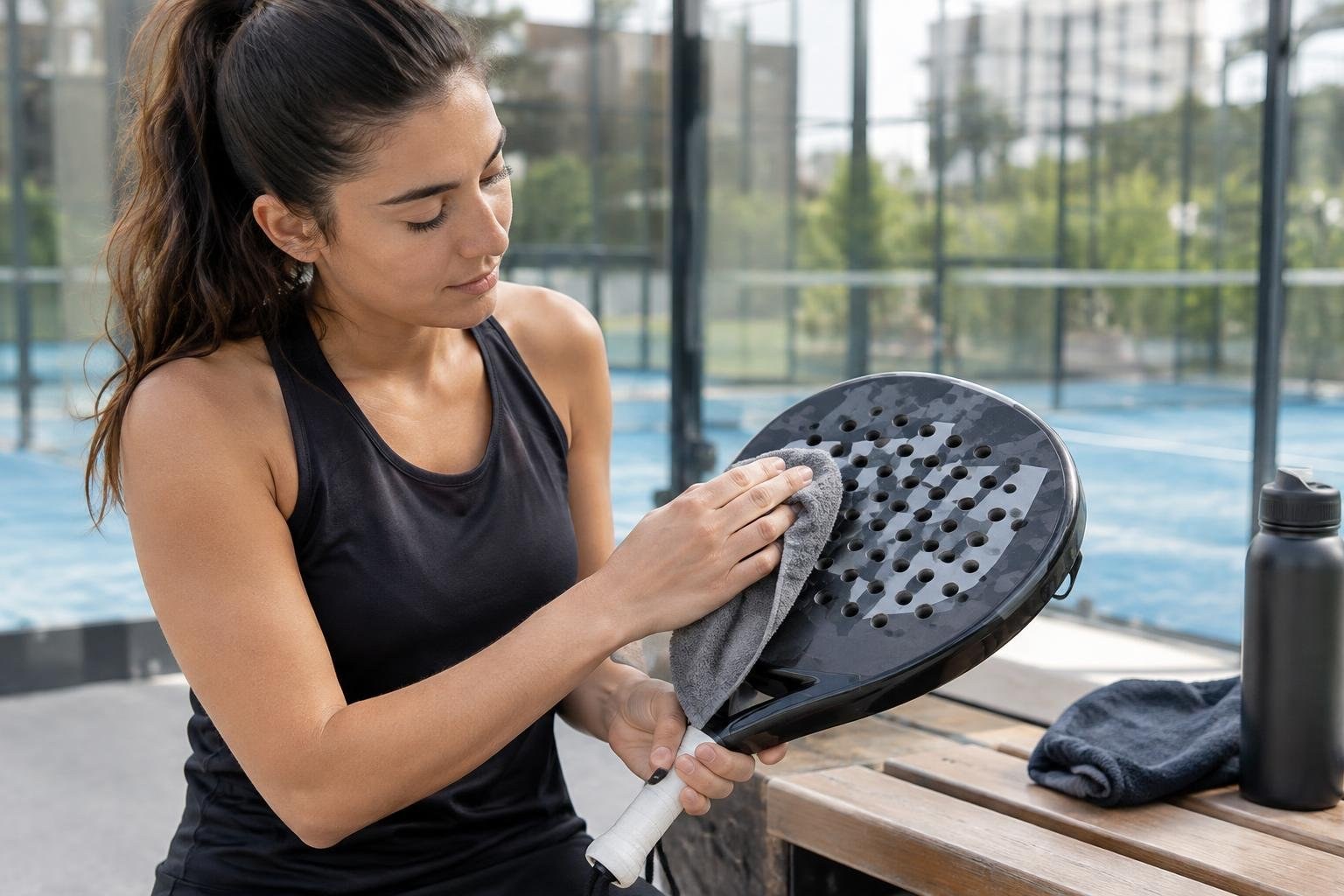
Routine racket care is mostly prevention, not a complicated servicing process. After a session, remove surface dirt with a soft, slightly damp cloth and dry the racket before storing it. Check the frame for fresh marks or damage, keep a protector strip fitted if you use one, and put the racket somewhere dry and ventilated. Avoid harsh chemicals, abrasive cleaners, and excessive water because they can damage racket materials.
- Wipe: Use a soft cloth and only enough water to dampen it.
- Dry: Do not put a damp racket straight into long-term storage.
- Look over the frame: Notice new cracks, impact marks, or a protector that has lifted.
- Store carefully: Keep the racket in a dry place where it will not be knocked over or crushed.
- Pay attention to play: Investigate new vibrations, internal noises, soft areas, or a clear performance change.
This basic routine is a sensible first step. It is not a substitute for an assessment if you suspect structural damage.
Why regular care matters
Care matters because damage and wear can affect how a racket feels and performs. A racket that is repeatedly knocked against a hard surface, left in unsuitable storage conditions, or cleaned aggressively is exposed to avoidable risks. Care will not make a racket indestructible, and normal use can still lead to wear, but simple habits help reduce preventable knocks and make changes easier to notice.
Think of care as three connected jobs: reduce avoidable impacts, protect the racket from poor storage conditions, and pay attention to signs that its behavior has changed. This approach is more useful than buying accessories without addressing how the racket is handled. It also helps you distinguish routine surface marks from symptoms that merit closer inspection.
Signs your racket may need attention
Consider a closer inspection or professional advice if the racket develops a new internal noise, unusual vibration, soft areas away from the sweet spot, or a noticeable loss of power. These are warning signs reported in racket-care guidance, not proof of a particular fault. Do not assume that one symptom identifies its cause.
Also check after a significant collision or if the frame shows a crack or other damage that appears more than cosmetic. If you are unsure whether a mark is superficial, avoid treating it as harmless simply because the racket still plays. A qualified assessment can help you decide whether continued use is appropriate.
Routine dirt or a scuffed protector is different from a suspected structural problem. Clean and inspect the former; take the latter seriously and ask an appropriate racket professional to look at it.
Options for preventing knocks: technique or a protector
Prevention starts with how you move and handle the racket. Avoid using it to scoop up a ball when you can pick the ball up with your hand or foot instead. During play, controlled movement is preferable to lunging in a way that drives the racket into the court or another hard surface. Some balls are not worth reaching if chasing them risks a collision.
A frame protector strip is another option. It is intended to take some contact before the frame does, and care guidance recommends fitting it firmly so it covers as much of the frame as practical. A protector is not a guarantee against damage: check that it remains secure, and do not rely on it to make careless impacts safe.
Choose prevention that addresses your actual habits. If accidental contact is the concern, focus on movement and frame protection. If storage is the issue, improve where and how the racket is kept before adding more accessories.
How to clean a padel racket safely
Use a soft, slightly damp cloth for ordinary surface dirt. Do not scrub with an abrasive material, apply harsh chemicals, or use more water than needed. The available guidance specifically warns against those cleaning choices because they can damage racket materials. Once clean, dry the racket and check it over before putting it away.
Keep cleaning proportionate. Stubborn marks do not automatically justify stronger chemicals or rougher scrubbing. If a mark remains, consult the racket maker’s care instructions before trying a different product. Avoid making assumptions about cleaners based on their use on other sports equipment.
Cleaning also gives you a regular moment to notice changes. Look for new damage and check whether the protector strip still sits securely. Cleaning is maintenance, not a repair method: do not try to hide a crack or suspected soft spot with a coating or patch.
How and where to store your racket
Store the racket in a dry, ventilated space, ideally where it is less likely to be knocked or crushed. A thermal cover is one suggested way to store and protect a racket. Do not treat a cover as permission to leave the racket in a hot car or in direct sun for long periods: care guidance warns that prolonged heat exposure can affect the racket’s core and frame.
Temperature advice also matters before play. One care source cautions against using a very cold racket because it may be more brittle and prone to cracking. If a racket has been exposed to an extreme temperature, allow it to return to ordinary conditions before use and inspect it for damage.
Keep the racket away from places where it can fall, be trapped under heavy items, or remain damp. Good storage is simple: dry, ventilated, protected from knocks, and not exposed to prolonged heat or direct sun.
Cost and pricing considerations
Care usually does not require a paid service. Wiping, drying, safe storage, and checking the frame are routine habits you can manage yourself. A protector strip or a suitable cover may involve an accessory purchase, while suspected structural damage may lead you to ask a racket professional about inspection or repair.
No supported standard price is available for protectors, covers, inspections, repairs, or replacement across locations and racket models, so avoid relying on a single quoted figure as universal. Ask what the charge covers, whether an inspection is separate from repair, and whether you will receive a recommendation before work begins. Compare the proposed cost with the condition and role of the racket rather than assuming repair is always cheaper or replacement is always necessary.
For a meaningful comparison, request itemized options where available: assessment only, a specific repair, or no repair if the damage cannot be addressed. Do not authorize a service based only on a vague promise to restore performance.
What affects the right care plan?
The right care response depends on what you notice. Surface dirt calls for gentle cleaning. A protector that is lifting may need refitting or replacement according to its instructions. A racket with unusual vibration, internal noise, soft areas, or a loss of power calls for closer assessment rather than more cleaning.
Frequency of play and handling affect wear, so the racket’s age alone does not tell the whole story. One published care guide offers an amateur lifespan estimate, but it also qualifies that estimate by how often someone plays. Treat it as a broad reminder that use matters, not as a dependable deadline for every player or model. Your racket’s actual condition and performance are more useful decision points.
Other considerations include how it was stored, whether it has suffered impacts, and whether the issue appears cosmetic or affects play. Because those factors vary, do not expect the same care plan or outcome for every racket.
What to expect, including timing and results
Care is usually quick: a gentle wipe and brief visual check can fit into your post-session routine. More time may be needed if you are assessing a suspected fault or arranging a professional opinion.
Expected results should also be realistic. Cleaning removes surface dirt; a protector can help shield the frame from some knocks; careful storage reduces exposure to avoidable hazards. None guarantees that an existing crack or internal problem will disappear, or that the racket will perform exactly as it did when new. Ask what a proposed repair is intended to address and what condition the racket may be in afterward.
If the problem is significant and you are unsure whether the racket is safe to keep using, do not let a quick turnaround promise replace a proper assessment.
How to choose a qualified racket professional
If a racket may need repair, look for a provider who handles padel rackets and can explain the proposed assessment in clear terms. Ask what they will inspect, whether they will contact you before undertaking paid work, and what outcome they expect. A useful professional should be able to distinguish a visible surface mark from a concern that needs closer evaluation without promising that every racket can be restored.
- Ask whether the service is an assessment, repair, or both.
- Request an explanation of the suspected issue and proposed work.
- Ask for the total cost and expected timing before authorizing work.
- Ask what happens if the racket is not considered repairable.
- Keep the maker’s care and warranty information available if relevant.
These are practical questions, not a claim that a particular license or certification is required.
Credentials, warranties, and safe use
Do not assume a provider has a required authorization or guaranteed warranty unless that information is confirmed for your location and service.
For safety, treat suspected structural damage differently from ordinary scuffs. Internal noises, unusual vibration, soft areas, or loss of power deserve attention; ask a racket professional before relying on a racket that may be damaged. Keep records of purchase and care instructions if you want to check the manufacturer’s warranty terms, and ask a repair provider to state any workmanship warranty in writing.
Warranty coverage can depend on the manufacturer’s terms and the circumstances of the damage. Read the applicable documentation rather than assuming that routine wear, accidental impacts, or attempted repairs are covered.
Ways to save safely on racket care
The safest way to avoid unnecessary spending is to begin with low-cost prevention: handle the racket carefully, use a protector if it suits your needs, clean it gently, and store it properly. Picking up the ball rather than scooping it with the racket, and avoiding risky lunges into hard surfaces, can reduce avoidable impacts without requiring a purchase.
Before paying for an assessment or repair, describe the symptoms and ask what the service includes. If the problem is only surface dirt, start with appropriate cleaning instead of buying a repair. If the frame may be damaged, do not try to save money by covering the problem or continuing to use the racket without understanding the risk. Compare a clear repair proposal with the racket’s condition and your needs, and ask whether an assessment can be provided before you commit to additional work.
Accessory purchases are optional tools, not substitutes for careful handling or safe storage. Buy only what addresses a real concern, and follow the product’s fitting or care instructions.
Mistakes to avoid and an actionable care checklist
Avoid these common mistakes: using the racket to scoop balls, lunging recklessly for shots that may cause a hard impact, leaving it in a hot car or prolonged direct sun, and scrubbing it with harsh chemicals or abrasive materials. Do not soak it, ignore unusual internal sounds, or assume a protector prevents every collision.
Quick care checklist:
- Wipe dirt away with a soft, slightly damp cloth.
- Dry the racket before storing it.
- Check for cracks, loose protector edges, or new marks.
- Store it in a dry, ventilated place and avoid prolonged heat or direct sun.
- Listen and pay attention to changes in vibration, feel, or power.
- Ask for a professional assessment if you suspect structural damage.
- Get the scope, cost, and timing of any paid work explained before agreeing.
Make the checklist a habit rather than waiting for a problem. Care is most useful when it helps you notice changes early and avoid preventable damage.
Frequently asked questions
How should I clean a padel racket?
Use a soft, slightly damp cloth to remove surface dirt, then dry the racket before putting it away. Avoid harsh chemicals, abrasive materials, and soaking it. The available care guidance warns that these cleaning methods can harm racket materials.
Where should I store my padel racket?
Keep the racket in a dry, ventilated place and away from prolonged direct sun or a hot car. A thermal cover can provide another layer of protection during storage, but it does not make unsafe temperatures harmless.
Does a racket protector help prevent damage?
A protector strip can help shield the frame from some impacts. Fit it securely and so it covers as much of the frame as practical, while following the instructions supplied with that protector.
When should I have a padel racket checked?
Unusual vibration, internal noises, loss of power, or soft areas away from the sweet spot are reasons to stop and inspect the racket more closely. These signs do not identify a specific fault by themselves; ask a racket professional to assess suspected structural damage.
How long does a padel racket last?
There is no reliable universal lifespan in the available guidance. How often the racket is used and how it is treated both matter, so assess its condition and performance rather than relying on a calendar alone.
People Also Ask
What is the best way to clean a padel racket after playing?
After play, remove surface dirt with a soft, slightly damp cloth, dry the racket, and store it in a dry place. Avoid harsh cleaners, abrasive materials, and excess water.
Can heat damage a padel racket?
Avoid leaving a racket in a hot car or in direct sun for long periods. Store it in a dry, ventilated space; a thermal cover can add protection when it is put away.
How do you protect the frame of a padel racket?
A protector strip is intended to shield the frame from some knocks. Fit it securely and cover as much of the frame as possible without ignoring the product’s fitting instructions.
What are the signs that a padel racket is damaged?
Internal noises, unusual vibration, a soft area away from the sweet spot, or a noticeable loss of power are reasons to inspect the racket and consider professional advice. They are warning signs, not a diagnosis.
How can I make my padel racket last longer?
No single maintenance step guarantees a particular lifespan. Frequency of play and handling affect wear, so monitor the racket’s condition instead of relying on a fixed replacement date.
Should I repair or replace a damaged padel racket?
Start by identifying the problem: surface dirt, a worn protector, a loose-feeling grip, or suspected structural damage may call for different responses. For cracks, internal noises, or soft spots, ask a racket professional before continuing to play.
Good padel racket care comes down to a few repeatable habits: wipe the racket gently, keep it dry, protect it from hard knocks and temperature extremes, and store it safely. Check for changes in feel or sound rather than assuming every mark means the racket needs replacing. If damage seems structural, pause play and ask a suitable racket professional to assess it. With thoughtful care, you can make better-informed decisions about repairs, accessories, and replacement.
Your next step
Explore padel apparel and the Major League Padel community.
Last reviewed and updated October 8, 2026 by the Major League Padel Editorial Team.
Sources
- Padel Racket Care and Maintenance Guide
- How to Care for Your Padel Racket | Maintenance Tips
- How to Care for a Padel Racket | Storage, Cleaning & Durability
- 6 Ways to Take Care of Your Padel Racket – EverythingPadel
- How to care for your padel racket: Complete maintenance guide – PadelPROShop
- How to Care for Your Padel Racket: Maintenance Tips to Extend Its Life
- How to Maintain a Padel Racket – Maintenance Guide | Padel Crush
- How to Take Care of Your Padel Racket? The Tips You Need to Know – Zona de Padel | News