
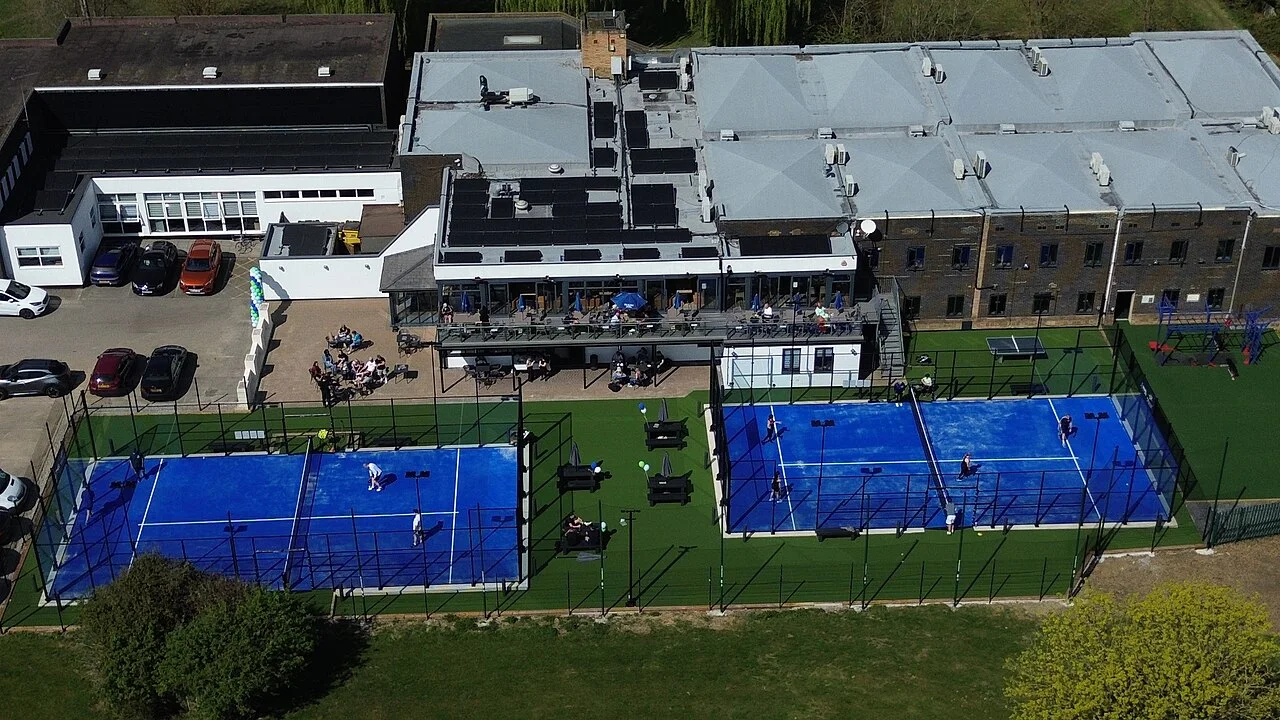
If you are choosing between padel and pickleball, the short answer is that pickleball is usually easier to pick up at the beginning. Its basic play is often described as more straightforward, while padel asks new players to adjust to a quicker ball, more movement and rebounds from the walls. That does not mean padel is too difficult for beginners. You can enjoy rallies before you master every tactical detail. The better choice depends on whether you want the quickest route to basic play or are drawn to the added challenge of reading walls and coordinating with a partner.
Quick answer: Is padel easier than pickleball?
For many new players, pickleball has the gentler learning curve. Padel is not inaccessible, but its walls create extra decisions: players must judge the rebound, choose where to stand and coordinate movement with a partner. That wall-reading skill can take longer to develop even when a beginner is already enjoying rallies.
Think of “easier” as two separate questions. Which sport is simpler to start playing, and which sport is easier to master? Pickleball is often simpler at the start. Neither sport is automatically easy at higher levels, where opponents, timing and shot selection matter. The LTA’s comparison also emphasizes that padel and pickleball are distinct sports with different equipment, court designs and rules.
Quick takeaway: If your priority is a straightforward introduction, try pickleball first. If you like a more layered doubles game and are willing to learn wall play, give padel a beginner session.
What makes the learning curves different?
The key difference for a newcomer is not simply the racket. Padel incorporates wall rebounds into play, while pickleball is played with a paddle and a plastic ball with holes. The sports also have different court designs and rules, so learning one does not mean you already know the other.
Walls can keep a padel rally alive and give players another way to handle a ball. They also make the game less intuitive at first: a player has to read not just the incoming shot but what may happen after the bounce. That makes padel’s learning curve feel more layered, rather than making it impossible to begin.
Pickleball is often characterized as easier for beginners to pick up, with more straightforward rules and more relaxed movement. That is a broad comparison, not a promise about every player or every game. Familiarity with racquet sports, fitness, confidence and the people you play with can all shape your personal experience.
How do walls, movement and pace affect beginners?
In padel, glass walls and other court boundaries are part of the playing environment. Learning to handle a rebound adds a new choice: play the ball before it reaches the wall or let it rebound and respond afterward. Beginners do not need to master every wall situation immediately, but they should expect this extra layer to become part of learning the game.
The larger playing area and faster ball movement described in comparisons of the sports can also ask more of a new player’s footwork and reactions. This may make a first padel session feel busier than a first pickleball session. For an early goal, prioritize getting into position and making controlled contact rather than trying to hit every ball hard.
By contrast, pickleball is commonly presented as having a more accessible starting point. It can still become competitive and require skill; “easier to start” does not mean “no strategy” or “easy to master.” As in padel, improvement comes from learning the game’s decisions, not just swinging the racket or paddle.
Which sport may suit your goals and preferences?
Pickleball may suit someone who values a quicker introduction and wants a game often described as less intense in its usual beginner comparison. Padel may better fit someone attracted to the pace, group play and added tactical challenge of wall rallies. Neither description decides what an individual will enjoy, so treat them as starting points for a trial rather than fixed rules.
- Consider pickleball first if simpler initial play is your main priority.
- Consider padel if you are curious about rebounds, faster exchanges and a more layered tactical experience.
- Try both if availability allows and you are unsure. The sport that feels more welcoming in practice may not be the one you expected.
Padel is commonly played as a social doubles experience, and comparisons highlight its group-play appeal. A sport’s social character can matter as much as its technical learning curve: an accessible session, welcoming partners and a suitable pace can make it easier to keep returning.
What does a first session include, and how does it work?
Before committing to lessons, a club membership or equipment, find out what an introductory session actually provides. Offerings vary, so ask the facility or organizer rather than assuming a particular service is included. Useful questions include:
- Is the session designed for people who have never played?
- Will someone explain the basic rules and demonstrate how to start?
- Is equipment available to borrow or rent, and is that included in the booking?
- Will you play with other beginners, or be placed in a mixed-level game?
- How long is the session, and what should you bring?
A useful first session should give you enough context to assess the sport: how the pace feels, whether you enjoy moving with a partner, and, for padel, whether learning rebounds interests you. If you are trying both sports, ask comparable questions of each provider so the experience is easier to judge fairly.
Signs you may need coaching or a beginner-friendly game
You may benefit from a coached introduction if the rules, pace or equipment feel confusing, or if you are repeatedly unsure where to stand and how to respond. In padel, a particular sign that you need instruction is feeling lost when the ball reaches a wall. That is a normal learning problem, not a reason to assume the sport is not for you.
Other signs that a beginner session could help include struggling to keep a rally going, feeling rushed by the ball, or finding it hard to coordinate with a partner. A lesson is one option; a relaxed game with experienced, patient players may also help. First identify the difficulty you want to solve, then ask whether the session is suitable for that need.
Do not interpret a difficult first game as a definitive measure of ability. Comparisons suggest that padel’s walls take longer to master, while many beginners can feel competent after a few sessions. That is a general observation, not a guaranteed timetable for any individual.
Cost and pricing: what should you compare?
There is no supported universal price for learning padel or pickleball: costs depend on where you play and what the provider includes. Before booking, compare the complete cost rather than looking only at a listed session or court rate. Ask whether court time, instruction, equipment and any other required charges are bundled or billed separately.
If you are deciding whether to take lessons, compare the price and format of a group introduction with individual instruction, where both are offered. Check the session length, group size and what you will practice. A cheaper option may not be the better value if it is not intended for beginners or does not include the support you need.
For recurring play, ask about the cost of repeated bookings or membership before choosing a schedule. Do not buy a racket or paddle just to find out whether you like the sport if you can first confirm whether borrowing or rental is available. Get the current terms directly from the venue because pricing and inclusions can differ by location and change over time.
What factors affect which sport feels easier?
The right way to compare the sports depends on more than their reputations for being easy or difficult. Personal familiarity with racquet games, comfort with movement and interest in tactics can change how quickly either one feels natural. The source comparisons describe padel as having faster play and a steeper learning curve, especially because of the walls, while pickleball is often described as simpler to pick up.
- Prior racquet-sport experience: It may make some movement or racket skills feel familiar, but it does not teach you padel wall play or pickleball rules automatically.
- Interest in tactics: Enjoying the idea of rebounds and extra shot choices may make padel’s learning process more appealing.
- Comfort with pace: A faster-feeling game can be exciting for one beginner and overwhelming for another.
- Social setting: A welcoming group and appropriate skill level may influence your experience as much as the sport itself.
These are decision prompts, not predictions. A trial gives you better personal evidence than relying on a broad description alone.
What to expect, including learning time
Do not expect to master either sport in one visit. Some descriptions say many beginners feel competent at padel after a few sessions, while also noting that wall play takes longer to master. “Competent” is not a defined test, so use it as a broad expectation, not a promised result or deadline.
For your first session, focus on understanding the basic flow and deciding whether you enjoy the experience. If you choose padel, allow time to become more comfortable with rebounds and movement alongside a partner. If you choose pickleball, use early play to understand its own equipment, rules and pace rather than assuming that a simpler start means no further learning.
When booking, ask the provider how much time is set aside for instruction and whether the session includes actual play. This helps set expectations without relying on a fixed number of sessions. Progress depends on the person, the quality of practice and the playing conditions.
How to choose a qualified coach, club or session
A qualified provider for your first experience is one who can explain the sport clearly and place you in a suitable beginner session. Before booking coaching or a group game, ask about the instructor’s relevant experience, the intended skill level, the session plan and how questions are handled. Verify any formal qualifications directly with the provider; the available comparisons do not establish one universal credential for coaches across locations.
Look for practical signs of a good fit: clear answers, transparent costs, a session described as beginner-friendly and a chance to check whether equipment is provided. Ask how players are grouped and whether you can attend without already having a partner. For padel, it is reasonable to ask whether wall play will be introduced at a beginner-appropriate pace.
Choose based on the learning experience you need, not on broad promises that a sport will be easy or that you will improve by a fixed date. If the provider cannot explain what is included or who the session is for, compare another option before paying.
Safety, venue rules and credentials to verify
Confirm the venue’s current booking terms, equipment arrangements and safety guidance before arriving. Rules, facility requirements and local operating details may differ, and no particular permit or credential requirement can be assumed from a general sport comparison. Ask the provider directly about its policies and any qualifications relevant to the instruction it offers.
Padel is often described as more athletic and faster-paced than pickleball, but broad comparisons cannot determine what is safe or comfortable for every person. Pick a session level that matches your experience, let the provider know if you need an adapted pace, and stop if you feel unwell or have a concern. If you have a health condition or uncertainty about exercise, seek appropriate professional medical advice rather than relying on a sport comparison.
Check that you understand what equipment is required and whether it is available at the venue. Do not assume that padel and pickleball gear or rules are interchangeable; they are different sports.
Ways to save without compromising your first experience
The safest way to control your initial spending is to test the sport before buying equipment or committing to frequent bookings. Ask whether the venue lends or rents the correct gear, and compare the full session cost with what is included. If you are considering lessons, choose a format that addresses your actual questions rather than paying for instruction beyond your current needs.
- Try a beginner session before buying sport-specific equipment.
- Confirm whether court time, equipment and instruction are included in the advertised price.
- Compare session length and group format, not price alone.
- Ask about recurring commitments before joining a membership or regular program.
- Do not choose an unsuitable or poorly explained session simply because it appears cheaper.
These are general budgeting steps, not a guarantee that one format costs less. Actual availability, rates and inclusions depend on the local provider.
Mistakes, red flags and a pre-booking checklist
Common mistakes include expecting padel to feel instantly as simple as pickleball, treating a challenging first game as proof that you cannot learn, or assuming that borrowed equipment, coaching or court time will be included without checking. Another mistake is choosing on a general claim about which sport is more intense instead of considering your own comfort and the specific session.
Before you book, use this checklist:
- Have I confirmed that the session is appropriate for a complete beginner?
- Do I know what equipment is required and whether it is available?
- Have I checked the total price, session length and cancellation terms?
- Can the provider explain who will lead the session and what I will learn?
- Have I considered whether I want a simpler start or the added challenge of padel wall play?
- Have I asked any safety or accessibility questions that matter to me?
Be cautious about guarantees of rapid mastery, unclear charges and vague answers about what is included. A trustworthy provider should be able to explain the session and its limitations plainly.
A practical way to decide which sport to try
Use this simple decision process if you remain undecided:
- Name your priority. Is it getting into basic play quickly, enjoying a more tactical challenge, or finding a welcoming group activity?
- Check local access. Find out which beginner sessions are available and whether the schedule, equipment and total cost work for you.
- Try before committing. Book an introductory opportunity, where available, and notice how the pace and movement feel.
- Review the experience. Ask yourself whether you enjoyed the game enough to want to learn more, not whether you played perfectly.
- Choose your next step. If padel appeals but wall play felt confusing, seek a beginner-focused introduction. If you preferred pickleball’s simpler start, continue there.
This approach avoids turning a broad comparison into a verdict about your ability. The most suitable sport is the one that fits your preferences and is accessible to you.
Frequently asked questions
Is padel easier than pickleball for beginners?
For most beginners, pickleball is easier to start because the rules and movement are more straightforward. Padel adds wall rebounds, faster exchanges and partner positioning, which take practice to read well.
Which sport is easier to learn, padel or pickleball?
Not necessarily. A beginner can enjoy padel early, but mastering wall play and court positioning takes longer. Pickleball is often quicker to learn at a basic level, while both sports can become challenging as competition increases.
Do padel and pickleball use the same equipment?
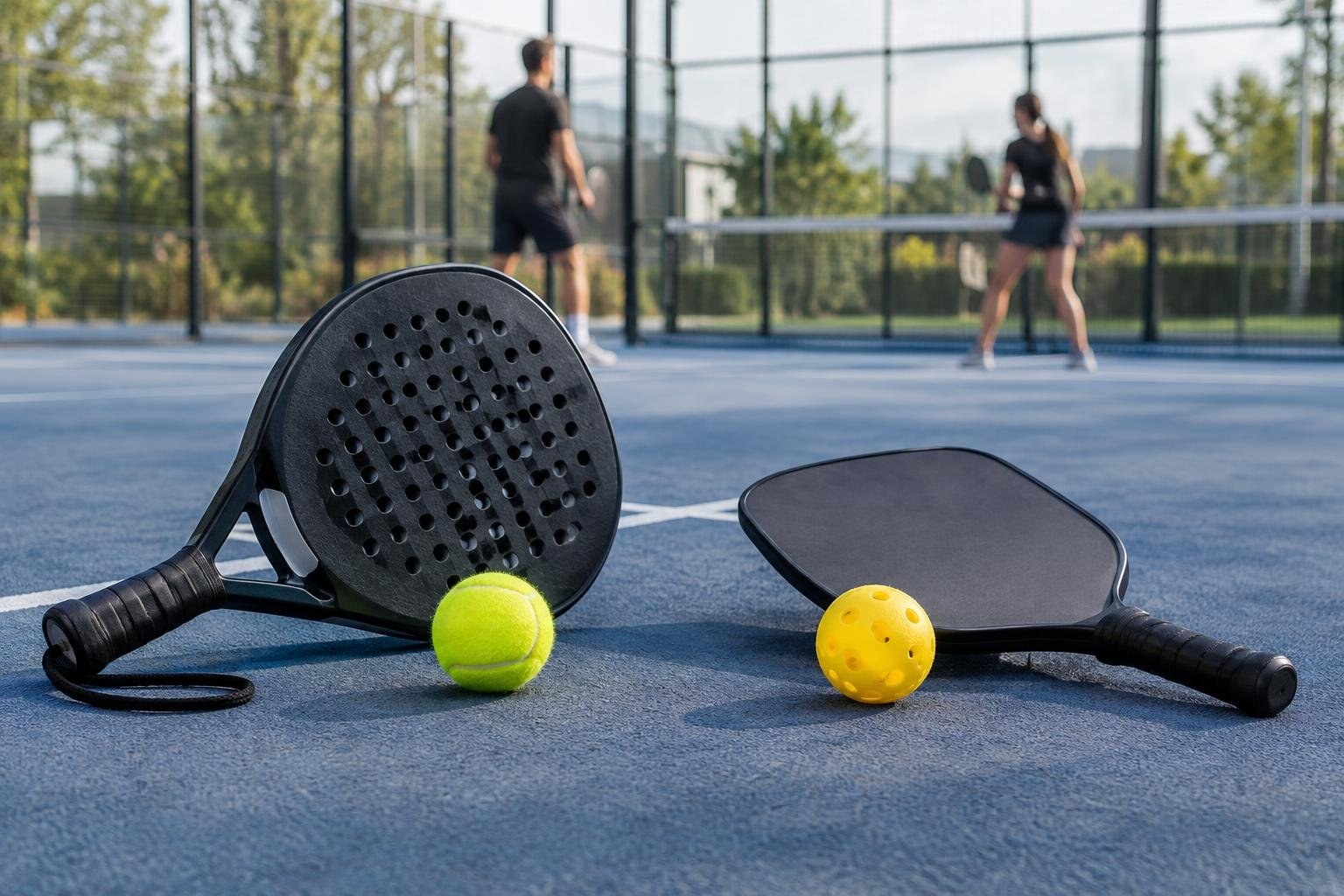
Padel uses a solid, perforated racket and a ball; pickleball uses a paddle and a plastic ball with holes. The courts and rules also differ, so one sport's equipment cannot be assumed to suit the other.
Why does padel have a steeper learning curve?
Padel uses surrounding walls as part of play, so players learn to judge rebounds and decide whether to hit the ball before or after it reaches a wall. That creates an extra tactical skill beyond simply returning the ball.
Should I try padel or pickleball first?
Pickleball is often the easier place to begin, while padel may suit players who want faster, more layered rallies and enjoy doubles play. The best choice depends on the pace and learning experience you prefer.
Is padel harder on the body than pickleball?
Neither sport is guaranteed to be suitable for every body or fitness level. Start at a comfortable intensity and seek medical advice if you have health concerns.
People Also Ask
Is padel harder to learn than pickleball?
Usually, pickleball is easier to pick up at first because its basic rules and movement are more straightforward. Padel's walls and quicker exchanges add skills to learn.
What makes padel difficult for beginners?
Padel play involves reading rebounds from the walls, which adds a tactical decision after the ball passes a player. Beginners can enjoy play before mastering those decisions.
Which is better for a complete beginner, padel or pickleball?
Pickleball is often a more approachable first choice for someone seeking simpler initial play. Padel may appeal more to someone who wants faster rallies and an extra tactical layer.
What is the main difference between padel and pickleball?
The sports use different equipment and court designs. Padel uses a padel racket and walls; pickleball uses a paddle and a plastic ball with holes.
How can I decide whether padel is right for me?
Try an introductory session in each sport if both are available. Compare how comfortable the pace feels, whether you enjoy the movement and whether you like learning wall rebounds.
Is pickleball less physically demanding than padel?
Not in a way that can be guaranteed for everyone. Padel is often described as more athletic and faster-paced, but individual experience depends on play intensity and personal circumstances.
For most first-time players, pickleball is easier to pick up because its basic play is more straightforward and generally less demanding. Padel can still be enjoyable from the first session, but reading rebounds, moving with a partner and learning when to use the walls add skills that take longer to develop. Choose based on the experience you want, then try a beginner session before investing in equipment or regular play.
Your next step
Compare ways to get started, build your understanding of padel and explore options for playing.
Last reviewed and updated October 8, 2026 by the Major League Padel Editorial Team.
Sources
- Padel vs Pickleball: Difference & Rule Which One Is Better for You?
- Padel vs Pickleball: Which Racket Sport Should You Play in 2026?
- Padel vs Pickleball: What's the Difference and Which One …
- A Simple Breakdown of Padel vs Pickleball for Beginners
- Pickleball vs. padel: A side-by-side comparison
- Pickleball vs Padel: Key Differences Explained | LTA
- r/Pickleball on Reddit: Is Padel or Pickleball easier to get started? (Ignoring cost)
- Padel vs Pickleball – What's the Difference? | Pickleheads