
Padel is a racquet sport played on an enclosed court where the glass walls can shape the rally. You can try it without being an experienced tennis player: start with a partner, a court, suitable equipment, and a willingness to learn how the ball rebounds. This beginner guide explains what to expect, what to ask before booking, how to approach basic play, and how to choose equipment or instruction without overspending. Rules and facility policies can vary by location, so confirm local details before your first session.
1. What happens during a first padel session?
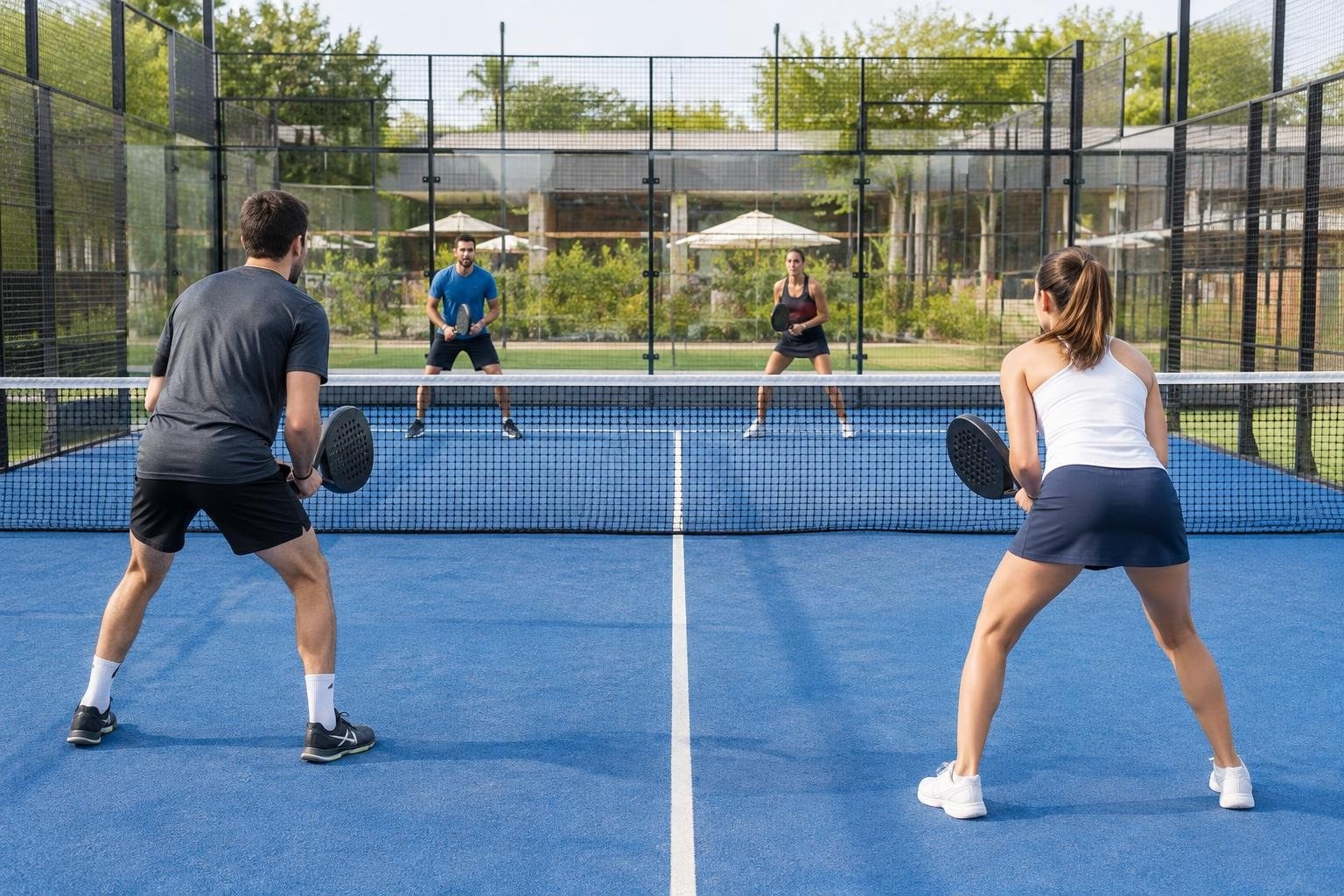
Think of your first padel outing as an introduction, not a test. The basic setup is straightforward: find a court, arrange a partner, check what equipment the venue provides, and agree on the rules you will use. Padel is played on a court with a net and surrounding glass walls; those walls can affect the rally and create shots that are unusual for people used to open-court sports.
Before booking, ask how long the session lasts, whether rackets and balls are included or rentable, what footwear is accepted, and whether a beginner session or coach is available. If you are joining friends, agree in advance whether the aim is relaxed play or instruction. That helps everyone choose an appropriate pace.
Arrive with enough time to check in and get oriented. If you have never played, tell your group. A quick explanation of serving, scoring, and wall play before starting can prevent confusion once the ball is moving. Facilities may have their own booking and equipment procedures, so confirm them directly rather than assuming every venue works the same way.
2. When might a beginner benefit from lessons or extra help?
Padel is a good option to explore if you want a social racquet sport and are curious about playing around walls. You do not need to arrive with a polished technique. A useful starting point is a willingness to learn court positioning, keep the ball under control, and coordinate with another player.
Consider a coached introduction if the rules feel unfamiliar, if your group is not sure how rebounds work, or if you want feedback as you learn. A lesson may also help if you repeatedly lose points because of positioning or communication and would like guidance.
Players come from different athletic and racquet-sport backgrounds, and those backgrounds can influence what feels familiar. Start with the basics that match your experience, then build your skills through practice.
3. What costs should you check before getting started?
There is no single reliable price for starting padel without a specified location and date. Costs depend on the venue and what you book, so compare the complete session rather than assuming that a court price includes equipment or instruction.
Before confirming, check these possible cost components:
- Court rental and the length of the booking.
- Racket or ball rental, if needed.
- Group instruction or a private lesson.
- Any booking, cancellation, or membership conditions.
- Whether the quoted amount is per court, person, or session.
Ask for the total payable amount and what is included. If you are comparing a lesson with casual court time, consider the value of feedback as well as the price. A lower headline fee may not be the least expensive option if equipment is extra or the booking is shorter. Avoid buying a racket before you know whether you enjoy playing and what type feels comfortable; ask whether rental is available first.
4. What factors shape your first-session plan?
Your first padel choices depend on more than a label such as beginner. Your prior experience, comfort with movement, goals, access to a partner, and the kind of session you want all matter. Someone with experience in another racquet sport may recognize some strokes, while a complete newcomer may need more time with grip, contact, and ball tracking.
For a first outing, prioritize access and learning over an elaborate equipment setup. If a racket is available to rent, try that before purchasing. When you do compare rackets, consider whether you can control the racket comfortably and whether the facility or coach can explain the options. Do not assume that a model promoted for power is automatically right for a new player.
Also consider where you will play. Ask about indoor or outdoor arrangements, how to book, and whether the venue offers beginner instruction. Those practical differences may shape your experience more than small equipment details. Choose a first session that gives you time to learn rather than one that pressures you to compete immediately.
5. Which beginner options should you compare?
Most new players can choose among casual court time, a coached introduction, or a beginner group session if one is offered locally. These options serve different needs. Casual play lets you try the game with people you know; coaching provides focused instruction; a group format may combine learning with meeting other players. Availability and format differ by facility, so ask what is actually offered.
Use this simple comparison:
| Option | May suit you if | Ask before booking |
|---|---|---|
| Casual court booking | You have a partner and want to try playing informally | What is included, and do you need to bring equipment? |
| Introductory lesson | You want help with rules, positioning, and basic shots | Is it designed for first-time players? |
| Beginner group | You would like structured practice with other new players | What is the group size and experience level? |
There is no universal best choice. If you are unsure, a short introductory session can help you understand the game before committing to equipment or regular bookings.
6. What should you expect, and how quickly will you learn?
Plan for your first session to include time to get oriented, practise a few basic shots, and play at a pace that lets you read the ball. Do not expect to understand every rebound or rule immediately. You can learn progressively: become comfortable with the court and net, practise controlled contact, then pay closer attention to wall rebounds and point strategy.
Warm up before play and give yourself time to move comfortably. Beginner guidance commonly emphasizes warming up, footwork, basic shots, and practising how to play off the glass. If you book instruction, ask how much of the session is explanation, drills, and playing time. That will help you know what to expect and whether the format fits your goals.
Improvement does not follow a fixed timetable. How quickly you become comfortable depends on how often you play, the quality of practice, and your starting experience. Set a small goal for each session, such as returning more balls or calling shots clearly, rather than expecting to master advanced techniques at once.
7. How do you choose a suitable coach or provider?
If you want a coach, look for someone who can explain padel in beginner-friendly terms and adapt instruction to your experience. Ask whether the lesson is intended for new players, what skills it covers, and whether you will practise rules, movement, basic shots, or wall play.
Ask how the coach gives feedback and whether the group level is appropriate. If you are booking through a club, confirm the instructor, duration, cost, cancellation terms, and equipment arrangements directly with the venue.
Compare local options where possible and choose a provider whose format and expectations are clear. Ask about the provider's qualifications and any facility standards that apply locally rather than assuming one credential rule applies everywhere.
8. What rules and safety checks matter before play?
Before you play, ask the venue about court rules, footwear, equipment, and any instructions for using the court. Follow the facility's guidance about court access and equipment.
Learn the rules used for your session before play begins. The net divides the court into two sides, service boxes are marked on each side, and walls can play a role in rallies. The details of serving and scoring should be explained using the rules applicable at the venue or event. Do not assume every informal group handles all rule details identically.
For a lesson or booking, review the cancellation terms and ask what happens if conditions make play unsuitable. General beginner guidance does not replace the facility's own rules or instructions.
9. How can you keep the cost manageable without cutting corners?
You can control spending without taking shortcuts that make the session confusing or uncomfortable. Ask if the venue rents equipment, whether a beginner group is available, and exactly what the court booking includes. Borrowing or renting a racket for an initial trial can help you decide whether you want to purchase one later.
Compare total session costs and terms rather than choosing solely by the lowest advertised figure. If you are booking with friends, clarify how the court fee is divided and whether the booking time includes arrival or check-in. When comparing instruction, look at group size, session content, and duration alongside price.
Save safely by delaying advanced equipment purchases until you understand your preferences. Do not skip a warm-up or ignore footwear requirements to reduce costs. If a deal is unclear, ask for written details about inclusions, cancellation conditions, and any additional charges before payment.
10. Beginner mistakes, red flags, and a booking checklist
New players often try to hit every ball hard or treat the walls as obstacles. Instead, focus on control and learn to read the rebound before choosing a shot. Beginner advice emphasizes placement over power and cautions against trying to volley everything. A ball that reaches the glass is not automatically lost; observe its path and decide whether it is better to play it after the rebound.
Another common problem is moving independently of your partner. Talk between points, call for balls, and try to keep a workable relationship with your teammate rather than leaving large uncovered areas. Practise footwork and basic shots, and use a simple target such as returning the ball safely before trying an ambitious winner.
Before you book, use this checklist:
- Have I confirmed session length, total price, and cancellation terms?
- Do I know whether a racket and balls are included or rentable?
- Have I asked about footwear and facility rules?
- If I want coaching, is the session suitable for a first-time player?
- Have I told my partner that I am new and agreed on a relaxed pace?
11. The court, walls, and simple rules to understand
The net divides the court, each side includes service boxes, and the enclosed walls can be used to shape a shot after the ball has bounced on the court. That changes the decision a beginner faces: instead of swinging at every ball early, you may need to watch its path and decide whether to play it before or after the rebound.
Padel is commonly played with partners, so communication and shared court coverage are part of the game. Call the ball, let your teammate know when you are moving, and avoid both players chasing the same shot. Start rallies with controlled returns and use the walls as something to learn, not something to fear.
Do not worry about advanced vocabulary at first. Learn the basic shot names and rules as they arise, and ask your partner or instructor to explain a point when you are uncertain. Rules for formal play should be checked against the relevant event or governing body; for casual sessions, agree on details before beginning.
12. A practical way to practise and improve
Build your first practice around repeatable basics: warm up, practise a controlled forehand and backhand, move your feet to reach the ball, and spend time reading a rebound from the glass. Keep the early goal modest: return the ball with control and recover to a position where you can help your partner.
As you gain confidence, practise deciding whether to volley or let the ball travel toward the wall. A volley is hit before the ball bounces; playing after a rebound requires tracking the ball's direction and timing. You do not need to force a difficult shot when a safe return keeps the rally going.
Use a short reflection after each session: Which ball was hard to read? Did you and your partner communicate? Did you choose control or try for power? A coach can help turn those observations into drills. Beginner resources recommend practising basic shots, footwork, and glass play, rather than relying only on match play to improve.
Frequently asked questions
What is padel, and how is it different from tennis?
Padel is generally played in doubles on an enclosed court. The net divides the sides, and the walls can remain in play after the ball bounces on the court. Beginners can focus first on keeping the ball in play and learning how the rebound changes shot choices.
What equipment do I need for my first padel session?
Ask the facility whether it provides a racket and balls, or whether you need to bring your own. Comfortable sports clothing and court-appropriate shoes are sensible starting points. Confirm footwear requirements with the facility before you arrive.
Can I play padel if I have never played a racquet sport?
Yes. You can start playing padel even if you have never played a racquet sport. Beginners can learn the court, basic control, and how to play with a partner; prior racquet-sport experience may make some movements feel more familiar.
How much does it cost to start playing padel?
The exact price depends on the local facility and what is included. Check the court fee, session length, racket rental, balls, coaching, and any booking or cancellation terms before you pay. Compare the total cost rather than one advertised item.
How long does it take to learn padel?
Start by allowing yourself time to learn the rules and become comfortable with rebounds. A first session is for orientation and practice, not mastery. Your pace will depend on how often you play and whether you practise with guidance.
What is the most common beginner mistake in padel?
Do not try to hit every ball hard or rush forward without coordinating with your partner. Begin with controlled shots, move together, and give yourself time to read rebounds from the glass.
People Also Ask
How do the walls work in padel?
Padel uses a net and an enclosed court with walls that can keep a rally going after the ball bounces on the court. The walls make reading the ball and choosing when to play it important.
Is padel easy for beginners?
Yes. You can begin by learning basic control, court awareness, and partner communication. Previous racquet-sport experience can help with familiar movement patterns, but it is not a prerequisite.
Should a beginner buy a padel racket before playing?
Check that the racket feels manageable and suits your current ability. Ask whether you can rent one before buying, and compare comfort and control rather than choosing only by appearance or a promise of power.
What does a padel court look like?
The court has a net, service boxes, and surrounding walls. The net divides the playing area, while the walls can be part of the rally under the rules being played.
What should I ask a padel club before booking?
Ask the venue about rental equipment, court access, session length, footwear expectations, and booking terms. If you want instruction, ask what the session covers and whether it is suitable for beginners.
How can I improve at padel as a beginner?
Begin with control and placement rather than trying to hit every ball hard. Learn to read the glass rebound, keep your footwork balanced, and communicate with your partner.
Padel is easiest to enjoy when you begin with simple goals: learn the basic rules, keep the ball in play, communicate with your partner, and treat the walls as part of the game. You do not need to master every shot or buy advanced equipment before your first session. Start with a suitable court and racket, ask the facility or coach what is included, and build confidence through practice. Compare local options and make an informed choice before booking or buying; Estimate.org can help you explore provider options.
Your next step
Compare options, learn what to ask, and search for providers on Estimate.org.
Last reviewed and updated October 8, 2026 by the Major League Padel Editorial Team.
Sources
- Padel 101: A Beginner's Guide | Padel39
- Padel tips for beginners : how to improve your game
- Padel for Beginners: Everything You Need to Know to Get Started — PadeLMQ
- All you need to know when you are a beginner in padel – Padel USA
- How to get started in padel | Beginner’s guide
- How to Play Padel: Complete Beginner's Guide 2026
- Padel for Beginners — Rules, Gear & Your First Match (2026 Guide) | Padel Rules
- Basic padel rules for beginners | Playtomic