
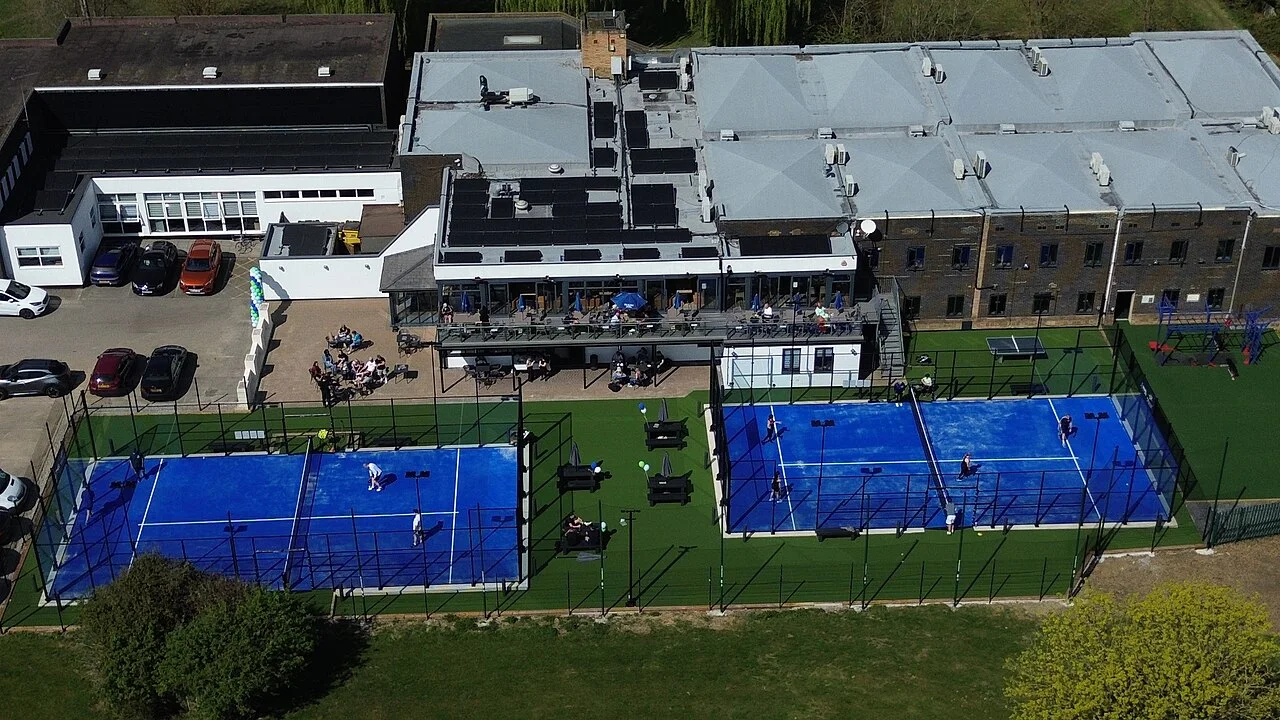
Padel is a doubles racket sport played on a smaller, enclosed court, where glass walls and metal mesh influence how a rally unfolds. It borrows tennis-style scoring, but the walls give players another way to defend and return the ball. This guide explains how padel works, what equipment you need, what to expect as a beginner, and how to compare courts, lessons, and other ways to get started.
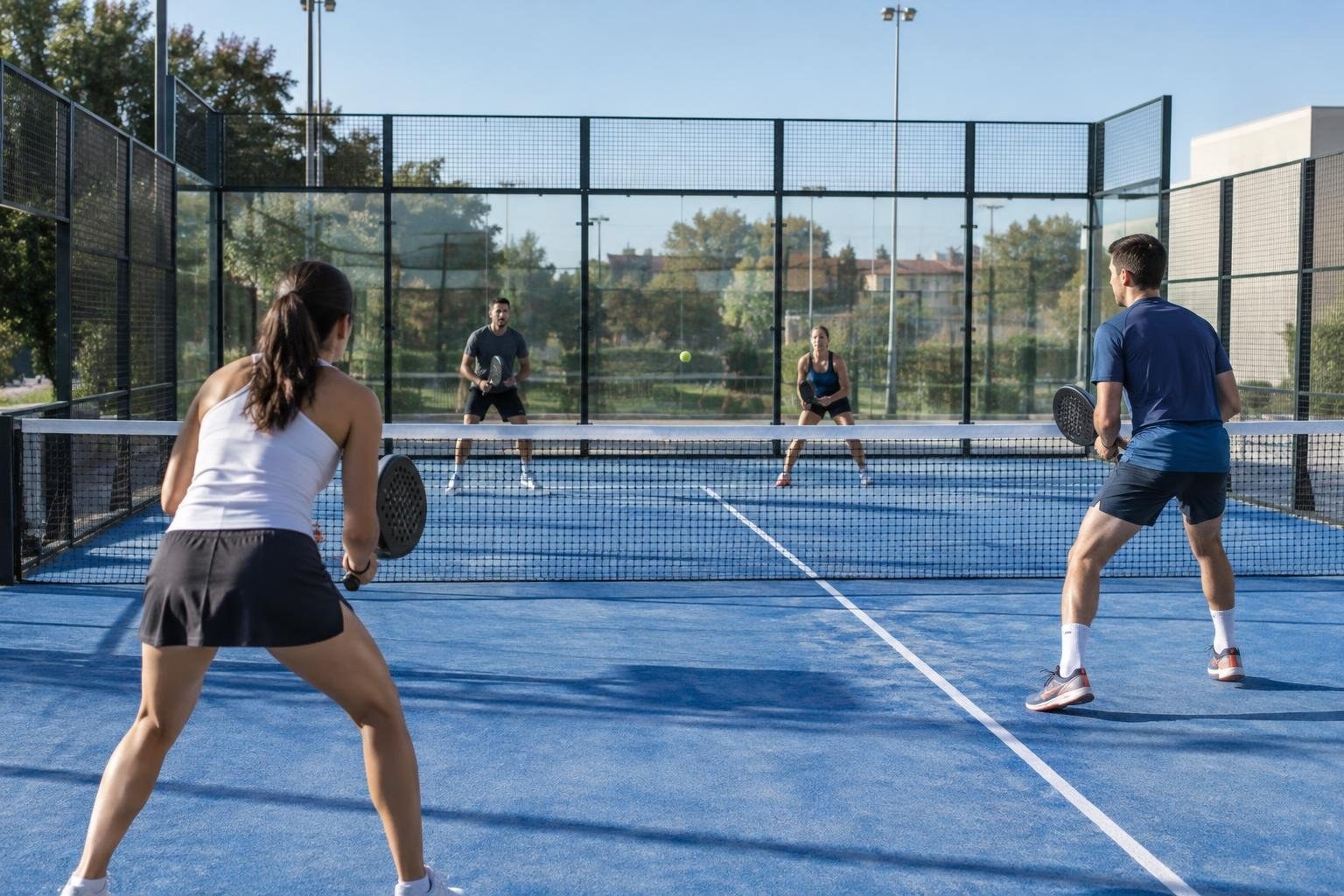
What is padel tennis?
Padel is a racket sport usually played two versus two on a 20-by-10-metre court. A net divides the playing area, and glass walls and metal mesh surround it. Players can use the enclosure as part of a rally, so padel is not simply tennis played in a smaller space.
It is often described as a blend of tennis and squash: tennis-like scoring and net play meet rallies in which wall rebounds matter. The most useful beginner mindset is to treat the walls as part of the court, stay connected to your partner, and choose control over an ambitious winner.
How the court and walls change the game
A standard padel court is an enclosed rectangle with equal halves divided by a net. Each side has service boxes; the surrounding glass and mesh make the court distinct from an open tennis court. The enclosure keeps many balls in play and can give a defending player time to recover after the ball has passed them.
In a rally, let the ball bounce on your side before it reaches the glass, then play it after the rebound if you can. A wall rebound does not give you a second bounce on the court: the ball still needs to be returned before it bounces twice. Glass and mesh do not behave identically, so learn how your venue’s court is laid out and watch the ball carefully.
How padel works: serve, rally, and score
Padel uses tennis-style scoring, with points grouped into games and games into sets. The rules also cover service, wall use, and faults; beginners should learn the version used by their club or event rather than assuming that every social session follows identical competition procedures.
- Start with the serve. Serve diagonally into the opposite service box, following the applicable service rules. A coach or official can demonstrate the legal action and explain faults.
- Return the ball. Keep the rally going by sending the ball over the net and into the opponents’ court.
- Use the bounce and walls. After a court bounce, a rebound from the enclosure can be played. Track whether the ball has bounced once or twice.
- Win the point, then the game. Use your event’s scoring instructions for any match-specific format.
For a first session, ask the organizer to walk through scoring and serving before play begins. The LTA’s beginner rules guide covers scoring, serving, wall use, and common faults.
What a first padel session includes and how it works
Playing padel normally means arranging a court and a doubles group, then bringing or borrowing suitable equipment. The practical process is simple: find a facility, confirm the booking format and what it supplies, arrive with enough time to prepare, and agree with the other players how you will handle score and rotation.
- Choose a court and a session that suit your experience.
- Ask whether the booking is court-only, a coached class, or organized social play.
- Confirm player numbers, equipment availability, court rules, and cancellation terms.
- Warm up, review the serve and scoring, and agree on simple partner communication.
Padel is commonly played by four people, with a partner on each side of the net. Some venues may offer beginner sessions or ways to join a group, but availability and booking arrangements vary.
Signs you may benefit from a lesson or guided session
Consider a lesson or guided introduction if you are unsure how to serve, keep score, read a wall rebound, or coordinate with a partner. These are practical signals that a little instruction could make play more comfortable, not reasons to assume you need an ongoing coaching package.
It may also be useful to get help if a group repeatedly loses points through confusion about whether the ball was in, how the wall was used, or who should cover a shot. A short explanation and a few supervised rallies may address basic uncertainty. If you are already playing comfortably, you may prefer a social match and occasional rule checks instead.
Match the type of help to the problem: rules questions call for a clear rules explanation; movement or shot questions call for a coach who can observe you play. Avoid paying for a larger package until you know what you want to improve.
Cost and pricing considerations
There is no single price that applies everywhere. The cost of getting started depends on local court rates and whether you book open play, a shared court, a group lesson, or individual coaching. Equipment purchase or rental may also affect your total. Because location and date matter, check current prices directly with facilities in your area.
Before booking, ask what the quoted amount covers: court time, coaching, racket or ball use, and any booking or cancellation conditions. Compare the full session rather than headline prices alone. A lower court fee may not include instruction or loan equipment, while a coached session may include a structured introduction. Do not assume equipment is supplied unless the venue confirms it.
Factors that affect the experience and overall cost
Several choices shape what a beginner gets from padel: court availability, indoor or outdoor setting, whether play is coached or social, group size, how much equipment the facility provides, and the experience level of the other players. Local conditions and booking policies also affect convenience, so confirm details rather than relying on assumptions.
For a first visit, prioritize a session where rules and equipment are explained over a highly competitive match. If you already know the basics, a social game may offer more rally time. If your goal is technique, ask how much individual feedback you will receive. A good fit is the option that matches your purpose, budget, and comfort level, not necessarily the most intensive package.
Options compared: court hire, lessons, and social play
Choose among court rental, a group introduction, private coaching, or organized social play according to what you need. A court booking offers flexibility but expects players to manage the session themselves. A group lesson introduces fundamentals with other learners. Individual coaching can focus attention on your questions, while social play emphasizes getting used to rallies and partners.
| Option | May suit you if | Check before booking |
|---|---|---|
| Court rental | You have a group and can organize play | Player numbers, equipment, and court rules |
| Group introduction | You want to learn basics with guidance | Class level, group size, and what is included |
| Private lesson | You want focused feedback | Coach’s padel experience and lesson goals |
| Social session | You want a relaxed way to meet players | How players are matched and skill expectations |
Ask whether the facility has beginner-specific options. Availability differs from one place to another.
What to expect, including timing and learning curve
Expect your first session to include basic orientation, a chance to try the serve and rally, and time to understand how walls affect the ball. The exact session length and format depend on the venue. Confirm the schedule, arrival time, and whether instruction is part of the booking before you travel.
Learning is not a fixed-length project. The basic scoring and court layout can be explained quickly, but judging rebounds, moving with a partner, and choosing when to attack improve through practice. Start with manageable goals: return several balls in a row, communicate before moving across the court, and notice how the ball comes off the glass. A coach can adjust the pace to your experience.
How to choose a coach or facility
A qualified padel coach should be able to explain the rules clearly, demonstrate safe movement and basic technique, and adapt instruction to a beginner rather than assuming prior tennis knowledge. Ask about the coach’s padel-specific experience, the lesson plan, class size, and what you should be able to do by the end of the session.
Look for a clear answer about costs, equipment, cancellation terms, and the level of the class. If the coach or facility makes sweeping promises about rapid results, ask what those claims mean in practical terms. You can also request a short introductory session before committing to a longer package. A good provider should welcome reasonable questions and make the session expectations clear.
Rules, qualifications, and safety checks
Check the venue’s own instructions and the rules that apply to the class, club, or competition. Requirements can differ by location and event; do not assume a rule, credential, or facility standard applies everywhere. If a qualification matters to you, ask the provider what it is and who recognizes it.
For a safer first visit, wear court-suitable shoes, warm up before fast movement, and keep clear of other players when retrieving balls. Learn how to move around the glass and mesh without colliding with your partner or the enclosure. Ask staff about court access and any facility-specific safety guidance. If you have a health concern that may affect exercise, seek appropriate professional advice before playing.
Ways to save safely when getting started
You can control introductory costs without compromising on a suitable experience. Ask whether a group lesson or social session is available, and whether rackets can be borrowed before buying your own. Share court time with the intended group where the booking structure allows it, and compare what each option includes rather than choosing only by the lowest advertised amount.
Do not save money by ignoring fit or safety. Use footwear appropriate for the surface, follow the venue’s instructions, and avoid buying advanced equipment before you understand what feels comfortable. If you are considering a lesson package, begin with one session when possible and decide afterward whether more coaching addresses a real need.
Common mistakes, red flags, and a booking checklist
New players often try to hit every ball hard, stand too close to the net, or chase a rebound without telling their partner. Those habits can make it harder to keep a rally going. Aim for a controlled return, watch the ball through its bounce, and move as a pair so one player does not leave an uncovered space. Treat a lob as a way to change the opponents’ position rather than swinging harder from a poor position.
Before booking or buying, use this checklist:
- Have I confirmed the session level and format?
- Do I know how many players are expected?
- Have I asked what equipment is supplied or available to borrow?
- Do I understand the price, duration, and cancellation terms?
- Can the coach or facility explain the rules and safety expectations clearly?
- Am I choosing a session that matches my goal, whether learning, practice, or social play?
Clear answers make it easier to choose confidently and avoid paying for something you do not need.
Frequently asked questions
What is padel tennis?
Padel is generally played as doubles, with two players on each side of a net. The court is enclosed by glass and mesh, and the walls can be part of the rally after the ball bounces on the court.
How does scoring work in padel?
Padel uses tennis-style scoring. Players win points, games, and sets, while the enclosed court and wall rules make the rallies different from tennis. Check the rules used by your club or competition for any format-specific details.
How do you serve in padel?
A padel serve is hit underhand after the ball is bounced, and it must travel diagonally into the opponent’s service box. The server has to follow the applicable service rules, so beginners should ask their coach or consult the competition rules for details.
Can you use the walls in padel?
After the ball has bounced on your side, it may rebound from the glass and remain playable. A ball that hits the wall or mesh before touching the court on your side does not count as a valid bounce.
What equipment do you need to play padel?
You need a padel racket, suitable court shoes, and a partner if you are playing the standard doubles format. Many facilities can advise whether rackets or balls are available to borrow, so ask before booking.
Is padel easy to learn?
Padel can be approachable for beginners because the court is enclosed and rallies can continue after a wall rebound. Learning the serve, positioning, and wall timing takes practice, and a first lesson or guided session can help.
People Also Ask
Do you need four people to play padel?
Usually, yes. Standard padel is played two versus two, with a partner on each team. Ask a facility whether it offers a supervised introduction or another format for solo visitors.
Is padel the same as tennis?
No. Padel has a net and tennis-style scoring, but the court is enclosed and the walls can be used after the ball bounces. Those differences change court coverage and shot choices.
What should a beginner bring to padel?
The basic equipment is a padel racket and suitable court shoes. Check with the venue about balls and whether it has rackets available to borrow before buying equipment.
What happens when the ball hits the glass in padel?
A padel court is enclosed by glass and mesh. After the ball bounces on your side, a rebound from the glass can still be played; hitting the enclosure before a court bounce is different and may end the point.
What should I learn first in padel?
A beginner can start by learning the serve, basic scoring, court positioning, and how to judge a wall rebound. A coached introduction can make the rules and movement easier to understand.
How much does it cost to play padel?
Prices vary by location, facility, time, and whether you book a court, join a group session, or take a private lesson. Check current local prices and ask what is included before paying.
Padel is a doubles racket sport in which tennis-style scoring meets rallies shaped by glass and mesh walls. The basics are straightforward: serve diagonally, return the ball before it bounces twice, and use the walls after a bounce to keep the rally alive. If you are new, start with a beginner-friendly court session, learn the serving and wall rules, and focus on placement and communication rather than power. Compare court, lesson, and equipment options before you book, and explore more padel guidance on mlpadel.com.
Your next step
Explore padel guides and compare your options before choosing where to play.
Last reviewed and updated October 8, 2026 by the Major League Padel Editorial Team.
Sources
- What Is Paddle Tennis Your Complete Guide – Padel Rumors
- Official padel rules and scoring explained
- What is padel: rules, court, equipment and beginner guide
- What Is Padel? How the Sport Works for Beginners | PadelCompass
- How padel works: an interactive guide · Smash
- Padel Rules: Quick overview of official padel regulations
- How to Play Padel: Rules, Basics, and How the Game Works
- Padel – Wikipedia