
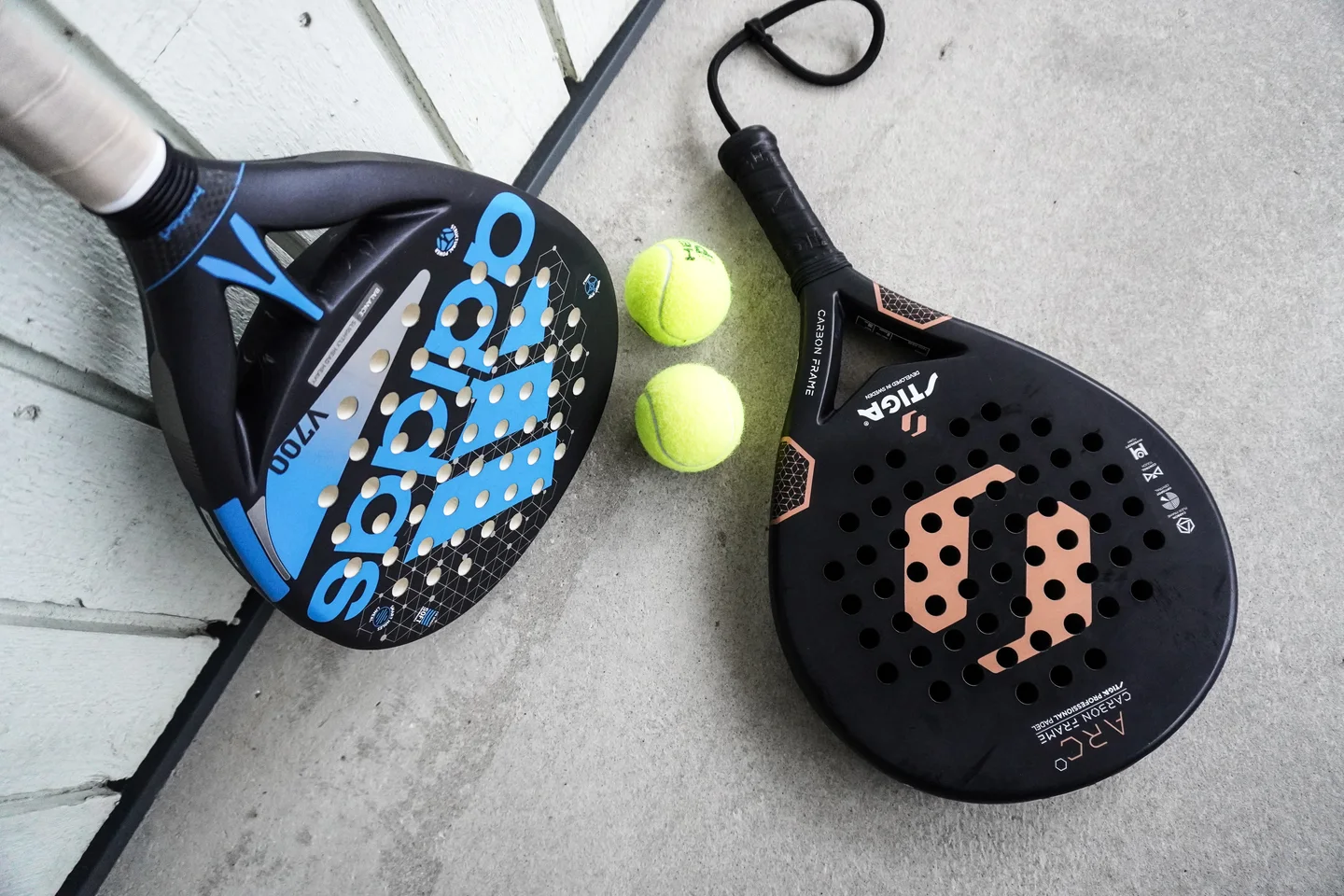
Choosing between soft and hard padel rackets is less about finding a universally superior option and more about matching the racket’s response to your game. A soft core generally absorbs more impact and feels more comfortable, while a hard core feels firmer and responds more directly. But a core label alone cannot tell you whether a racket will suit your control, technique or preferred shots. This guide explains the trade-offs, what to test before buying, and how to make a careful choice without relying on price claims or marketing shorthand.
Soft vs hard padel rackets: what the difference means
The soft-versus-hard distinction usually refers to the feel and density of the racket’s core, the foam inside the racket. Softer cores are generally more elastic and absorb more impact; harder cores are denser and produce a firmer response. Racket-face construction also contributes to stiffness and feel, so the core is not the only part that matters.
In practice, the question is not simply which racket hits harder. Ask whether you value a more forgiving, comfortable response or a firmer, more direct one, and whether you can control that response during your usual shots. A soft core may feel more manageable for some players, while a hard core may better suit someone who already has reliable technique and wants a direct response. Treat those as starting points, not rules.
Product descriptions use terms such as soft, medium and hard, but labels do not replace trying a racket. Even two rackets described with the same feel can differ in construction and in how they behave for a particular player.
How to compare soft and hard rackets in practice
The process is a comparison of feel and on-court response, not a complicated fitting procedure. Start by identifying what you want to improve or what currently feels uncomfortable. Then compare the complete rackets, taking account of their stated core feel and construction. Where you can, test them using similar shots and conditions.
- Set your priority. Decide whether comfort, defensive control, or a more direct attacking response matters most.
- Check what the label describes. Look for the core material and density information, and distinguish core descriptions from claims about the full racket.
- Test ordinary shots first. Try controlled returns, defensive balls and volleys before judging a racket by a single hard hit.
- Notice comfort and control. Ask whether the response feels manageable and whether you can make clean contact repeatedly.
- Compare the same model information. Record the model name and specifications so you do not confuse different versions.
- Review the purchase terms. Check what is included, the seller’s return policy and any written warranty before paying.
If you cannot demo a racket, use your priorities and the exact specifications to narrow the choice, while recognizing that descriptions cannot predict personal feel perfectly.
Signs you may want to try a different racket feel
A softer racket may be worth trying if firm impact feels uncomfortable, if you are developing your technique, or if you want a more forgiving-feeling response. A harder racket may be worth testing if you already make consistent contact and want a firm, direct response for attacking play. A medium feel can be a practical comparison point if neither end of the range seems right.
These are clues for what to test, not proof that a certain racket is necessary. Discomfort can have multiple causes, and a change of racket cannot diagnose or treat an injury. Do not keep playing through persistent pain simply because a softer racket is advertised as comfortable. Seek advice from a qualified health professional for ongoing or worsening symptoms.
Similarly, a player who wants more power should first check whether the current problem is equipment feel, contact quality or shot choice. A firmer core may return energy more directly, but that does not guarantee a faster or more effective shot in every player’s hands.
Cost and pricing: compare the whole purchase, not just the core
There is no supported universal price range for soft and hard padel rackets, and softness alone does not establish that one option should cost more. Prices vary by product and market, so compare the exact racket and current seller terms rather than making a decision based on a generic “soft” or “hard” category.
When comparing prices, make a like-for-like checklist: model and version, stated core and face construction, what is included in the purchase, delivery or collection terms, return conditions and written warranty. If two options have different specifications, a price difference does not show that the core alone accounts for it.
Set a spending limit before shopping, then compare rackets within it by comfort and suitability. Avoid paying extra solely for a power promise if you have not established that the racket’s feel matches your needs. Confirm local currency, taxes and current terms with the seller before purchase.
Factors that affect feel and performance
Racket feel depends on more than a soft or hard core. Core material and density matter, and the faces and overall stiffness also affect how the racket behaves on contact. A racket’s response can therefore differ from what a single product label suggests.
Your own game matters too. A more elastic core may absorb more impact and can feel comfortable; a dense core produces a firmer response. The useful choice depends on whether you can control that feel in the situations you actually face, including defending and attacking. Experience and preference are relevant, but there is no requirement that every beginner use a soft racket or that every advanced player use a hard one.
Keep the comparison focused: identify one or two priorities, check the material description, and test the racket if possible. Changing several variables at once makes it harder to understand why one model feels better than another.
Soft, medium or hard: options and trade-offs
| Feel | Typical response | Who may want to test it | Trade-off to consider |
|---|---|---|---|
| Soft | More impact absorption and a more elastic feel | Players prioritizing comfort or a forgiving response | May offer less raw power than a hard core |
| Medium | An intermediate feel between soft and hard | Players seeking a balance rather than either extreme | The label alone cannot establish how it will feel in your hand |
| Hard | Firmer, more direct response, with potential for greater power | Experienced or aggressive players who prefer direct feedback | May feel less comfortable if you prefer impact absorption |
These are general tendencies, not guaranteed outcomes. Softer cores are commonly made with soft EVA or other elastic materials, while harder rackets can use higher-density EVA or other firmer constructions. Materials vary between models, so check the actual product details.
Soft cores may also be associated with a longer-feeling ball contact and easier spin generation, but this should not be treated as a promise. A racket’s perforated face, technique and contact all contribute. If spin is your priority, test the exact model rather than choosing by core category alone.
What to expect when testing a racket, including timing
Racket shopping does not require a long fitting process, but allow time to compare rather than choosing after one hit. If a club, coach or retailer offers a demo, ask how long you can use the racket and whether you can compare more than one feel. Test with enough ordinary rallies to notice comfort and control, not just a brief power shot.
There is no universal timeline for deciding. A short trial may reveal that a racket feels immediately uncomfortable, but a longer session can help you judge whether its response remains manageable across different shots. If demos are not available, shortlist models using the material information and your priorities, and carefully review the seller’s return conditions before ordering.
Allow time to read the exact model details and purchase terms. The most useful result is not a promise that one core will transform your game, but a well-informed choice that feels controllable and comfortable for your own use.
How to choose a trustworthy retailer, coach or racket adviser
For equipment, a qualified provider means a seller, coach or racket specialist who can explain the exact product and help you compare it without treating a sales claim as a guarantee. Ask what “soft” or “hard” means for that model, what materials are used, and whether the description refers to the core, face or overall feel.
- Can they identify the exact model and version?
- Can they explain the core material and how it may affect feel?
- Do they distinguish general tendencies from guaranteed performance?
- Can they explain the demo, return and warranty terms clearly?
- Are they willing to compare alternatives against your stated needs?
A coach may help you identify whether your priority is comfort, control or a more direct response, but no one can choose perfectly without your feedback. Be wary of advice that presents a racket as ideal for everyone or promises injury prevention or automatic power gains.
Safety, product claims and purchase terms
Before buying, check the exact model and construction details, and ask the seller to explain what “soft” or “hard” means for that racket. Confirm any return conditions and warranty terms that apply to your purchase.
Read comfort claims cautiously. A softer racket may feel more comfortable to some players, but that does not establish that it prevents injury. Epicondylitis can be associated with overuse and repeated movements. A racket choice is not a diagnosis or treatment plan; consult a medical professional about persistent pain.
Do not treat marketing language as a substitute for medical guidance. Choose a racket whose response you can control, and seek appropriate professional help if symptoms persist.
Ways to save safely when buying a padel racket
You can make a better-value choice without compromising on fit. First decide what you need the racket to do, then compare several models in the same price range rather than assuming the most expensive option will suit you best. Use a demo where available, or ask about return terms before buying online.
Compare complete specifications and purchase terms, not just a headline core label. Check whether a price comparison is for the same model and version, and avoid paying more based only on broad promises such as “more power” or “protects your arm.” If you are unsure, ask a coach or knowledgeable seller to explain the trade-offs in plain language.
Do not choose a harder racket simply because it is described as powerful, or a softer one solely because it is described as comfortable. A suitable feel that you can control is more useful than a feature you cannot make use of in play.
Mistakes, red flags and a before-you-buy checklist
Avoid these common buying mistakes:
- Choosing by core label alone. Check the full model and its construction.
- Assuming hard always means better power. Firmer response can suit some attacking players, but does not guarantee a better shot for everyone.
- Assuming soft prevents injury. Comfort is not a medical guarantee; seek professional advice for ongoing pain.
- Testing only a smash. Compare normal defensive and control shots as well as attacking shots.
- Ignoring return terms. Read the seller’s conditions before paying, especially if you cannot demo.
- Confusing marketing with specifications. Ask which construction detail supports the description.
Before you buy: identify your main priority; compare soft, medium and hard where possible; check exact materials and model; assess comfort and control; confirm total purchase terms and warranty; and walk away from unsupported guarantees. This checklist helps keep the decision focused on evidence and your experience rather than a one-size-fits-all claim.
Frequently asked questions
What is the difference between a soft and hard padel racket?
A soft padel racket generally has a more elastic, lower-density core that absorbs more impact and feels more forgiving. A hard racket has a denser, firmer core that produces a more direct response and can return more power. The construction of the whole racket also affects how it plays.
Is a soft padel racket better for beginners or sore joints?
A soft-feel racket is often a sensible option to try if you are new to padel, want a more comfortable response, or find firm impact unpleasant. It is not a treatment or guarantee against injury. If you have persistent pain, seek advice from a qualified health professional.
Who should use a hard padel racket?
A hard racket may suit an experienced player who can consistently prepare early and wants a firmer, more direct response, including on attacking shots. It is not automatically more powerful for every player, because technique, racket design and contact quality matter too.
Is a medium-feel padel racket a good compromise?
A medium-feel racket can be a useful middle ground if you want a response between soft comfort and a hard, direct feel. Compare the complete racket rather than relying on the feel label alone.
Which padel racket core is best for control?
There is no single best core for every player. Try to assess comfort, control on defensive shots, and response on volleys and attacking shots. If a demo is available, test the racket rather than choosing only by a product description.
Do soft or hard padel rackets cost more?
Compare the exact model, construction, seller terms and warranty, and check current prices in your market before buying.
Does a soft racket generate more spin?
Core feel is one part of racket performance. A soft core is commonly associated with more impact absorption, while a hard core is associated with a firmer response. Racket shape, balance, weight, face construction and your technique can also affect the result.
Can a soft racket prevent tennis elbow?
A racket cannot be relied on to prevent or treat an injury. Softer feel may be more comfortable for some players, but recurring elbow, wrist or shoulder pain warrants professional medical advice and a review of playing load and technique.
People Also Ask
How do soft and hard padel rackets feel different?
Soft cores are typically more elastic and absorb more impact. Hard cores are denser and provide a firmer, more direct response. The complete racket design also influences performance.
What makes a padel racket soft or hard?
A lower-density, more elastic core is commonly described as soft, while a denser core is described as hard. Product labels are not a substitute for checking the model specifications or trying the racket.
Should a beginner choose a soft padel racket?
Soft feel is often suggested for new players because it can feel more comfortable and forgiving. Still, control and confidence depend on the entire racket and how it feels in your hand.
Are hard padel rackets more powerful?
A firmer racket can give an experienced player a more direct response and support attacking play. A player does not gain power simply by choosing a hard racket if the feel makes good contact more difficult.
How can I test a padel racket before buying it?
Compare how each racket feels on defensive returns, volleys and attacking shots. If possible, test both under similar conditions and pay attention to comfort as well as ball response.
What racket should I use if my elbow hurts?
Core softness is one factor, not a reliable injury-prevention measure. Persistent pain should be discussed with a health professional rather than managed by changing equipment alone.
Soft and hard padel rackets differ mainly in feel and response. Softer cores tend to absorb more impact and feel more comfortable, while firmer cores deliver a more direct response and can help produce power. Neither is automatically the right choice: assess your control, playing style, comfort, and experience with the whole racket before deciding. If possible, compare rackets in play, check the exact model details, and choose the one you can use confidently across a full match.
Your next step
Explore more padel racket guides and compare your options before choosing your next racket.
Last reviewed and updated October 8, 2026 by the Major League Padel Editorial Team.
Sources
- Hard or soft padel rackets | Find the best one for your game
- Guide to hard, medium and soft feel in padel rackets
- Soft or hard racket? Keys to preventing epicondylitis in padel
- Padel Racket Cores Explained: Soft vs Hard EVA Foam (UK 2026)
- Soft vs Hard Core Padel Racket Guide 2026 | EVA Explained – Racket Fits
- Hard or soft padel rackets: which one fits your style best? | Playtomic
- The difference between hard and soft padel rackets – Padel USA
- Padel Racket Stiffness: Soft vs Medium vs Hard Guide (2026) – Padel Pulse Ace