
Sports & Lifestyle | October 2026
The Country Club Has a New Battleground
The setting could hardly be more civilized.
Beautifully maintained courts, manicured landscaping, expensive homes, and members gathering for a morning of friendly competition. The weather is perfect, the friendships are longstanding, and the greatest concern should be whether someone remembered to bring an extra sleeve of balls.
Then someone calls a ball out.
The opposing team insists it was in.
One player shakes his head in disbelief. Another raises his voice. Someone suggests the call was intentional. A partner looks away, embarrassed by the developing argument.
What began as a friendly match suddenly becomes a confrontation over integrity, honesty, and personal respect.
And unlike a professional tournament, where competitors can retreat to different cities when the match ends, these players might live three houses apart.
They will see each other at dinner that evening. Their spouses may be friends. Their grandchildren may play together. They might serve on the same club committee or attend the same neighborhood gatherings.
Yet a disputed point in a recreational racket sport can become a grievance that lasts for months.
Welcome to the increasingly competitive world of country club pickleball and padel, where the stakes are theoretically low, but the emotions can be remarkably high.
Across America, the two sports are changing the recreational and social character of private clubs. They are drawing members onto courts with unprecedented enthusiasm, creating new social networks, and giving people of different ages an opportunity to compete.
But they are also exposing the complicated intersection of competition, ego, social status, and community life.
The central question is becoming increasingly important:
When does healthy competition stop being healthy, and why are people willing to damage real friendships over games that are supposed to be fun?
The Explosive Growth of Pickleball and Padel
The transformation is supported by extraordinary participation numbers.
According to the Sports & Fitness Industry Association's 2026 Pickleball Single Sport Report, approximately 24.3 million Americans played pickleball in 2025, compared with just 4.2 million in 2020.
That represents more than a fivefold increase in five years.
The sport, once associated primarily with retirement communities, has expanded across generations. The same report found that teenagers and young adults ages 13 to 24 now have the highest participation rates of any age group.
Padel, meanwhile, is experiencing its own extraordinary expansion.
The International Padel Federation's 2025 World Padel Report estimated more than 35 million active players worldwide, with approximately 77,300 courts across 150 countries.
In the United States, SFIA estimated approximately 1.07 million padel participants during 2025. The United States Padel Association reported a 53.5% increase in individual membership that year, reaching 2,915 members across a network of 108 member clubs.
The sports have distinct personalities.
Pickleball is relatively easy to learn, requires a modest playing area, and allows beginners to enjoy competitive rallies quickly.
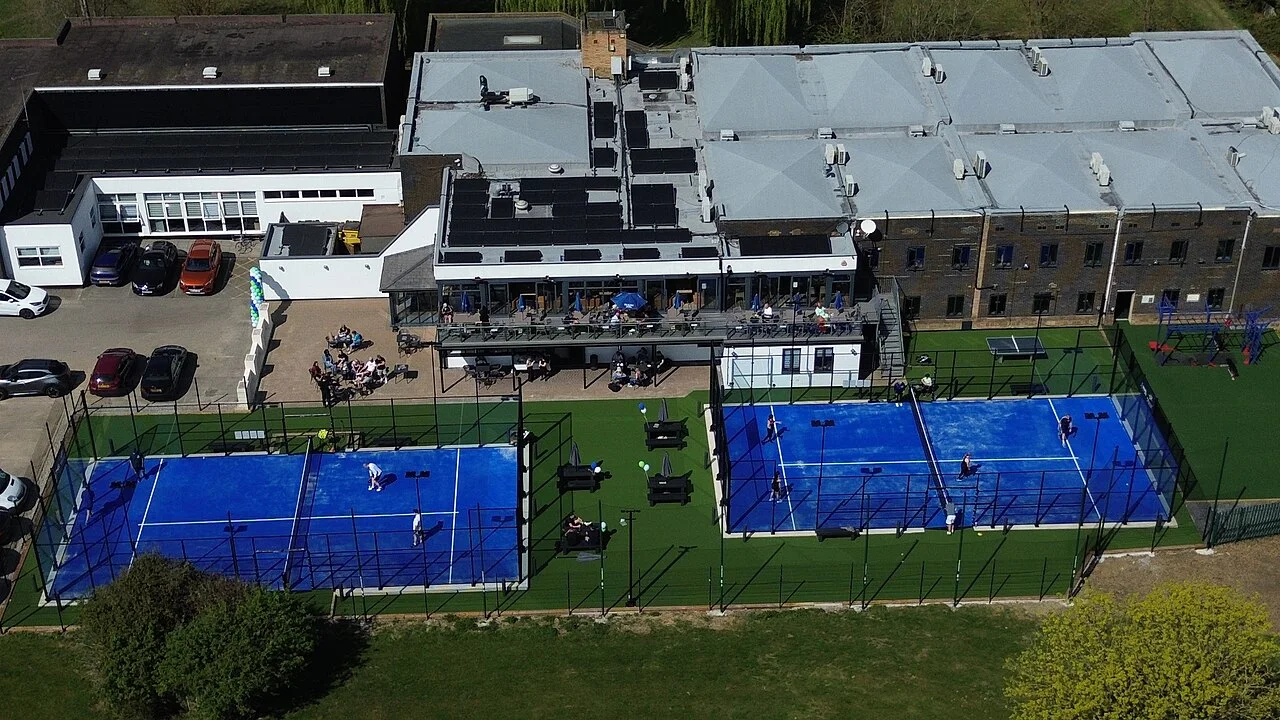
Padel, played primarily in doubles on an enclosed court with glass walls, adds elements of tennis, squash, strategy, and teamwork. The walls keep rallies alive, creating dramatic exchanges and opportunities for remarkable recoveries.
Both games offer exercise, mental stimulation, and social interaction. Both allow players to discover competition later in life, sometimes after decades away from organized athletics.
And both are becoming increasingly attractive investments for country clubs.
In 2025, The Breakers Palm Beach unveiled a $12 million racket sports complex incorporating tennis, pickleball, and padel. Its 16 courts included two dedicated pickleball courts and two padel courts, illustrating how established luxury properties are embracing the new sports alongside traditional tennis.
The underlying message is unmistakable: pickleball and padel are no longer passing recreational trends.
They are becoming part of the social infrastructure of American club life.
Unfortunately, expanding participation also means expanding opportunities for disagreement.
Two Types of Competitors, One Shared Court
Spend enough time around competitive club sports and a familiar contrast emerges.
There are players who treat every match as an opportunity for exercise, friendship, improvement, and enjoyment.
They compliment good shots, laugh at their own mistakes, accept disappointing calls, and shake hands sincerely when a match ends.
They want to win, but winning does not define the experience.
Then there are competitors who approach the court with a different intensity.
Every point matters. Every questionable call demands scrutiny. Losing is personal. An opponent's celebration can feel like an insult, and a partner's missed shot can provoke visible frustration.
The distinction is not necessarily between serious and recreational players.
Some highly skilled competitors display exceptional courtesy and restraint. Others with considerably less talent behave as though an amateur round-robin championship carries the prestige of Wimbledon.
Intensity itself is not the problem.
Athletic competition requires passion, determination, and a genuine desire to win. Padel and pickleball would be substantially less exciting without those qualities.
The problem begins when competitiveness becomes entitlement: when a player believes that wanting to win badly enough justifies intimidation, dishonesty, or disrespect.
A powerful shot is legitimate competition.
A deliberately humiliating remark after the shot is not.
Celebrating a comeback is part of sports.
Mocking an opponent who makes a mistake is something different.
Questioning a rule respectfully is reasonable.
Repeatedly accusing someone of cheating without evidence is not.
The real measure of sportsmanship is not how a player behaves while comfortably ahead. It is how that person responds when losing, frustrated, or convinced a decision has gone against them.
That is when character becomes visible.
The Line-Call Controversy: One of the Greatest Tests of Integrity
Perhaps no aspect of recreational racket sports produces more suspicion than line calls.
In pickleball, players are generally responsible for making calls on their own side of the court, subject to the applicable officiating rules.
That creates an unusual arrangement: the competitor who benefits from calling a ball out is often the person entrusted with making the decision.
Most players take that responsibility seriously.
But the system depends on honesty.
The 2026 USA Pickleball Official Rulebook establishes a fundamental principle: questionable calls must favor the opponent. A player should not declare a ball out without clearly seeing space between the ball and the boundary line.
In other words, uncertainty is not a license to award yourself a point.
USA Pickleball's Sportsmanship Guide goes further, urging players to correct incorrect calls by their own partners, acknowledge their own faults, and avoid arguing disrespectfully over an opponent's decision.
These expectations are not decorative suggestions. They are central to the credibility of self-officiated competition.
Consider a familiar situation.
A powerful return lands near the baseline. One competitor believes the ball touched the line. The receiver calls it out.
Perhaps the receiver genuinely saw it differently.
Perhaps the player was poorly positioned.
Perhaps the ball was traveling too quickly for an accurate judgment.
Or perhaps the player knowingly made the wrong call.
Those possibilities are not equivalent.
An honest mistake is not cheating. A difference in perspective is not proof of dishonesty. Even a clearly incorrect call, standing alone, does not establish intent.
But knowingly declaring a good ball out is a different matter. It crosses from competitive error into deliberate deception.
The trouble comes when repeated questionable calls cause opponents to lose confidence in a player's integrity.
Soon, every close ball becomes controversial. Teammates become uncomfortable. Opponents begin discussing the player privately.
A reputation develops.
And in close-knit communities, reputations can travel much farther than the ball.
One questionable call might cost a point. A reputation for dishonesty can cost friendships.
When the Scoreboard Becomes More Important Than the Neighborhood
Country club competition differs from most organized sports in one especially important respect.
The participants cannot easily escape one another.
Professional athletes may exchange heated words during competition, then travel to different cities, teams, hotels, and lives.
Country club players return to the same clubhouse.
They encounter each other in restaurants, fitness centers, card rooms, community meetings, and social gatherings.
This creates an unusual environment in which competitive relationships and personal relationships overlap.
An insult during a match can become an uncomfortable dinner.
A dispute between two players can involve their spouses.
A disagreement between doubles partners can divide an established group of friends.
And a heated exchange that should have ended at the court gate may continue through text messages, group chats, and conversations with other members.
The most damaging disputes are often not the loudest.
They are the ones that linger.
Two couples stop inviting one another to dinner. A regular foursome quietly dissolves. Members request not to be paired with certain people. Friends feel pressured to take sides over a disagreement they never witnessed.
Eventually, a sporting incident becomes a broader community problem.
What makes the situation particularly absurd is that the original disagreement may have concerned a single point in an inconsequential match.
The value of that point disappears almost immediately.
The social consequences can remain for years.
From Friendly Rivalry to an Actual Fight
For anyone tempted to dismiss country club confrontations as exaggerated storytelling, a well-documented Florida incident provides a sobering example.
In February 2026, the Associated Press reported that a pickleball match at a country club in Port Orange, Florida, escalated into a physical altercation following a dispute over rules involving the non-volley zone, commonly called the kitchen.
According to the arrest affidavit described in the reporting, two married couples began arguing about the application of the rules.
The disagreement escalated through verbal insults.
Authorities alleged that one participant struck an opponent with a pickleball paddle and punched him while he was on the ground. His wife was also accused of participating in the confrontation.
Both faced felony battery charges involving a person aged 65 or older.
According to the affidavit, as many as 20 people eventually became involved in the disturbance.
These were criminal allegations reported at the time, not findings of guilt.
Nevertheless, the incident revealed how far a seemingly minor recreational disagreement can escalate.
A conflict about where a player could legally strike a ball had reportedly resulted in arrests, accusations of violence, and the involvement of numerous people.
It was an extreme example, not evidence that such violence is common.
There are no reliable national statistics establishing how frequently pickleball or padel disputes turn physical at country clubs.
But the event illustrates an important danger: once a participant treats disagreement as a personal attack, an otherwise ordinary sporting dispute can become something much more serious.
The game stops being the issue.
Pride takes over.
Padel: A More Strategic Game, but No Immunity From Bad Behavior
Padel has cultivated a reputation for being highly social, tactical, and team-oriented.
The enclosed court creates extended rallies, and the use of glass walls introduces an element of unpredictability.
Because padel is played in doubles, coordination between partners is fundamental.
Players need to communicate, cover space intelligently, anticipate rebounds, and make tactical decisions together.
This shared responsibility can produce extraordinary camaraderie.
It can also expose personality conflicts.
When a team loses a crucial point, one partner may believe the other failed to cover the middle. Another may complain about excessive power, poor positioning, or a risky shot selection.
A player who repeatedly criticizes a partner can turn an enjoyable match into an unpleasant experience.
And when judgment becomes entangled with ego, the partnership suffers.
Padel has its own opportunities for disputes over service legality, double bounces, ball contact, scoring, and the proper application of wall and fence rules.
Its international governing body, the International Padel Federation, explicitly requires sportsmanlike conduct. Its rules address verbal abuse, physical abuse, unsportsmanlike behavior, and related misconduct.
Padel is not automatically more polite than pickleball, nor is pickleball inherently more confrontational.
The people involved determine the culture.
A courteous competitor generally remains courteous regardless of the racket in hand.
Likewise, someone who believes that winning excuses disrespect can bring that attitude to virtually any sport.
The Invisible Divisions Inside the Club
As participation expands, clubs also face a different challenge: social fragmentation.
What begins as a welcoming group of neighbors can gradually develop its own hierarchy.
Players sort themselves by ratings, tournament accomplishments, preferred partners, and competitive ambitions.
Some become intensely focused on rankings and formal match results.
Others simply want an enjoyable morning with friends.
Both approaches are legitimate. Problems arise when one group begins treating the other as less deserving of court time, respect, or inclusion.
Higher-rated players may become reluctant to play with developing competitors.
Lower-rated players may feel excluded from desirable social groups.
Regular partners may form closed circles, making it difficult for new members to participate.
Even informal round robins can become socially charged when pairings are perceived as unfair or when certain players repeatedly refuse to compete with others.
The result can be a curious contradiction.
Sports celebrated for creating community begin producing smaller communities that compete for status within the larger one.
Some degree of competitive separation is necessary. Players generally benefit from participating at appropriate skill levels.
But there is a difference between organizing fair competition and creating social exclusion.
A well-managed club should be capable of accommodating serious tournament competitors and members who simply want exercise and companionship.
Neither group should need to diminish the other.
The Other Country Club Conflict: Courts, Noise, and Competing Priorities
Not every division is created by player behavior.
Sometimes the conflict begins before anyone steps onto a court.
As clubs convert existing tennis facilities or invest in new pickleball and padel courts, they face questions about space, financing, access, and competing member interests.
Traditional tennis players may resent losing court availability.
Pickleball enthusiasts may argue that participation justifies additional facilities.
Padel supporters may favor investment in newer, more specialized courts.
Other members may wonder whether recreational development has begun to dominate club priorities.
Noise can become another flashpoint.
Pickleball's distinctive paddle-and-ball impact has generated complaints in residential communities throughout the United States.
In July 2025, the Miami Herald reported on disputes and litigation involving pickleball courts in South Florida homeowners' associations, including controversy surrounding court conversions and noise.
In March 2026, residents near pickleball courts at The Villages in Florida petitioned for noise mitigation, according to local reporting.
These disputes reflect a broader reality for residential country clubs: an amenity that enhances one member's lifestyle may diminish another member's enjoyment of the neighborhood.
Clubs therefore have responsibilities beyond scheduling matches.
They must manage facilities transparently, consider sound and residential proximity, create equitable access policies, and balance the needs of different members.
A successful sports program should strengthen the community, not create resentment between the people using the facilities and those living nearby.
The Psychology of Losing: Why Small Matches Produce Big Emotions
Why can a seemingly insignificant recreational match provoke such intense behavior?
There is no single explanation, and it would be misleading to diagnose individual players based on isolated confrontations.
But the structure of recreational competition offers several plausible contributors.
First, sports provide immediate feedback.
A missed shot is visible. A lost point is measurable. A defeat is public.
For people accustomed to professional achievement, authority, or success in other areas of life, recreational competition may offer one of the few environments where performance cannot be controlled through wealth, professional standing, or seniority.
Athletic ability has little interest in someone's business accomplishments or social standing.
Second, competition can become part of personal identity.
Players invest substantial time practicing, arranging matches, improving rankings, and discussing performance.
When that identity becomes too closely connected to winning, a defeat can feel like a challenge to personal worth rather than an ordinary sporting outcome.
Third, doubles competition introduces shared responsibility.
It is easier to become frustrated when another person's mistakes affect the result.
That frustration can produce criticism, resentment, or blame.
Finally, social visibility amplifies the emotional stakes.
Losing in front of neighbors or longtime friends may feel more embarrassing than losing to strangers.
These are possible dynamics, not established explanations for every disagreement.
But together they help explain why recreational sport sometimes produces emotional intensity that seems entirely disproportionate to the actual stakes.
What the Research Says About the Benefits of Playing Together
The troubling stories should not obscure an important reality: recreational racket sports can be extremely valuable to community life.
Research increasingly supports the social and psychological benefits of pickleball.
A 2024 scoping review published in the Journal of Physical Activity and Health examined research on pickleball participation and identified potential benefits involving physical activity, social interaction, psychological well-being, and community connection.
A separate national survey of 825 Americans over age 50, published in 2025, found an association between current pickleball participation and lower reported loneliness compared with respondents who had never played or had stopped playing.
Because that study was cross-sectional, it could not establish that pickleball caused the difference.
Nevertheless, the findings reinforce the importance of social participation and active recreation.
Other qualitative research has described how recreational pickleball can create belonging, purpose, and positive social relationships among older adults.
These findings make the interpersonal conflicts especially unfortunate.
The same activity that can bring people together may damage those connections when poor sportsmanship is tolerated.
Clubs should not ignore aggressive conduct as merely part of competitive culture.
Doing so risks undermining one of the principal reasons members play in the first place.
The Responsibility of Clubs: Competition With Boundaries
Country clubs have an opportunity to establish a culture in which serious competition and mutual respect coexist.
That requires more than posting a general reminder to behave appropriately.
Clubs should publish clear standards governing line calls, acceptable language, player conduct, physical intimidation, disputes, and disciplinary consequences.
Members should understand the difference between a legitimate competitive disagreement and behavior that crosses the line.
Tournament organizers should establish procedures for resolving contested rules without allowing arguments to escalate.
Officials or neutral tournament directors can assist during higher-stakes matches, although routine social play will still depend heavily on voluntary honesty and restraint.
Player ratings and groupings should be transparent, with opportunities for members to move between levels as their skills develop.
Social programs should offer a mix of competitive leagues, balanced round robins, instructional events, and more relaxed recreational play.
Importantly, clubs must be prepared to enforce their standards consistently.
A longtime member, highly rated competitor, influential committee member, or tournament champion should not receive permission to intimidate others simply because of status.
Nor should a player be punished based solely on an unverified accusation arising from a disagreement.
Fair processes, consistent rules, and proportionate responses protect everyone.
The objective is not to remove emotion from competition.
It is to preserve the boundaries that keep emotion from turning into abuse.
The Unwritten Rules That Matter More Than the Official Rules
Every sport has a rulebook.
But the most important principles of country club competition often extend beyond the technical rules of the game.
A player can make a legally valid shot and still behave disrespectfully afterward.
A team can win a match fairly while embarrassing an opponent through unnecessary comments.
Someone can challenge a questionable decision without shouting, insulting, or accusing another person of intentional dishonesty.
The unwritten rules are straightforward.
Compete intensely, but do not humiliate.
Celebrate success, but acknowledge the effort of others.
Make honest calls, including the ones that cost you points.
Treat doubles partners as teammates, not convenient targets for blame.
Accept that different people remember close plays differently.
And when disagreement becomes heated, remember that no recreational point is worth threatening someone's safety or dignity.
There is another responsibility that receives too little attention: the willingness to correct a teammate.
When a partner makes a clearly incorrect call or behaves inappropriately, silence can be interpreted as approval.
It takes character to respectfully acknowledge that your own team was wrong.
But those moments are often more meaningful than anything recorded on the scoreboard.
True sportsmanship includes the willingness to sacrifice a competitive advantage to preserve fairness.
The Morning After the Match
Imagine two teams walking off a padel court after a difficult match.
One side has lost narrowly.
There were disputed calls, a few frustrating mistakes, and moments when tempers threatened to rise.
But instead of accusations, there are handshakes.
One player compliments an opponent's excellent return. Another acknowledges a shot that was probably closer than originally believed.
The competitors discuss the match, laugh about a remarkable rally, and make plans to play again.
Now imagine the alternative.
The losing team refuses to acknowledge the winners.
Accusations are exchanged. The conversation becomes personal.
By lunchtime, the dispute has reached other members.
By dinner, mutual friends are wondering whether they should take sides.
The following week, two neighbors avoid one another in the clubhouse.
Both scenarios begin with the same game.
Only one ends with the community stronger.
And that is the essential difference between sportsmanship and merely winning.
The Ultimate Country Club Championship
Pickleball and padel have brought extraordinary vitality to private clubs.
They have given older athletes renewed competitive purpose, younger members new reasons to participate, and neighbors opportunities to form friendships that might never otherwise have developed.
They deserve the enthusiasm surrounding them.
The occasional ugly confrontation should not define either sport, and the overwhelming majority of recreational matches end without anything approaching a serious dispute.
Nevertheless, their popularity makes it increasingly important to examine what competitive culture should look like inside a shared residential community.
Because the true legacy of a player is rarely determined by a tournament result.
Few people will remember who won a particular round robin three years from now.
They may not remember the score, the final point, or the trophy presentation.
But they will remember who consistently demonstrated integrity.
They will remember who made weaker players feel welcome, who congratulated opponents after difficult losses, and who remained gracious when a close call went against them.
They may also remember who repeatedly started arguments, embarrassed partners, questioned everyone's honesty, or treated other members with contempt.
For country club residents, the lesson is especially important.
You are not merely competing against opponents. You are playing with neighbors, friends, and people who will remain part of your community long after the match is over.
The scoreboard resets after every game.
Relationships do not.
And ultimately, the most respected champion at any country club should not simply be the player who wins the most matches.
It should be the person everyone still wants to play with tomorrow.
Sources and Further Reading
The following sources support the participation statistics, official rules, documented incidents, and health research discussed in this article.
Sports & Fitness Industry Association (2026) — 2026 Pickleball Single Sport Report. U.S. participation trends, demographics, and growth. Read source
Sports & Fitness Industry Association — U.S. Pickleball Participation Statistics. National pickleball and padel participation estimates. Read source
International Padel Federation (2025) — World Padel Report 2025. International participation, clubs, and facilities. Read source
United States Padel Association (2026) — 2025 Annual Report. Membership and club expansion. Read source
USA Pickleball — Official 2026 Rulebook. Line calls, officiating responsibilities, and rules of competition. Read source
USA Pickleball — Sportsmanship Guide. Recommended standards for courtesy, honesty, dispute resolution, and player conduct. Read source
International Padel Federation — Official Rules of Padel. Gameplay rules and player conduct. Read source
Associated Press (February 12, 2026) — Pickleball Argument Sparks a Brawl at a Florida Country Club. Reporting on the Port Orange incident. Read source
Miami Herald (July 31, 2025) — Why Pickleball Is Pitting Neighbor vs. Neighbor in South Florida Communities. Court-related neighborhood disputes. Read source
Journal of Physical Activity and Health (2024) — Pickleball Participation and the Health and Well-Being of Adults: A Scoping Review. Read source
National survey research (2025) — Association of Pickleball Participation With Decreased Perceived Loneliness and Social Isolation. Read source
Its illustrative scenarios are not representations of specific unreported events, and its discussion of player conduct does not imply wrongdoing by any particular unnamed individual or club.