
Padel is a racquet sport usually played in doubles on an enclosed court. Its defining twist is that the walls are in play: after the ball bounces on the court, it can rebound off glass and still be returned. That creates rallies built on control, positioning and teamwork, not just hard hitting. If you are wondering what padel is, how the rules work or what to bring to your first session, this guide walks through the essentials and helps you choose a sensible way to begin.
What padel is and why the walls matter
Padel combines familiar racket-sport elements with a distinctive enclosed court and wall play. Most newcomers encounter it as a doubles game: two players share each side, hit a ball over a net, and work together to defend space and create openings. The playable walls make rebounds part of the rally after a legal bounce, so a point can continue even when a player does not reach the ball immediately.
That wall element changes decision-making. Instead of chasing every ball as soon as it passes, players learn to judge its path, let it rebound when useful and prepare for the next shot. The game rewards control and cooperation, making it useful to learn the fundamentals before trying advanced shots.
Padel guides for new players commonly cover the rules, equipment, techniques and ways to get started. The sections below turn those basics into a practical plan for your first time on court.
The court, walls and basic layout
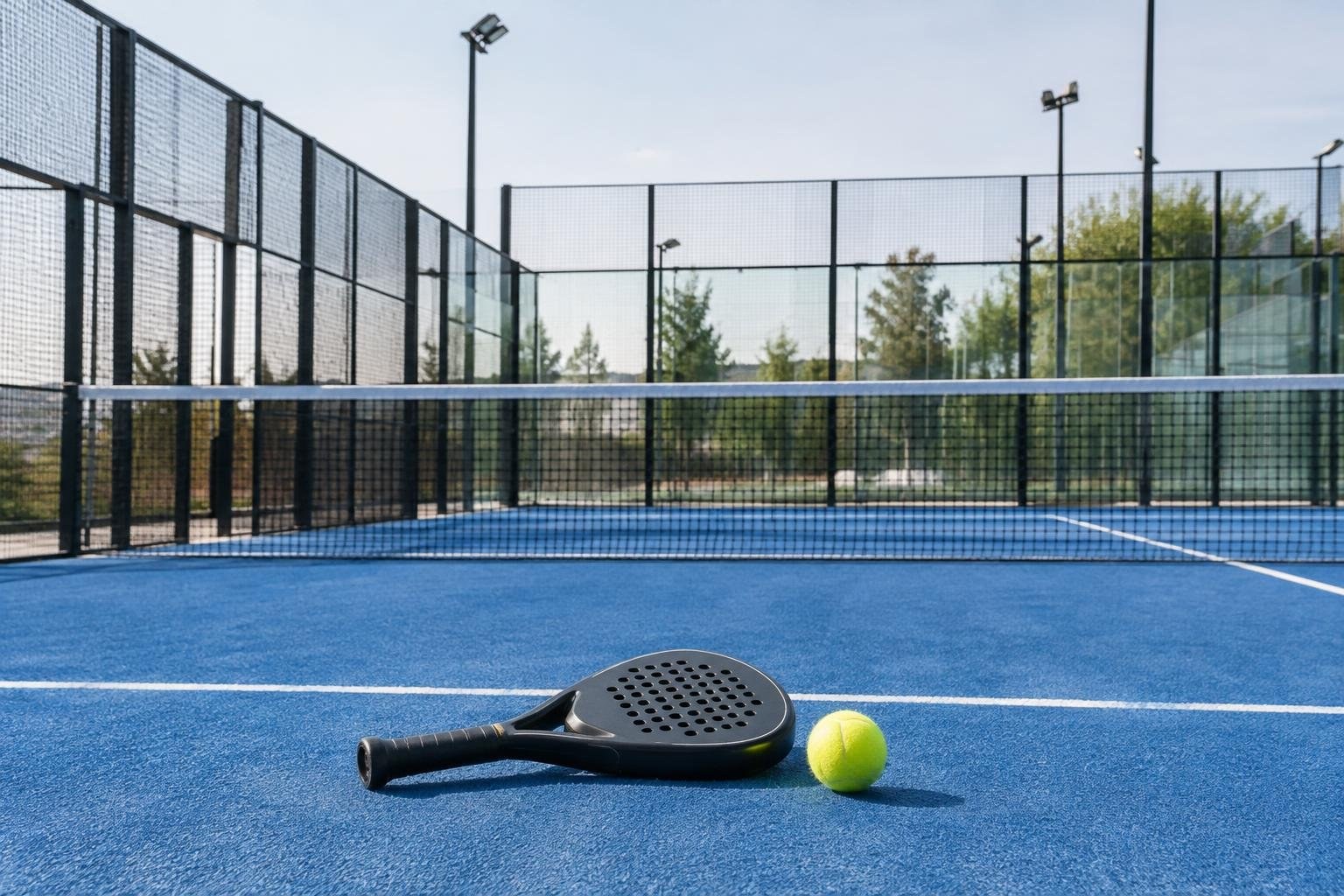
A padel court is enclosed, with glass walls and mesh sections around the playing area. A net divides the two sides, and service boxes give players a target for the serve. The walls are not simply barriers: they affect the ball’s path and are used during a rally.
The most useful wall rule for a new player is straightforward: let the ball bounce on your side first, then you may play it after it rebounds from your wall, provided it has not bounced a second time. A ball hit directly into the opponent’s wall before it has bounced on their court does not count as a legal return. Start by watching the ball’s bounce and rebound rather than rushing toward the glass.
The walls create more possible ball paths than an open court. A ball can rebound at an angle or lose pace against the glass, so leave room to move and read the trajectory. Mesh and glass may produce different rebounds; concentrate on tracking the ball and maintaining balance rather than trying to predict every rebound in advance.
Before play, ask the venue to explain its court access and any local house rules. The basic purpose of the court layout is to support the serve, net play and legal wall rebounds.
How serving, rallies and scoring work
Padel commonly uses tennis-style scoring: points progress through 15, 30 and 40, then game. Games make up sets. The exact match format can depend on the competition or venue, so check whether a casual booking or event uses a shortened match or a particular deciding-point rule.
Players serve diagonally into the opposite service box. The server lets the ball bounce and strikes it underhand, at or below waist height. The receiving team tries to return it after the serve has landed in the correct box. As with other rules details, confirm any local variation before a competitive match.
During a rally, aim to return the ball before it bounces twice on your side. A ball that bounces once and then rebounds from a wall is still playable. The point ends when a team cannot return the ball legally, sends it out or commits another fault under the rules being used.
For a first game, remember three priorities: make a legal underhand serve, keep the ball in play and communicate with your partner. Understanding those basics makes it easier to learn the finer points as they arise.
What equipment do beginners need?
You do not need a full equipment collection to try padel. Start with a padel racket, suitable court shoes and comfortable clothing that lets you move freely. A padel racket has a solid face with holes rather than the strings of a tennis racket. If you do not own one, ask whether the venue offers rentals before you book.
For a first racket, prioritize a comfortable grip and a manageable feel over promises of extra power. Racket shape, balance, weight and face materials can influence how a racket feels, but the right choice depends on the player. New players benefit from trying equipment before spending heavily, if rentals or demo options are available.
- Racket: Confirm whether you need to bring one or can rent it.
- Shoes: Choose sports footwear suitable for the court surface and secure movement.
- Clothing: Wear comfortable clothes that allow side steps, reaching and turning.
- Water: Bring water and take breaks when needed.
Do not buy a racket based only on a label such as beginner or power. Comfort, control and confidence are more useful starting criteria.
How to get started: a first-session plan
The simplest way to begin is to find a court session that fits your experience and equipment needs. A booking may be court time only, or it may be part of a lesson, coached introduction, group activity or other format. Confirm the details rather than assuming a reservation includes a coach, racket or organized opponents.
- Choose a format. Decide whether you want an introductory lesson, a casual game with friends or a beginner group.
- Check what is provided. Ask about racket rental, balls, footwear requirements, session length and the venue’s cancellation policy.
- Arrive ready to learn. Tell the instructor or other players that you are new, and ask for a quick explanation of serving and wall play.
- Start with control. Focus on sending the ball safely across the net and moving with your partner.
- Review what felt difficult. Use the next session to practice one or two specific skills rather than trying to fix everything at once.
Beginner resources commonly recommend learning the fundamentals of rules, equipment and play before progressing to more advanced technique. A short orientation can help you understand the flow of a game, but no single lesson guarantees a particular level of progress.
When a lesson or guided introduction may help
A beginner session or coaching may be useful if you are unsure how to serve, when to let the ball rebound, or where to stand with a partner. It can also help if you find that games stop frequently because players are uncertain about rules or court movement. These are practical reasons to seek instruction, not signs that you need a formal program before you can play.
Consider asking for help if any of these apply:
- You have not used a racket sport court before and want an introduction to safe movement.
- You keep swinging at the ball before it reaches a comfortable contact point.
- You and your partner both chase the same shot or leave a large gap between you.
- You are confused by a wall rebound or the underhand serve.
- You want structured practice rather than learning only through casual games.
Players with tennis, squash or other racket-sport experience may recognize some movement or rally concepts, but padel still has its own court and wall decisions. Treat prior experience as a starting point, not proof that every technique transfers directly.
If pain, dizziness or another health concern affects your ability to play, stop and seek appropriate professional advice. A coach can teach sport skills, but should not be treated as a medical professional.
Padel compared with tennis and squash
Padel is often compared with tennis because both use a net, a racket, a ball and familiar point scoring. It is also compared with squash because players use walls. Padel has its own combination: an enclosed court, wall rebounds after the ball bounces, and a game commonly organized around doubles teamwork.
| Feature | Padel | Tennis | Squash |
|---|---|---|---|
| Walls in play | Yes, after a legal court bounce | No, in standard court play | Yes, walls are central to rallies |
| Typical social format | Commonly doubles | Singles and doubles | Often singles |
| Key adjustment for a newcomer | Read rebounds and coordinate with a partner | Cover an open court and manage longer reaches | Read wall paths and share a compact court |
This comparison is a broad orientation, not a ranking of which sport is better. If you enjoy learning trajectories and working with a partner, padel may appeal. If you prefer singles or already enjoy another racket sport, try a session and judge the experience for yourself. Equipment and detailed rules differ, so do not assume a tennis racket or tennis technique will transfer unchanged.
What to expect, how long it takes and cost considerations
Expect your first session to focus on basic contact, serving, returning and learning how the ball rebounds. How quickly you become comfortable depends on your prior experience, practice and the kind of guidance available. Some beginners may rally early, but that does not mean wall timing and match positioning will feel automatic.
Use each session to build one layer at a time: first make reliable contact; then practice a controlled serve and return; then add the wall and partner movement. An instructor or group may set a different pace, so ask what the session is designed to teach and how much of it is active play.
Cost depends on the booking and what is included. Before committing, compare the total charge for the session, any racket rental, coaching or group participation, and any other stated fees. Rates and availability vary by location and provider; check current terms directly with the venue rather than relying on a general estimate.
To keep spending sensible, try rental equipment if available and book a format that matches your goals. A court-only game may suit people who already have partners and know the basics. A coached introduction may offer more guidance, but compare what instruction is actually included.
How to choose a court, coach or beginner session safely
Choosing a court, coach or beginner session is a consumer decision: compare the actual experience being offered, not just the label. Look for clear information about session level, length, group size, equipment, court access and what happens if you need to change a booking. Ask whether the coach teaches beginners and how the session balances instruction with playing time.
A useful checklist before booking:
- Is the session genuinely suitable for first-time players?
- Are racket and ball arrangements explained?
- Are the venue’s footwear and safety expectations clear?
- Can you find the cancellation and payment terms?
- Does the provider explain the instructor’s relevant experience or qualifications without vague guarantees?
- Can you contact someone with questions before paying?
Credentials, coaching standards and facility requirements can vary by location. Check locally applicable information and verify claims with the provider or relevant sporting organization. Do not assume that a particular badge, membership or insurance arrangement applies everywhere. Similarly, ask who is responsible for maintaining the court and what the venue’s safety procedures are.
For injuries or medical questions, rely on a qualified health professional. A sports coach can offer instruction on movement and technique but should not diagnose or treat a medical condition.
Basic positioning and shot choices
Good early padel is less about spectacular shots and more about decisions that keep your team organized. Start in a balanced position, watch the ball, and move with your partner so you do not leave an easy opening between you. If one player goes forward and the other stays far back, opponents may be able to target the gap.
Use a lob, a shot hit high over opponents, when you need time or want to move opponents away from the net. Do not lob automatically: a short lob can give opponents an easy attack. A volley is a shot played before the ball bounces; use it only when you are balanced and can control the direction.
When defending near the back, resist the urge to hit every ball hard. A controlled return that gives your pair time to reset may be more useful than a powerful shot that goes out. Learn to let a ball reach the wall when its path makes that the safer option. As your reading improves, you can explore named overhead shots such as the bandeja or víbora with instruction rather than attempting them without a sound base.
These ideas are principles, not rigid rules. The right choice depends on where you and your opponents are, how fast the ball is arriving and whether you can keep control.
Safety, common mistakes and a practical checklist
Padel uses walls and quick changes of direction, so prepare to move thoughtfully. Follow the venue’s instructions, check the playing area before starting and use footwear appropriate for the surface. Warm up gradually, avoid rushing into full-speed movements before you feel ready, and take breaks as needed. These are general participation precautions, not a substitute for personalized medical advice.
Common beginner mistakes are easy to recognize and correct:
- Hitting too hard: Aim for a controlled return and a larger safe target.
- Running toward every ball: Read whether a bounce or wall rebound gives you time to set up.
- Standing still after a shot: Recover to a useful position and check where your partner is.
- Splitting up: Move together so opponents have fewer open spaces to target.
- Ignoring the serve rules: Practice the bounce-and-underhand action before a competitive match.
- Buying equipment too soon: Try the game and available rental gear before choosing a racket based on advertising alone.
- Skipping the booking details: Confirm what is included, the venue’s policies and whether you need to bring equipment.
Good court etiquette matters too. Communicate clearly with your partner, avoid unsafe swings near other players, and follow the venue’s directions about access and equipment.
Ways to save and a before-you-book checklist
Use this short decision guide before your first booking:
- Decide whether you want a coached introduction or a casual game.
- Check whether the session accepts beginners and what level it is aimed at.
- Confirm racket availability, footwear guidance, session duration, total price and cancellation terms.
- Ask whether the venue explains its rules and safety expectations before play.
- Bring comfortable sports clothing and water, then tell your playing partners you are new.
- After the session, note one skill to practice and whether you want more instruction or another casual game.
There is no need to buy premium equipment or master every shot before joining a beginner session. A clear idea of the rules, a willingness to communicate and a comfortable way to move are enough to make the first game more enjoyable. If a provider will not explain basic booking terms or makes guarantees about results, pause and compare other options.
Factors That Affect Your Padel Plans and Costs
The cost, pace and usefulness of getting started depend on the choices you make before booking. Compare these factors rather than assuming every beginner session offers the same experience:
- Session format: Court time, a coached introduction and a beginner group can provide different amounts of instruction. Check what is included.
- Equipment: A racket rental, if available, may affect the total cost. Confirm whether the venue supplies rackets and balls.
- Session details: Length, group size and active playing time can shape what you get from a booking. Ask the provider for specifics.
- Starting experience and practice: Familiarity with racket sports and how often you play can affect how quickly skills such as serving, wall timing and positioning feel comfortable.
- Venue and booking terms: Prices and availability vary by provider and location. Check the current total charge and cancellation terms directly before paying.
Set your goal first. If you mainly want to try the sport, compare a casual game with a guided introduction. If you want instruction, ask what skills the session covers and how much time is spent playing.
Frequently asked questions
What is padel?
Padel is a racquet sport usually played as doubles on an enclosed court. Players hit the ball over a net, and the walls can keep a ball in play after it bounces on the court. The sport combines rallying and positioning with decisions about when to use the walls.
How do you play padel?
A padel match is commonly played as doubles, with one player on each side of the net in each team. Players use solid, perforated rackets and a ball, serve underhand after a bounce, and can play a ball off their own walls after it has bounced on the court. The goal is to return the ball before it bounces twice on your side.
How does padel scoring work?
Padel commonly uses tennis-style scoring: 15, 30, 40 and game, with games grouped into sets. Check the format before play because casual bookings and competitions may use different match lengths or deciding-point procedures.
What equipment do I need to start playing padel?
A beginner needs a padel racket, suitable court footwear and comfortable sports clothing. Many venues may offer rental equipment, but check before you book. Do not assume tennis shoes provide the same grip or support on every padel surface.
Is padel easy for beginners to learn?
You can learn the basics of serving, returning, wall play and partner positioning during your first sessions. Becoming comfortable with bounce timing, court coverage and decisions about when to approach the net takes practice; progress varies by person and playing frequency.
Can you use the walls in padel?
A padel court is an enclosed playing area with a net, service boxes, glass walls and mesh sections. The walls are part of play: after the ball bounces on the court, it may rebound from a wall and still be returned before a second bounce.
People Also Ask
Is padel played with two or four players?
Padel is usually played by two teams of two. Players use solid padel rackets to send a ball over a net, and enclosed walls make rebounds part of play after a legal court bounce.
Is a padel racket the same as a tennis racket?
No. A padel racket is a solid, perforated racket rather than a strung tennis racket. The two sports also differ in court layout and how walls are used.
How do you serve in padel?
The serve is underhand: let the ball bounce, strike it at or below waist height, and send it diagonally into the opponent’s service box. A serve that touches the net and lands in the correct box is generally replayed, but confirm the rules used at your venue.
When can you hit the ball off the wall in padel?
After the ball bounces on your side, it may hit your glass wall and remain playable. You must return it before it bounces a second time. A ball that hits a wall before its first court bounce is not a legal rally return.
What should a beginner buy first for padel?
The basic equipment is a padel racket, a ball and appropriate court shoes. Check whether the venue supplies or rents rackets and balls before buying anything.
Can tennis players switch easily to padel?
Tennis experience can help with racket coordination, reading a ball and understanding basic scoring. Padel still requires learning the wall rebounds, underhand serve, doubles positioning and a different approach to shot selection.
Padel is a doubles-first racquet sport where smart positioning, controlled shots and the use of glass walls matter as much as power. You can begin with borrowed or rented equipment, learn the basic serve and scoring, and build confidence through games with patient partners. Before booking, compare nearby courts, what each session includes, and whether a beginner lesson would help. When you are ready to take the next step, explore your options and find a way to get started through Estimate.org.
Your next step
Explore padel apparel and the Major League Padel community.
Last reviewed and updated October 8, 2026 by the Major League Padel Editorial Team.
Sources
- Complete Beginner's Guide to Padel | Rulo Blog
- Complete Beginner’s Guide to Padel | KG Padel Academy
- How to get started in padel | Beginner’s guide
- What Is Padel? A Beginner's Guide to the Sport – Padelmarket USA
- What is Padel? A Complete Guide to the Sport | The Padel School Blog
- Padel for Beginners — Rules, Gear & Your First Match (2026 Guide) | Padel Rules
- Padel 101: A Beginner's Guide | Padel39
- How to Play Padel: Complete Beginner's Guide 2026