
Choosing a padel racket by grams alone can be misleading. Two rackets with similar listed weights may feel different once you account for balance and the accessories fitted to the handle and frame. For many players, 350–360 g before accessories is a useful starting point, but the right choice is the one you can swing comfortably and control through a session. This guide explains how to compare racket weights, what to ask before buying, and how to avoid paying for a setup that does not suit your game.
What padel racket weight should I use?
Short answer: Start by comparing rackets around 350–360 g before accessories, then choose the one that feels comfortable and controllable in your hand. That range is a useful starting point for many players, not a universal prescription. Published guidance puts many adult rackets around 350–370 g, while broader guides describe rackets across approximately 340–385 g. Brand categories and individual preferences vary.
A lighter racket may be easier for you to maneuver, while a heavier one may feel more substantial. Neither result is guaranteed by the number alone: balance changes how racket weight is distributed. Beginners and players prioritizing comfort can try the lighter end first, then move up only if the racket still feels easy to control. Do not choose weight based only on your gender, body size, or playing level.
1. What the weight listing includes, and how to check it
The listed weight is only a starting measurement. Ask whether it describes the bare racket or the racket with accessories, and whether the product’s stated figure is a target or the measured weight of the particular racket you will receive. Different brands may group “light” and “medium” rackets differently, so do not assume two labels mean exactly the same thing.
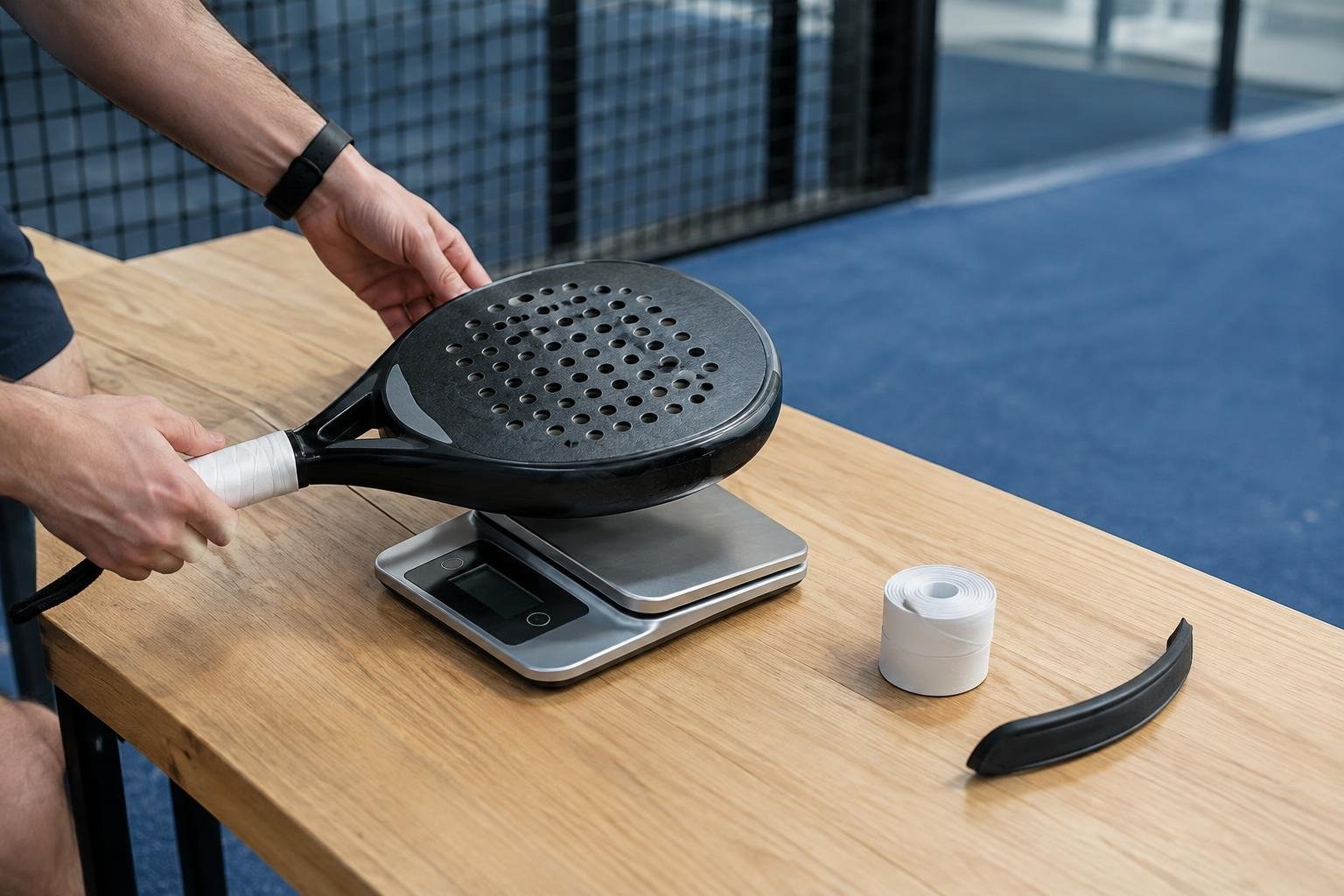
An overgrip and edge protector add weight. One guide estimates that these accessories together typically add about 10–15 g. That could turn a racket listed at 365 g into a setup closer to 375–380 g, depending on the accessories. If you compare two rackets, weigh them with the same grip and protector arrangement where possible. Otherwise, you may be comparing the accessories as much as the rackets.
Ask for the finished weight or weigh the racket yourself if you can. Record the result with your usual accessories fitted. This gives you a more useful number to compare later.
2. How to choose a racket weight: a practical process
Choosing a racket is a small process: establish your starting range, check what the stated weight includes, compare balance and handling, then try the setup if you have access to a demo. Do not rely on a product page number alone. If you cannot test before buying, ask the retailer to explain the listed weight, included accessories, and return terms before you order.
- Set a starting point. If you are unsure, compare rackets around 350–360 g before accessories.
- Check balance. A lower-balanced racket can handle differently from a higher-balanced racket at a similar weight. Weight and balance should be considered together.
- Account for your setup. Ask whether the weight includes an overgrip or protector.
- Assess control and comfort. Consider whether you can prepare and swing without forcing the movement.
- Reassess after play. A few swings in a shop may not tell you how the setup feels throughout a session.
This process does not require a special fitting service. A knowledgeable retailer or coach can help you compare options, but the decision should be based on your own handling and comfort.
3. Signs your current racket weight may not suit you
Consider testing another weight or balance if your racket consistently feels hard to maneuver, if you struggle to prepare the racket comfortably, or if the setup feels tiring to use. These are prompts to reassess the fit, not proof that the racket is the cause of a problem. Technique, grip, racket construction, and individual comfort may also matter, and the supplied weight guidance does not establish a diagnosis.
Players seeking a more comfortable feel can compare lighter options around 350–360 g, a range identified in one guide for beginners and players who prioritize comfort. If you already use a racket in that range, try comparing its balance and fully accessorized weight before assuming that going lighter will help. A separate guide suggests beginners consider 340–355 g, which shows why suggested ranges should be treated as starting points rather than strict level-based rules.
If discomfort persists, stop using a setup that feels uncomfortable and seek appropriate professional advice. Changing racket weight is not a substitute for advice about ongoing pain or injury.
4. Cost and pricing considerations before you buy
Racket and fitting prices vary by model, retailer and service. Avoid using a price estimate from another market or date as a reliable local quote. Before spending, ask what the racket costs, what is included, and whether any demonstration, fitting, or return option has a separate charge.
Compare the complete purchase rather than a headline racket price. Ask whether the overgrip and edge protector are included, because they affect both the finished weight and what you may need to add. If you are considering a more expensive model mainly because it is heavier, first check whether a racket at a different balance or with a suitable accessory setup provides the handling you want.
Ask the retailer to confirm the final price and relevant terms in writing before you commit. A clear comparison should show the racket, included accessories, optional items, and any service charges separately. Do not assume that a higher price guarantees a better weight fit.
5. Factors that change how racket weight feels
Weight is one factor in how a racket feels, but it is not the whole specification. Balance affects how weight is distributed and can change handling. One racket guide notes that a lower-balanced racket may allow a higher total weight while maintaining similar handling to a lighter racket with a different balance. Treat that as a comparison principle, not a guarantee that any two rackets will feel identical.
Your finished setup matters too. A racket’s listed weight can rise when you add an overgrip or edge protector. Avoid using unsupported claims about construction as a substitute for testing the actual racket.
When comparing choices, keep the question practical: Can you maneuver the racket comfortably? Does it feel stable enough for your normal strokes? Can you maintain control without forcing your swing? If two rackets are close in weight, balance and in-hand feel can help explain why one suits you better.
6. Options compared: lighter, middle, and heavier rackets
Use these ranges as an initial shortlist, not as rules tied to age, gender, body weight, or ability. The guidance varies: one source recommends 350–360 g for beginners and players seeking comfort, while another suggests 340–355 g for beginners. Other guides place medium rackets around 340–360 g or describe a broad overall adult range of about 350–370 g.
| Starting option | When it may be worth comparing | What to check |
|---|---|---|
| A lighter option, around 340–355 g | If easier handling is your priority or you are new to choosing rackets | Whether the complete setup still feels stable and controlled |
| A middle starting range, around 350–360 g | If you want a practical first shortlist without choosing an extreme | How balance and accessories affect the finished feel |
| A heavier option, around 365 g and above | If lighter rackets feel insubstantial and you can comfortably handle a heavier setup | Whether you can maneuver it consistently through normal play |
The ranges overlap because sources classify rackets differently. Choose based on handling and comfort, not the assumption that a particular level automatically calls for a particular weight. Higher weight is not a shortcut to better technique or results.
7. What to expect when testing a racket, including timing
Expect the choice to take more than a glance at a label. If a retailer or club offers a suitable demonstration, compare the racket with a similar grip setup and use it in ordinary play. No reliable fixed trial period is established by the available sources, so do not treat a single number of minutes, sessions, or days as a universal test.
During a comparison, pay attention to whether the racket is comfortable to prepare and swing, whether the weight feels manageable as you continue playing, and whether you can control it without changing your movement to compensate. If you can only handle the racket briefly, make your decision cautiously and check the return policy before purchase.
There is no guaranteed timeline for adapting to a different racket. Instead of assuming you will get used to any weight, reassess the complete setup after play. If it remains uncomfortable or difficult to control, compare a different weight or balance rather than forcing the adjustment.
8. How to choose a helpful retailer or adviser
You do not need a provider to choose a racket, but a retailer or coach who can explain the specification can make comparisons clearer. Look for someone willing to explain the listed weight, balance, accessories, and any limitations of a short trial. The goal is informed advice, not a sales pitch for the heaviest or most expensive model.
Ask direct questions: Is this the actual racket’s weight or a stated range? Are accessories included? Can I compare a similar racket with a different balance? Is a demo available, and what are the terms? What happens if the racket does not suit me? A useful answer should help you understand tradeoffs and avoid pressure to buy immediately.
Do not assume a salesperson has a particular credential unless they can verify it. If you seek technical advice, ask about the person’s relevant experience and consider getting a second view from a coach who knows your game.
9. Credentials, warranties, permits, and comfort considerations
A consumer buying a racket should focus on product details, purchase terms, and safe, comfortable use. Check the rules and protections that apply where you live if you need a definitive answer about returns, warranties, or product requirements.
Before paying, review the written warranty and return conditions. Confirm who handles a warranty claim, what the policy covers, and whether changing or adding accessories affects the terms. Do not treat a warranty as proof that a racket will suit your weight preference.
For comfort, do not ignore persistent discomfort or force yourself to keep using a racket that feels difficult to handle. Some supplied guidance recommends lighter rackets for easier handling and less arm strain, but that is not a guarantee of injury prevention. Seek appropriate professional advice for continuing pain or suspected injury.
10. Ways to control cost without compromising your decision
Save safely by comparing more than one weight and balance before choosing, and by asking whether accessories are already included. A lower-cost option that fits your handling needs may be a better purchase than paying extra for a specification you have not tested.
- Ask for the final price, included accessories, and any optional service charges.
- Check the return and warranty terms before buying, especially if you cannot test the racket.
- Compare the finished weight rather than buying extra accessories solely to change a number.
- Do not remove a protector or use an unsuitable grip just to reach a target weight; choose a setup you can play with comfortably.
- If you are uncertain, ask whether a demo or a straightforward comparison is available before committing.
Saving money should not mean skipping essential product information or accepting unclear purchase terms.
11. Mistakes, red flags, and a pre-purchase checklist
Avoid these common decision errors:
- Treating a suggested range as a rule. The sources offer different beginner ranges. Use them to shortlist, then assess comfort and control.
- Comparing bare racket weight with a finished setup. Accessories can add roughly 10–15 g together, so compare like with like.
- Ignoring balance. A racket’s balance can change how its weight feels in use.
- Assuming heavier means better. Weight alone does not establish better performance or a better fit.
- Buying under pressure. Ask for the specifications and purchase terms before deciding.
- Ignoring persistent discomfort. Do not assume changing racket weight will solve a health problem.
Before you buy: confirm the stated weight, ask whether accessories are included, compare balance, test the racket if possible, check the return and warranty terms, and choose the setup you can control comfortably.
Frequently asked questions
What padel racket weight should I use?
For many players, 350–360 g before accessories is a reasonable place to start. Your best weight depends on how the racket feels in your hand and whether you can swing it comfortably and consistently.
Is a lighter padel racket always better for beginners?
Not necessarily. A lighter racket can feel easier to move, while a heavier racket may feel more substantial. Balance, racket design, grip setup, and your own swing affect the overall feel, so weight alone does not determine which racket suits you.
How much weight do an overgrip and protector add?
An overgrip and edge protector add weight. One supplied guide estimates that these accessories together can add about 10–15 g, so check whether a stated racket weight includes them.
Should racket weight depend on my gender or body weight?
There is no single weight that works for every player of the same age, gender, or body size. Use those details as context, but prioritize comfortable handling, racket balance, and the actual setup you will play with.
How can I compare the weight of two padel rackets?
You can use a scale to compare rackets, but the number is only part of the decision. Compare them with the same accessories and grip setup, then assess how each feels during swings and normal play.
Should I change racket weight if my arm feels uncomfortable?
Try a lighter or differently balanced option if your current racket feels difficult to maneuver or tiring to use. If discomfort continues, stop playing with the setup and seek appropriate professional advice rather than assuming weight is the only cause.
People Also Ask
What is the average weight of an adult padel racket?
Many adult rackets are described around the 350–370 g range, but published ranges vary. Compare the actual racket and its fitted accessories rather than relying on a label alone.
What is considered a light padel racket?
Some guidance places lighter rackets below about 340 g and medium rackets around 340–360 g, but brands do not use identical categories. Treat labels as approximate and assess the racket’s balance and feel.
Does a heavier padel racket give you more power?
A heavier racket can feel more substantial, but added weight may also make it less comfortable to maneuver for some players. Try the complete setup before deciding that extra weight will improve your play.
Does racket balance matter as much as weight?
A racket’s balance affects its handling, so a lighter racket is not automatically easier to swing than every heavier one. Compare the complete rackets in hand and during play.
Do padel racket weights include the overgrip?
The racket’s stated weight may not include accessories. An overgrip and edge protector can add roughly 10–15 g together, so check the product details and weigh the finished setup if possible.
What weight padel racket is suitable for a junior player?
There is no universal age-based weight. Compare manageable options and consider the player’s comfort, swing control, and ability to handle the racket consistently.
For most players choosing a first padel racket, 350–360 g before accessories is a sensible starting range, not a rule. Check the racket’s balance and its weight with your overgrip and protector, then judge how it feels through a full session. Choose the lightest setup that still feels stable and comfortable for the shots you play. Compare options carefully, and use a qualified retailer or coach for a second opinion if you are unsure.
Your next step
Explore more practical padel equipment guides on ML Padel.
Last reviewed and updated October 8, 2026 by the Major League Padel Editorial Team.
Sources
- Padel Racket Weight Guide: Light vs Heavy (UK 2026)
- Padel Racket Weight Guide 2026: Weights by Brand, Light vs Heavy
- Padel Racket Weight Guide: How Heavy Should a Padel Racket Be? – Padel Pulse Ace
- How to choose the weight of a padel racket – Zona de Padel | News
- How Heavy Should a Padel Racket Be? Weight Guide by Level — The Padel Brief
- Padel Racket Weight Guide: How Heavy Should Yours Be? – 12k Padel
- r/padel on Reddit: How much does your racket weight?
- Guide on the weight in a padel racket – Alkemia Padel