
Padel involves quick changes of direction, short sprints, and sudden stops. The shoes you wear matter because the sole affects how your feet interact with the court. Padel-specific shoes are designed for this setting, but some tennis shoes may also work. Running shoes are generally a less suitable choice. The right decision depends on the court surface, your playing frequency, fit, budget, and the facility’s footwear guidance. Here is how to compare your options without assuming that the most expensive or most specialized shoe is automatically right for you.
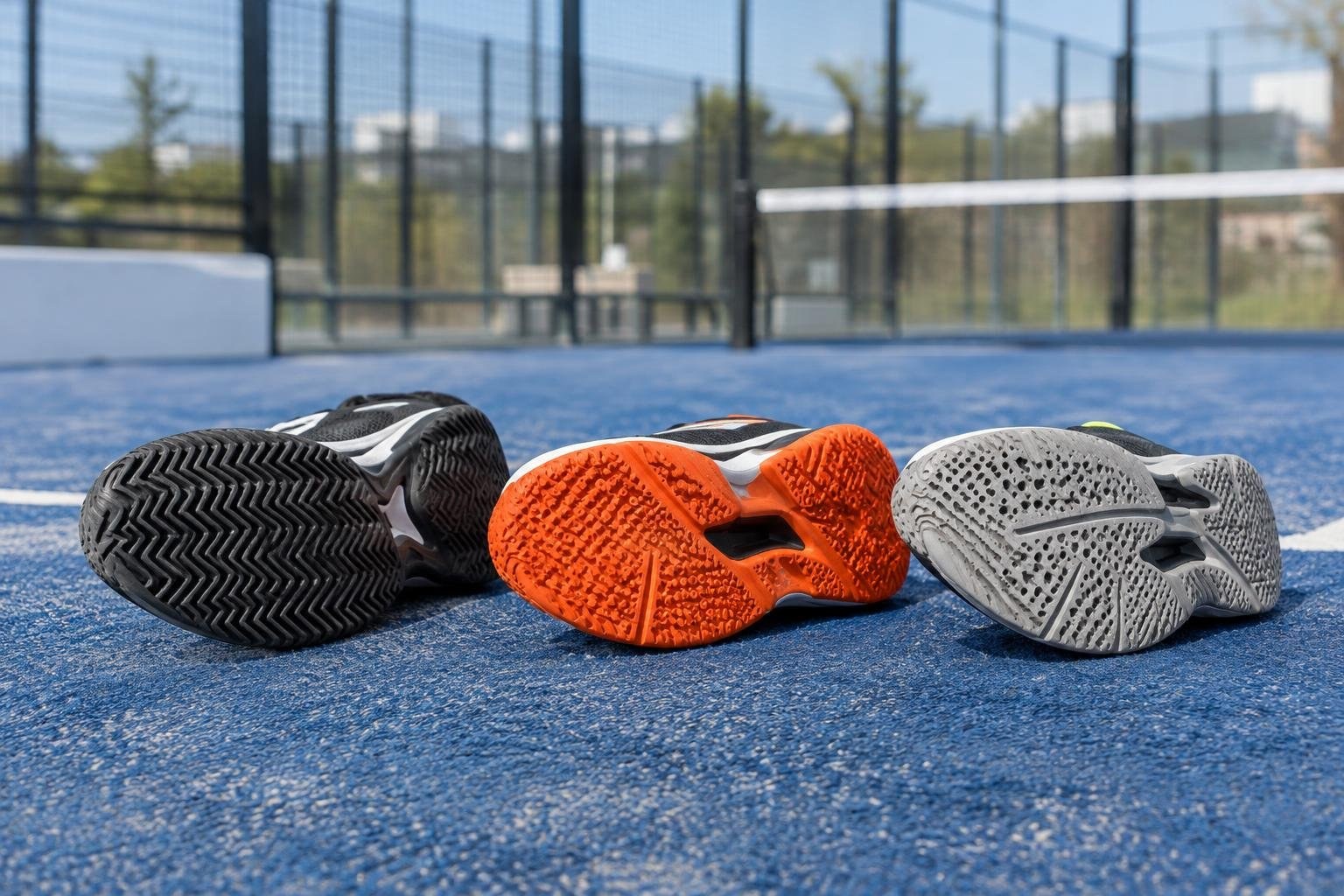
Do you need special shoes for padel? The short answer
Short answer: For regular padel, padel-specific shoes are a sensible choice. They are designed for the sport’s court movement and surfaces. Some tennis shoes with a suitable court outsole may also work, while running shoes are generally not ideal.
“Special” does not mean that every player must buy a shoe with padel printed on the label before stepping onto court. It means that footwear designed for court movement is a better match than a general-purpose running shoe. The sources describe grip and movement as key reasons to choose suitable footwear, but they do not establish a universal rule requiring a particular shoe model.
If you are attending a club session, ask the facility whether it has footwear requirements. If you expect to play often, compare padel shoes and suitable tennis shoes based on tread, fit, and the court’s surface rather than the product name alone.
Why footwear matters on a padel court
Padel footwear matters because the sport includes quick lateral movements, stops, and short bursts of acceleration. Shoes intended for court sports are designed to provide grip for movement on court. Footwear that does not suit the surface can make movement feel less secure; no shoe can guarantee that a player will avoid slips or injury.
Padel is played on artificial turf, and the amount of sand or other loose material on the surface can vary. The sources note that court surfaces have changed, with some newer courts using less sand. That matters because a sole that grips very strongly on one surface may feel different on another.
Suitable shoes are also made to withstand the wear of court play. That does not mean that a specialist shoe will last forever, or that a label alone proves it will suit your feet. Fit, comfort, sole design, and how often you play all matter when you decide what to buy.
What the shoe-selection process includes
Buying padel shoes is a straightforward process: learn about the court, choose an appropriate sole, check the fit, and follow the facility’s guidance. You do not need to start with an elaborate gear setup. Supportive shoes are one of the main practical items to consider alongside a racket and comfortable clothing.
- Ask about the court. Find out whether it has a noticeable amount of sand or a lower-sand surface, and whether the club has footwear rules.
- Compare soles. Look for a padel-specific outsole or a suitable court shoe. Herringbone, clay-style, and omni patterns are commonly discussed for padel.
- Check the fit. Try on both shoes if possible. Walk, make a few controlled side steps, and check for discomfort or a feeling that your foot is moving inside the shoe.
- Confirm the purchase terms. Review the seller’s return policy and the product description before removing tags or wearing the shoes outdoors.
- Reassess on court. If the shoe feels too slippery or overly grippy, stop and ask the facility or a knowledgeable footwear provider for advice rather than forcing yourself to adapt.
This is a practical buying sequence, not a substitute for any specific court or club requirements. The important choice is footwear suited to the playing surface and your comfort, not buying extra accessories you do not need.
Signs your current shoes may not be suitable
Consider changing footwear if you are using running shoes, feel uncertain or insecure during lateral movement, notice that the sole does not suit the court, or find your current shoes uncomfortable. These are prompts to reassess your choice, not proof that a particular shoe will prevent injury.
A few practical questions can help:
- Do the shoes feel stable when you move sideways, rather than only when walking forward?
- Does the sole have a court-oriented tread, such as herringbone or omni, rather than a running-shoe design?
- Are you playing on a court with more sand, or on a lower-sand surface?
- Are you using court shoes often enough that wear may have changed how the sole feels?
If you experience pain or a persistent problem with movement, stop playing and seek appropriate professional advice. Shoe choice is one part of preparation, not a medical treatment.
Options compared: padel shoes, tennis shoes, and running shoes
For most buyers, the main options are padel-specific shoes, tennis shoes with a suitable court outsole, and running shoes. Padel shoes are the most directly tailored option. Tennis shoes may be a reasonable alternative if their tread and fit suit the court. Running shoes are generally not the preferred choice for padel.
| Option | When to consider it | What to check |
|---|---|---|
| Padel-specific shoe | You play regularly or want footwear made for padel movement and surfaces. | Outsole pattern, comfort, fit, and court compatibility. |
| Tennis shoe | You already own one or are comparing court-sport footwear. | Look for a herringbone or omni pattern and confirm it suits the club’s court. |
| Running shoe | Generally not the preferred option for padel. | Running shoes are not designed specifically for padel’s court movement. |
There is no single best choice for every player. A specialist label does not replace a good fit, and a tennis shoe should not be assumed suitable simply because it is made for another racquet sport.
How court surface and sole pattern affect your choice
The sole pattern should make sense for the court you use. Herringbone, also called a fishbone pattern, is described as a tread that can release sand while providing grip. Clay or tractor-style patterns are recommended for courts with more sand. Omni patterns are associated with lower-sand courts and varied grip.
These are useful starting points, not a universal ranking of outsole quality. Court surfaces differ, and the amount of sand can affect how a shoe feels. Some sources describe newer courts as having less sand than earlier surfaces, which is one reason older assumptions about clay-court shoes may not apply everywhere.
Before choosing, ask the club about its surface and whether players commonly use a particular kind of court shoe. If you play at several venues, consider the courts you use most often and prioritize a shoe that feels comfortable and controlled there. Do not choose a sole based only on a photograph or a generic claim that it works on every court.
Cost and pricing considerations
There is no dependable universal price range in the available information, so compare current prices where you live rather than relying on a single figure. The total value of a shoe is not just its ticket price. Consider whether it fits, whether its outsole suits your regular court, how frequently you will use it, and what the seller allows if the fit is wrong.
Compare products at the same level: a padel shoe against another suitable court shoe, not against a casual sneaker with different intended use. Check whether the product description clearly identifies its intended sport and sole pattern. Avoid paying extra for features you cannot explain or do not need.
If you already own tennis shoes, first check their outsole and ask the venue whether they are acceptable. That may help you avoid buying a second pair unnecessarily. If you play regularly, compare the cost of suitable padel and tennis shoes with the comfort and court fit you expect to get, not an assumption that the cheapest option is the best deal.
What to expect, including timing and first use
How quickly you need to decide depends on when you plan to play and whether you already own suitable court shoes. If you have a session booked soon, ask the club about its rules before arriving. If you are shopping ahead, take time to compare the outsole and fit instead of making the decision from a product name alone.
There is no fixed break-in timeline that applies to every shoe or player. A useful expectation is to try the shoes indoors, follow the seller’s return conditions, and avoid relying on new footwear for an important match until you know it feels comfortable. On court, start with controlled movement and reassess how the sole feels.
If the shoe feels uncomfortable or does not provide the level of control you expected, do not assume that discomfort is something you must tolerate. Check the fit and the court suitability, and seek advice from the club or seller where appropriate.
How to choose a knowledgeable shoe provider
When choosing a retailer or footwear adviser, look for clear product information rather than a sales pitch. A useful provider should be able to explain the outsole pattern, identify whether the shoe is intended for padel or another court sport, and help you compare options without promising that a shoe will prevent injuries.
- Ask what surface or playing conditions the shoe is designed for.
- Ask how the tread is expected to behave on courts with more or less sand.
- Confirm the fit and return terms before purchase.
- Compare the actual outsole and construction, not just the marketing label.
- Ask the padel facility what players may wear on its courts.
A qualified provider in this context means a knowledgeable seller or adviser who can explain the product and its limits. The supplied information does not establish a particular certification that consumers must seek for shoe advice. If a salesperson makes medical guarantees or cannot explain basic product differences, consider another source of advice.
Safety, club requirements, and purchase protections
Check the club’s footwear guidance before you play. Do not assume that one brand or tread is mandatory everywhere.
For safety, choose footwear that feels comfortable and controlled for lateral movement. Grip is important, but more grip is not automatically better on every surface: the appropriate outsole depends in part on the court and its sand. Stop if you feel unstable or experience discomfort, and seek suitable professional advice for persistent pain or injury concerns.
Before buying, read the manufacturer’s product information and the seller’s warranty or return terms. Coverage and conditions vary, so do not assume that wear, fit issues, or a change of mind will be covered. Keep purchase information and follow any care instructions supplied with the shoes.
Ways to save without compromising your choice
You can control spending without choosing footwear that is a poor match for the sport. First check whether a pair of tennis shoes you already own has a suitable court outsole. If so, ask the club whether that shoe is acceptable before shopping for something new.
When you do need to buy, compare several suitable options and focus on fit, tread, and intended use. Look at current local offers, but make sure the product description and return terms are clear. A discount is not useful if the shoe is uncomfortable or the sole does not suit the courts you play on.
Avoid reducing cost by substituting a shoe designed for a different kind of movement without considering its outsole. The sources specifically caution that running shoes are not ideal for padel, while suitable tennis shoes can be an alternative. Saving safely means comparing compatible options, not simply choosing the lowest price.
Mistakes, red flags, and a buying checklist
Common mistakes include treating all athletic shoes as interchangeable, choosing a sole without asking about the court, and assuming that the most aggressive tread is always best. Court surfaces and sand levels vary, and sole patterns are described differently for more-sand and lower-sand conditions.
Use this checklist before buying:
- Have I checked the club’s footwear guidance?
- Do I know whether my regular court has more sand or a lower-sand surface?
- Is this a padel shoe or a court shoe with a suitable outsole?
- Have I compared the tread pattern, comfort, and fit?
- Do I understand the seller’s return and warranty terms?
- Am I avoiding claims that footwear guarantees injury prevention?
Another avoidable error is purchasing based on a name alone. Read the product details and inspect the outsole. If the seller cannot explain the shoe’s intended use, pause and compare alternatives before committing.
Factors that affect your shoe choice
Several factors shape which shoes are a suitable choice for padel. Start with the court: artificial-turf surfaces can differ in how much sand or loose material they have, and sole patterns are associated with different court conditions. Herringbone or clay-style tread is commonly linked with courts that have more sand, while omni patterns are described as an option for some lower-sand courts.
Your movement and playing frequency matter too. Padel involves lateral movement, stops, and short bursts of acceleration, so consider whether your current shoes feel comfortable and controlled during those movements. Players who play regularly may want to compare padel-specific shoes with suitable court shoes, including tennis shoes with an appropriate outsole.
Also check the facility’s footwear guidance before playing. Compare the actual tread and fit rather than relying on a product label alone, and consider whether a pair you already own is suitable for the court you use.
Frequently asked questions
What are padel shoes called?
They are usually called padel shoes or padel-specific shoes. They have soles designed to provide grip and support for padel-court movement.
Can you wear tennis shoes for padel?
A tennis shoe with a herringbone or omni-pattern sole may be a practical alternative. Check the club’s rules and whether the tread suits the court surface.
Are running shoes okay for padel?
Running shoes are generally not ideal because their design may not suit the quick lateral movements and stops involved in padel. Use court shoes if possible.
Which sole is best for padel courts with sand?
Herringbone or clay-style tread is commonly associated with courts with more sand, while omni patterns are described as an option for courts with less sand. Ask the facility what its court is like.
How much do padel shoes cost?
There is no one price that applies everywhere, and the supplied information does not establish a reliable price range. Compare current local prices, shoe fit, sole type, durability, and the return policy.
How do I choose padel shoes?
Check whether the shoes feel secure and comfortable, whether the tread is appropriate for the court, and whether the product is specifically made for padel or suitable court sports. Follow the club’s footwear guidance.
People Also Ask
Do you need special shoes for padel?
For regular play, choose padel shoes or suitable court shoes. A tennis shoe with an appropriate tread can work for some players, but check the court and club guidance.
Can I play padel in tennis shoes?
Not necessarily. Some tennis shoes have tread patterns that can suit padel. The best choice depends on the shoe, court surface, and facility requirements.
Why are running shoes not ideal for padel?
They can be a poor choice because running shoes are not designed specifically for padel’s court movement. A court shoe with a suitable sole is a better option.
What shoe sole is best for padel?
Herringbone or clay-style tread is often recommended for courts with more sand. Omni patterns are described as suitable for some lower-sand courts.
How should I choose shoes for padel?
Ask the facility about its surface and footwear guidance, then compare shoes for tread, comfort, fit, stability, and price. Try them on if possible.
How much should I spend on padel shoes?
There is no reliable universal price in the supplied information. Check current local prices and compare suitable footwear by fit, sole, durability, and return terms.
For regular padel, shoes designed for the sport are a sensible choice because their soles are intended to work with padel-court movement and surfaces. You may be able to start in suitable tennis shoes, especially if they have a herringbone or omni-style tread, but running shoes are not the best substitute. Check your club’s footwear requirements, consider the court’s surface and sand, and choose a comfortable shoe that lets you move securely without feeling stuck. Compare your options, learn what features matter, and use Estimate.org to search for providers and make an informed choice.
Your next step
Compare your footwear options, learn what to look for, and search for providers on Estimate.org.
Last reviewed and updated October 8, 2026 by the Major League Padel Editorial Team.
Sources
- Padel dress code decoded: What to wear on court – David Lloyd Clubs
- What to Wear for Padel: A Complete Clothing and Gear Checklist | Padel Ember
- Ultimate guide to buying the correct padel shoes & soles | PadelRacketReviews.com
- The Ultimate Guide to Padel Shoes – Padelsouq
- Why You Need Padel Shoes & How to Choose Them
- Why you need padel shoes
- What shoes to wear for padel
- Select the Right Padel Shoes | The Ultimate Guide | Mypadellife.com