
The best shoes for playing padel on artificial turf depend on more than the word “padel” on the box. Courts can differ in how much loose sand sits on the grass and how compact or worn the surface is, and footwear guides describe different outsole patterns for those conditions. Before buying, ask the club about its court surface, compare omni, herringbone, and hybrid soles, and make sure the shoe fits securely and feels stable when you move. This guide explains how to make that choice, what to check before paying, and which common buying assumptions to avoid.
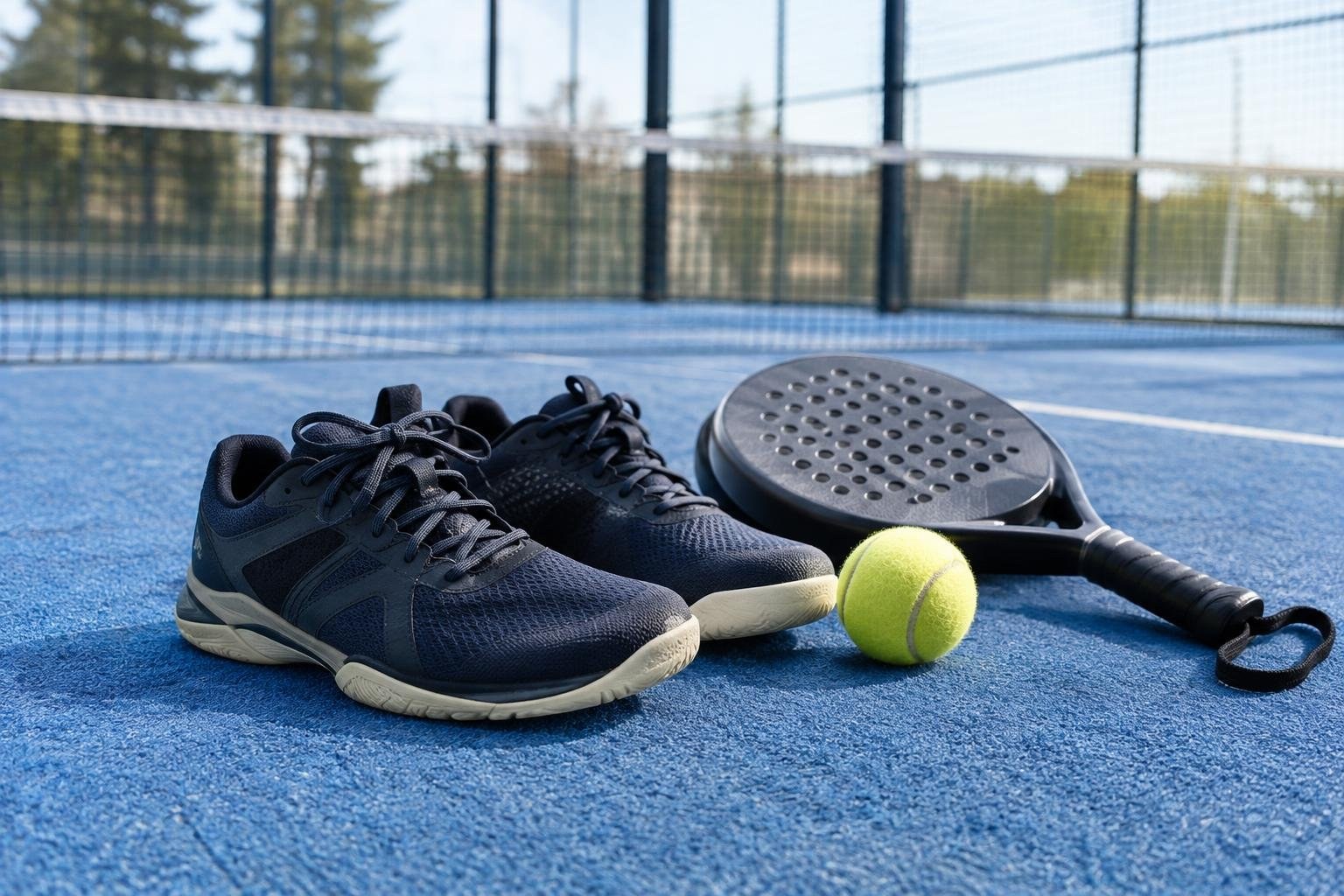
1. What choosing padel shoes for artificial turf involves
The useful first step is to identify the court surface, not to choose a shoe based only on its product name. Artificial grass can have loose sand on top, and guides describe different sole patterns for sand-heavy, compacted, or smoother surfaces. Padel-specific shoes are intended to provide grip and withstand court wear; the outsole pattern is central to selecting a suitable pair. Surface-based outsole guidance distinguishes herringbone, omni, and mixed designs. Padel shoe guidance also discusses omni and hybrid herringbone patterns for sand-dressed turf.
Use a simple process: ask the club about its turf and sand, identify the matching outsole options, try on the shoes, and assess comfort and stability with padel movement in mind. If you play at more than one facility, tell the seller or fitter that the surfaces differ. A shoe that feels suitable on one court may not be the best match for every surface.
Outsole choice is not the whole buying decision. Check how the shoe holds your foot, whether it feels comfortable as you change direction, and whether its construction suits your needs. A suitable pattern cannot compensate for a poor fit.
2. Signs your current shoes may not suit the court
Consider changing or reassessing your footwear if it feels slippery, unstable, or uncomfortable on the court, or if you discover that the outsole does not suit the surface you play on. Those are reasons to investigate the match between shoe, fit, and court rather than simply buying a more powerful-looking shoe. Artificial turf can be paired with loose sand, and guidance says that surface conditions affect which outsole is appropriate. Surface footwear advice notes that an unsuitable sole can limit agility or provide too little support.
Think about where you play most often. If the club’s courts have changed, or if you alternate between an outdoor sand-covered court and an indoor smoother surface, revisit the outsole choice. The relevant warning sign is a mismatch between the shoe and the surface, not simply that the shoe is not marketed as a specialist model.
Footwear cannot guarantee that injuries will be prevented. The practical aim is to choose a shoe whose grip and support feel appropriate for the court and your movement. If you have persistent pain or a medical concern, seek advice from a qualified health professional rather than treating a shoe purchase as a diagnosis or cure.
3. Cost and pricing: what to compare before buying
Prices vary by model and seller. Compare the total cost of the options you are considering against practical criteria: court-surface match, fit, comfort, and the seller’s exchange or return terms.
Build a short comparison before you buy. Record the shoe’s outsole type, the court condition it is intended for, how it fits your foot, and the purchase terms. A low-cost pair that does not match your regular court may be a poor value; an expensive pair is not automatically the right choice either. Available guidance focuses on surface, grip, and support rather than proving that price predicts suitability.
For a fair comparison, check the same factors across several pairs. Do not treat model names, promotional claims, or a professional player’s signature shoe as evidence that the shoe suits your foot or your court. Product details can change, so verify specifications and policies with the seller before ordering.
4. Factors that affect which shoe is right for you
The main factors are the amount and condition of sand, whether the turf is new or worn, whether the surface is smooth or lower-sand, and how the shoe feels on your foot. Guidance recommends omni soles for new artificial grass with lots of sand and herringbone for more compact or worn grass. Other footwear guidance describes omni patterns for indoor synthetic or low-sand turf and warns that surface differences matter.
Also consider whether your schedule takes you to more than one court type. One source describes players moving between outdoor sand-covered turf and smoother indoor surfaces, reinforcing the need to check the actual courts rather than assuming all artificial turf is alike. A hybrid outsole may be worth comparing where conditions vary, but the available information does not establish that every hybrid design works equally well everywhere.
Fit is an individual factor. Pay attention to whether your foot feels secure and whether the shoe remains comfortable as you move. Do not infer a fit from a model’s reputation or a general product description alone.
5. Omni, herringbone, and hybrid soles compared
There are three broad outsole approaches to compare:
- Omni: Small circular studs are associated with omni patterns. Guidance recommends this type for new grass with more sand and describes it for lower-sand or indoor synthetic surfaces as well. The suitability depends on the specific court conditions.
- Herringbone: A fishbone-like pattern, also called clay or spike in some product descriptions. It is recommended for compact or worn grass, where controlled grip is desired.
- Mixed or hybrid: A combination of patterns. It is an option to compare if you play on different surfaces, but confirm the product’s intended use rather than assuming that “hybrid” means suitable for every court.
These descriptions are not a universal ranking. One source notes that omni patterns can pack with silica on sand-heavy courts and lose grip, while other guidance favors omni for new turf with lots of sand. That difference is a reason to confirm the surface and assess the specific shoe, not to treat a single generalization as a rule for all courts.
When comparing options, ask the club about its turf, check the product’s stated surface, and consider trying the shoe if that is possible. Favor the match between the outsole and court over claims that one pattern is best for everyone.
6. What to expect when shopping and testing a pair
Take time to check the court and compare fit. The time needed to adjust to new shoes varies. If you can try shoes on before buying, move in them and assess comfort and stability. If buying remotely, review the seller’s sizing guidance and exchange terms before placing the order.
When a club has several court surfaces, ask which one your regular booking uses. If you cannot get a clear answer, describe the court to a knowledgeable staff member or seller and ask what information would help identify the right outsole. Do not assume that indoor always means a particular surface or that outdoor always means the same amount of sand.
After purchase, pay attention to how the shoes feel during play. If you experience slipping, discomfort, or a lack of confidence in movement, reassess the fit and court match. These checks are practical, not a promise of a particular performance outcome.
7. How to choose a knowledgeable shoe seller or fitter
For footwear, a “qualified provider” means a seller or fitter who can help you understand the shoe’s intended surface and fit, rather than someone whose recommendation rests only on a sales claim. Ask the person to explain why the outsole suits your court and what the product description says about its intended use. If the answer is vague, compare the manufacturer’s product information and ask the club to describe its court surface.
Bring useful details: where you play, whether the turf is sand-heavy or compacted, whether you play indoors as well as outdoors, and any fit concern you want to address. Ask about sizing, exchange terms, and what happens if the shoe proves uncomfortable. These are questions to verify with the seller; do not assume a particular policy applies.
Be cautious about claims such as “works on every court” unless the seller can explain the surfaces covered. The available guidance identifies meaningful differences between omni, herringbone, and mixed soles. A knowledgeable seller should be able to discuss those tradeoffs without promising that a shoe will prevent injury or guarantee better results.
8. Safety, product claims, and purchase protections
Padel footwear is a consumer purchase, not a building project, so permits are not relevant to selecting a pair. The practical checks are product suitability, fit, and purchase terms. Confirm the listed outsole type and surface guidance, and ask about the seller’s exchange or return conditions before buying. Policies differ, so verify them directly rather than relying on an assumption.
Safety deserves a realistic explanation. Artificial-turf padel shoes are designed to provide grip, and footwear guidance warns that a mismatch can affect agility or support. That does not mean any specific shoe prevents injury. Choose shoes that feel secure and appropriate for the surface, and seek medical advice for injury symptoms or persistent pain.
Do not treat professional credentials as a substitute for checking fit and court conditions. If a seller makes a technical or medical claim, ask for a clear explanation and assess whether the claim is supported by the product information. No special certification or warranty requirement is established in the sources used for this guide.
9. Ways to compare value and save without a poor fit
You can shop efficiently without compromising on fit or surface suitability. First, ask the club what court you use most often; then limit your comparison to shoes whose outsole is intended for those conditions. Comparing a few relevant options is more useful than browsing every model in the category.
- Check whether the court has loose sand, compact or worn turf, or a smoother lower-sand surface.
- Compare the stated outsole and intended court use.
- Try shoes on if possible, or check the seller’s sizing and exchange information before ordering.
- Compare price only after confirming the shoe is a plausible surface match.
These steps can help avoid paying for a feature or style that does not address your needs. They do not guarantee the lowest price or a particular shoe lifespan. Avoid cutting costs by ignoring comfort, choosing an unsuitable outsole, or assuming that a discount makes a poor fit acceptable.
10. Buying mistakes, warning signs, and a practical checklist
Common mistakes include assuming every artificial-turf court has the same surface, choosing by brand or appearance alone, and treating one outsole pattern as universally best. The available guidance differs according to sand and turf condition: omni is recommended for new, sand-heavy grass, while herringbone is recommended for more compact or worn grass. Some guidance also identifies omni for lower-sand surfaces, so confirm the court rather than relying on a blanket rule.
Use this checklist before buying:
- Ask the club what surface and sand conditions your regular court has.
- Identify whether omni, herringbone, or a mixed outsole fits those conditions.
- Check the product’s stated intended surface.
- Assess fit and comfort rather than relying only on a size label or review.
- Ask about exchange terms and verify them with the seller.
- Be skeptical of unsupported guarantees about injury prevention or universal court performance.
A signature model or a shoe described as a competitive favorite is not automatically right for your court or foot. Choose on the basis of surface match, fit, and clear product information.
Frequently asked questions
How do I choose padel shoes for an artificial-turf court?
Ask the club whether the court has loose sand, compacted turf, or a smoother low-sand surface. Omni soles are described as a suitable option for new, sand-heavy grass, while herringbone is recommended for more compact or worn grass. If conditions vary, compare hybrid designs and test the shoe’s comfort and stability where possible.
What is the difference between omni and herringbone padel soles?
Omni soles use small circular studs; herringbone soles use a fishbone-like pattern; mixed or hybrid soles combine outsole patterns. The right choice depends in part on the turf and the amount of sand on the court.
Can I wear clay-court tennis shoes for padel?
Not necessarily. A clay-court tennis shoe may have a herringbone outsole, but padel courts and footwear needs vary. Check the court surface and shoe fit rather than relying only on the sport name or product label.
How much should I spend on padel shoes?
Compare the total purchase cost, fit, outsole match, durability information, and the seller’s exchange terms rather than choosing by price alone.
When should I replace or change my padel shoes?
If the shoes feel unstable, fail to provide comfortable grip, or do not suit the court surface, reconsider the outsole and fit before your next match. Different turf and sand conditions can call for different sole patterns.
Are herringbone soles best for every padel court?
There is no single best outsole for all artificial turf. Omni is recommended for new grass with more sand; herringbone is recommended for more compact or worn grass. A hybrid sole is another option to compare when court conditions vary.
People Also Ask
Which padel shoe sole is best for sand-covered artificial turf?
Omni soles are recommended for new artificial grass with lots of sand, while herringbone is recommended for more compact or worn turf. Check the actual court conditions before choosing.
Should I choose herringbone or omni soles for padel?
Not always. Guidance differs by court condition: omni soles are suggested for sand-heavy new turf, while herringbone is suggested for compact or worn grass. Match the sole to the court rather than choosing one pattern by default.
Do I need special shoes to play padel on artificial grass?
Artificial-turf padel shoes are designed to provide grip on the court, and footwear guidance recommends choosing a sole suited to the turf and sand conditions. Fit and support also matter when assessing whether a shoe feels appropriate for your play.
What should I ask a padel club before buying shoes?
Ask whether the court has loose sand, compacted or worn turf, or a smoother low-sand surface. These conditions help narrow the outsole choice; a club may be able to describe its own courts.
Are hybrid padel shoes a good choice for artificial turf?
A hybrid outsole combines patterns and can be compared with omni and herringbone options. The supplied guidance does not identify one hybrid design as best, so judge its suitability against the court and your comfort.
Are expensive padel shoes worth it?
No universal price range is established here. Compare the shoe’s fit, sole suitability, and purchase terms across options without assuming a higher price guarantees a better match.
Can the wrong shoes make it harder to move on court?
An outsole that does not suit the playing surface can affect grip and movement. If you feel slipping or instability, check both the shoe’s fit and whether its sole pattern matches the court.
The best shoes for playing padel on artificial turf are the ones that match the court’s sand level and surface, fit securely, and let you move confidently without feeling unstable. Start by asking the club what its courts are like, then compare outsole patterns and try shoes on before buying when possible. Omni, herringbone, and hybrid soles each suit different conditions, so no single pattern is automatically best for every artificial-turf court.
Your next step
Compare your options, learn what features to look for, and search for providers on Estimate.org.
Last reviewed and updated October 8, 2026 by the Major League Padel Editorial Team.
Sources
- Best Padel Shoes (2026): What to Look For + Our Picks | Padel Courts Finder
- Definitive Guide to Choosing Padel Shoes Based on Artificial Grass
- Best padel shoes for different court surfaces – PadelShop.com
- Recommended shoes for playing padel on artificial grass
- Select the Right Padel Shoes | The Ultimate Guide | Mypadellife.com
- Best Padel Shoes 2026: Complete Buying Guide
- Best Padel Shoes by Court Surface 2026: Turf, Hard & Indoor
- Best Padel Shoes (June 2026) | The Court Scout