
Choosing the best padel shoes for men is less about finding a universal winner and more about matching fit, grip, stability, and protection to your feet, playing habits, and court. Padel involves quick changes of direction and close-to-the-ground shots, so shoes built for court movement deserve more attention than casual trainers. Dedicated padel shoes are one option; some hardcourt tennis shoes may also be worth comparing. Use this guide to understand what matters, assess the tradeoffs, and make a confident purchase without treating a product ranking as a substitute for trying the shoe on.
Quick answer: what are the best padel shoes for men?
Short answer: prioritize a comfortable, secure fit; stable support for side-to-side movement; grip that suits your court; and durable construction around the toe. These criteria are more useful than a label or headline claiming one shoe is best for every man.
Padel-shoe recommendations commonly emphasize grip, lateral stability, court feel, and protection from court abrasion. One guide points to toe and heel reinforcement, while others describe padel footwear as designed for quick cuts and recovery. Those are useful features to inspect, not proof that every model will suit every player.
Product recommendations change, and a shoe that works for one foot or playing style may not work for another. Treat named models as a shortlist for comparison, then check current specifications, fit, availability, and return terms before buying.
What to know before buying men's padel shoes
Padel shoes are court footwear intended for the repeated starts, stops, and directional changes of court play. The practical buying question is whether a particular shoe gives you appropriate grip and stability while remaining comfortable and secure on your foot.
Dedicated padel footwear is not the only category worth considering. On’s court-shoe page includes a hardcourt tennis shoe among its options for padel, so a suitable tennis court shoe can be part of your comparison. That does not make every tennis shoe appropriate: assess the specific outsole, construction, and fit rather than relying on the sport named on the box.
For men shopping online, read product descriptions carefully and confirm the model’s intended use. If you can try shoes on, use the opportunity to assess comfort and movement before deciding.
Which shoe features matter on court?
Start with movement and wear areas. Padel shoe guides highlight quick lateral cuts, recovery steps, grip, and court feel. Toe reinforcement also matters to compare: toe-drag during serves and low volleys is identified as a point where a soft toe may wear sooner, and some models are described as reinforcing the toe and heel.
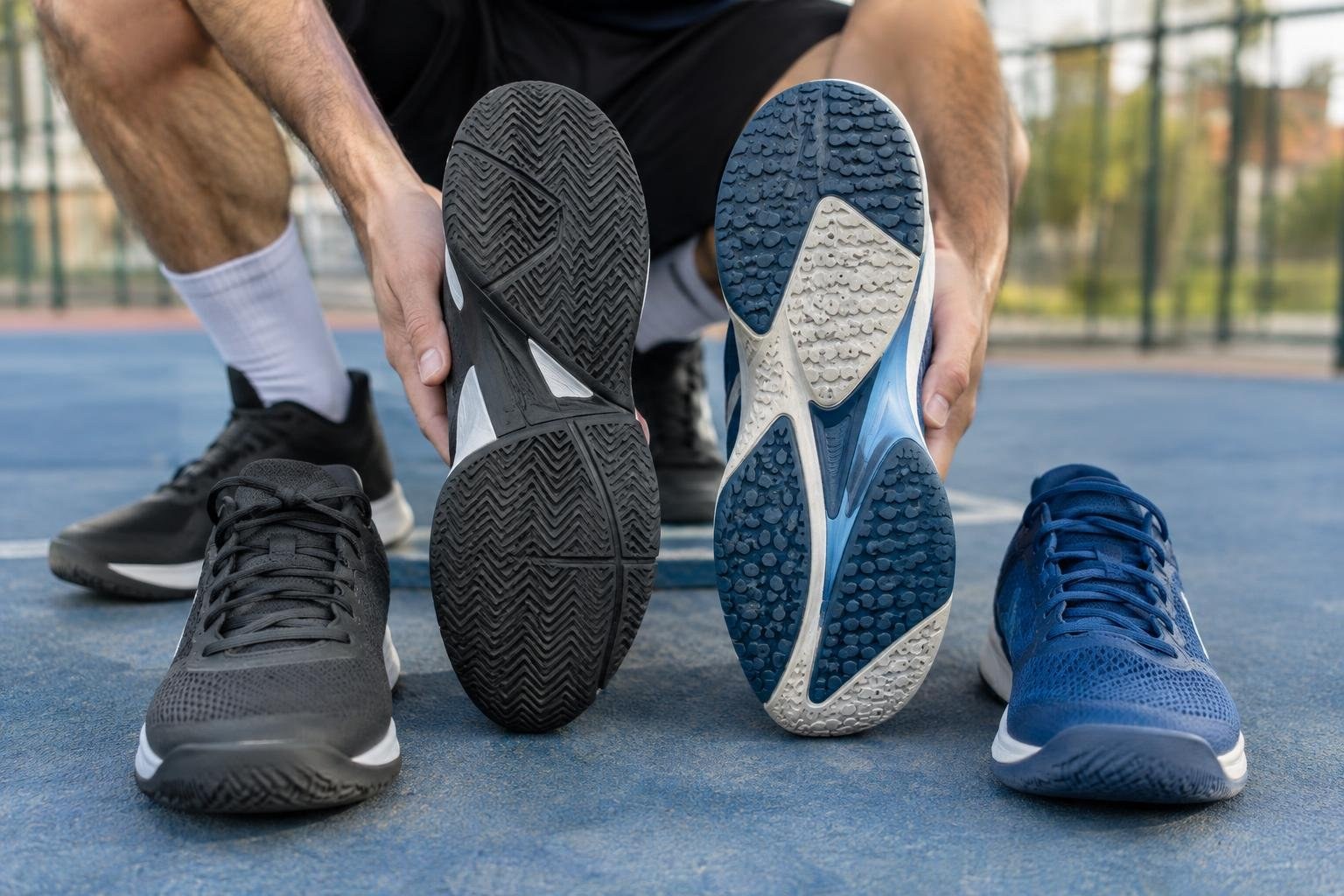
Inspect the outsole and toe construction in the product details or in person. Look for a clear description of the shoe’s court use and compare the tread and protective coverage across models. A recommendation featuring a herringbone outsole is one example, not a guarantee that the same tread is ideal on every court.
Comfort, support, and weight are personal tradeoffs. A lightweight design may appeal to a player who values a less bulky feel; another player may put more weight on stability or cushioning. The information supplied by manufacturers and retailers describes features, but your fit and preference determine whether those features work for you.
Padel shoes versus tennis shoes: options and tradeoffs
Use this quick comparison to shape a shortlist. It is a framework for evaluating options, not a claim that one category always performs best.
| Option | Potential reason to consider it | What to check |
|---|---|---|
| Dedicated padel shoe | Designed and marketed for padel court movement; some lines emphasize grip, stability, or reinforced high-wear areas. | Actual fit, outsole, toe protection, comfort, and court suitability. |
| Hardcourt tennis shoe | A court-shoe alternative; at least one court-shoe guide includes a hardcourt tennis model for padel. | Whether the specific model feels stable and grips appropriately on your court. |
| General athletic or casual shoe | May be convenient for everyday use, but the supplied padel-shoe guidance instead focuses on court-specific movement and grip. | Do not assume it is a suitable substitute. Check intended use and movement before playing. |
The best comparison is between shoes that fit you and are suitable for your playing surface. A category name is only a starting point.
Signs you may need different padel footwear
Consider a purpose-built court shoe when your current footwear feels insecure during changes of direction, lacks suitable court grip, or shows wear in high-contact areas. Toe wear is a specific issue identified in padel-shoe guidance because of toe-drag during certain shots.
These are prompts to reassess your footwear, not a diagnosis or proof that a new shoe will solve pain or movement problems. If discomfort persists, stop relying on a shopping guide and seek appropriate professional advice. When the shoe is visibly worn or no longer feels secure, compare replacement options and inspect the outsole and upper before continuing to use it.
Newer players can also use these checks before buying their first pair. A beginner does not need to shop by professional-player endorsement; comfort, stable grip, and fit are practical starting points.
Cost and pricing considerations
There is no supported universal price range here, and prices vary by market, model, and time. Compare the current price from the retailer you plan to use rather than relying on an old article or an undated “best value” label.
Assess value alongside the shoe’s fit, construction, court use, and return policy. A premium-sounding material or feature is not automatically worth paying more for if the shoe does not fit or meet your priorities. Conversely, the lowest listed price is not a saving if the model is unsuitable or cannot be returned when the fit is wrong.
Before checkout, check whether the quoted total includes delivery and whether sale terms change the return conditions. Compare like with like: the same model, size, and version, using current retailer information.
How to compare models and choose by playing needs
The right model depends on more than whether it is sold as a men’s shoe. Compare the shape and feel on your foot, your preference for a lighter or more supportive feel, how much toe protection is offered, and whether the outsole is appropriate for your court.
- For a first pair: prioritize comfort and stable grip. A buyer’s guide gives similar beginner-focused advice.
- For frequent play or visible toe wear: compare toe reinforcement and the overall durability features described for each model.
- For a court-shoe alternative: investigate hardcourt tennis shoes, but confirm the particular model suits your court and foot.
- For a feature-led shortlist: compare specific designs rather than brand reputations. Published guides discuss examples including HEAD Sprint Pro 4.0, NOX AT10 PRO, ASICS Gel Resolution X Padel, and Joma Open Men.
These are examples reported by the available guides, not independent test results or a ranking. Verify current versions and details with the maker or retailer before purchase.
What to expect when shopping, including timing
A shoe purchase usually involves comparing models, checking size and availability, trying the shoe if possible, and confirming the retailer’s return terms. Online, allow time to review sizing information and the exact model version; in a shop, ask to try both shoes and walk or move in them before deciding.
There is no dependable universal timeline for delivery or breaking in a particular model in the available product information. Delivery and return windows depend on the seller and location, so verify them at checkout. Do not assume that a shoe will become comfortable after purchase if it feels wrong during a fitting.
When possible, judge the pair in the socks you normally wear for padel. Try a few controlled side steps and stops only where the shop permits, and pay attention to both comfort and whether your foot feels held in place.
How to choose a reliable retailer or product source
For footwear, the “provider” is generally the shoe retailer or manufacturer supplying product information, sizing support, and after-sale terms. Choose one that identifies the exact model and version, provides clear size guidance, and states how returns or exchanges work.
Compare the product details against the features you need rather than relying on broad statements such as “for every player.” If you need clarification, ask the retailer about intended court use, outsole, sizing, and return eligibility before ordering. Brand lists and retailer recommendations can help identify models to investigate, but they do not establish that a shoe will suit your individual foot.
Keep your order confirmation and check the terms that apply to your purchase. If a product description is vague or the seller cannot explain its return process, consider another seller.
Safety, warranties, and claims to verify
Check product safety and purchase protections in the information that applies where you live. Confirm the correct size and intended court use, review the seller’s return and warranty terms, and follow any care guidance supplied with the shoe. Warranty terms and consumer protections vary by product, seller and country.
Do not treat a professional endorsement, an advertised feature, or a product’s “padel” label as a safety certification. If you have a foot condition or ongoing pain, consult a qualified health professional about suitable footwear. A general buying guide cannot assess an individual medical need.
Before play, check that the shoes feel secure and that the outsole is in usable condition. If they feel unstable or unsuitable, do not assume they will work simply because they are designed for court use.
Ways to save without making a poor tradeoff
You can control spending without compromising on fit or suitability. Compare current prices for the same model and version, consider a previous-season color or model only after checking that its features still meet your needs, and review delivery and return costs before ordering.
- Set your priorities first: fit, grip, stability, and protection matter more than cosmetic details.
- Check whether a sale changes the return or exchange terms.
- Compare a dedicated padel shoe with a suitable court-shoe alternative rather than assuming the most specialized option is always necessary.
- Avoid buying solely because a guide calls a shoe “best” or because a professional uses a related line.
Do not save money by choosing a shoe that feels unstable or is not suitable for your court. The aim is a good-value fit, not simply the lowest checkout total.
Mistakes, red flags, and a pre-purchase checklist
Avoid these common buying mistakes:
- Buying by ranking alone: a guide’s top pick is not a personalized fitting.
- Ignoring the toe: compare reinforcement if toe-drag and abrasion are concerns.
- Assuming every court shoe is interchangeable: check the specific outsole and intended use.
- Choosing on brand or appearance alone: test comfort, stability, and fit.
- Skipping return terms: confirm the seller’s policy before ordering.
- Assuming a higher price guarantees a better match: judge the individual shoe against your needs.
Before you buy: identify your court and priorities; shortlist suitable models; compare outsole, stability, toe construction, and comfort; verify sizing and current price; and read return and warranty terms. If you cannot answer these questions from the product listing, ask the retailer before paying.
Factors that affect your padel shoe choice
Several factors can change which shoe is the right match for you. Start with your court and the shoe’s stated intended use: compare the outsole and grip rather than assuming every court shoe works in every setting. The available court-shoe options include a hardcourt tennis model, while padel-focused guides emphasize grip, stability, and court feel.
Your movement and wear patterns matter too. If you drag your toe during serves or low volleys, compare toe reinforcement because this area may wear sooner. Players who prioritize quick lateral cuts may focus on stability and court feel, while those who prefer a less bulky shoe may weigh its described weight against support and cushioning.
Finally, your foot shape and comfort determine whether a model’s features work for you. Compare the exact model and version, try it on if possible, and judge whether it feels secure during permitted side steps and stops. Recommendations and feature lists can help build a shortlist, but they do not replace checking fit.
Frequently asked questions
What should men look for in padel shoes?
Start with a secure, comfortable fit, stable support for lateral movement, dependable grip for your court, and toe protection. Compare dedicated padel shoes with court shoes only after checking the outsole and fit for your needs.
Do I need shoes made specifically for padel?
Not necessarily. Dedicated padel models are designed for court movement, but some hardcourt tennis shoes may also be worth comparing. Check the grip pattern, stability, fit, and whether the shoe suits the surface where you play.
Is a herringbone outsole best for padel?
Herringbone is one outsole pattern featured in padel-shoe recommendations, but no single tread is automatically right for every player or court. Consider the surface and how the shoe grips when you move and change direction.
Which padel shoes are recommended for men?
There is no single best option for everyone. Some recommendations highlight the HEAD Sprint Pro 4.0, while other guides discuss models such as the NOX AT10 PRO and ASICS Gel Resolution X Padel. Treat these as options to compare, not a universal ranking.
How should padel shoes fit?
Try shoes on with the socks you normally wear for padel. Check that your foot feels held securely without uncomfortable pressure, and test short lateral steps and stops if the retailer permits. Follow the retailer’s return conditions.
How much do men's padel shoes cost?
Prices change by model, retailer, location, and sale. Compare the current total price, including delivery where applicable, and weigh it against fit, construction, comfort, and return terms rather than assuming the most expensive shoe is best.
People Also Ask
What makes a shoe suitable for padel?
Padel footwear should feel secure and comfortable while allowing controlled court movement. Compare outsole grip, lateral stability, toe protection, and fit, then check that the shoe suits your court.
Can men play padel in tennis shoes?
A tennis shoe can be a candidate, particularly a hardcourt model, but the label alone does not confirm that it will suit your court or your foot. Check its outsole, stability, comfort, and return policy.
What sole pattern should padel shoes have?
Some padel-shoe buying guides feature herringbone outsoles, but tread suitability depends on the court and shoe design. Compare grip and movement in the conditions where you actually play.
Which brands make men's padel shoes?
Brand names do not settle the choice. Compare individual models for fit, grip, stability, toe reinforcement, and comfort. The available guides mention Adidas, ASICS, Nike, Bullpadel, NOX, HEAD, Babolat, and Joma among options to investigate.
Are lightweight padel shoes better?
Not automatically. A model described as lightweight or cushioned may appeal to some players, but personal fit and support matter. Try the shoe and compare how stable and comfortable it feels during court movements.
Can the wrong padel shoes cause problems?
Use a shoe that feels secure and comfortable and is suitable for the court surface. If you have foot pain or a medical concern, ask a qualified health professional for advice rather than relying on a shoe guide.
The best padel shoes for men are the ones that fit securely, feel stable during side-to-side movement, and provide suitable grip and protection for your court. Compare dedicated padel models with appropriate court shoes, then judge the fit in person when possible. Do not choose by brand, professional endorsements, or a product label alone. Use comfort, movement, court surface, durability, and return terms to make the final call.
Your next step
Explore padel apparel and the Major League Padel community.
Last reviewed and updated October 8, 2026 by the Major League Padel Editorial Team.
Sources
- Best Court Shoes For Padel | On United States – On Running
- Best Padel Shoes (2026): What to Look For + Our Picks | Padel Courts Finder
- Best Padel Shoes: Top Picks for Men & Women (2026)
- Premium Padel Shoes for Unbeatable Performance and Style | Shop Now – Padel USA
- Best Padel Shoes of 2025
- Men's Padel Shoes: Find Your Pair Among the Best Models of 2026 – Padel Market
- Best Padel Shoes 2026: Buyer's Guide & Top Models – Padel Market
- 6 Best Padel Shoes in 2026: Top Padel Shoes for Men