
Padel balls can look usable long after they stop bouncing the way you expect. That makes the simple question, “How long do padel balls last?” harder to answer with one match count. Published estimates commonly range from two to five matches, and another guide estimates about three to five hours of active play. The practical test is whether the balls still give you a consistent, lively bounce for the kind of game you want. This guide explains typical lifespan, pressure loss, signs to replace a set, and how to decide whether a pressurizer is worthwhile.
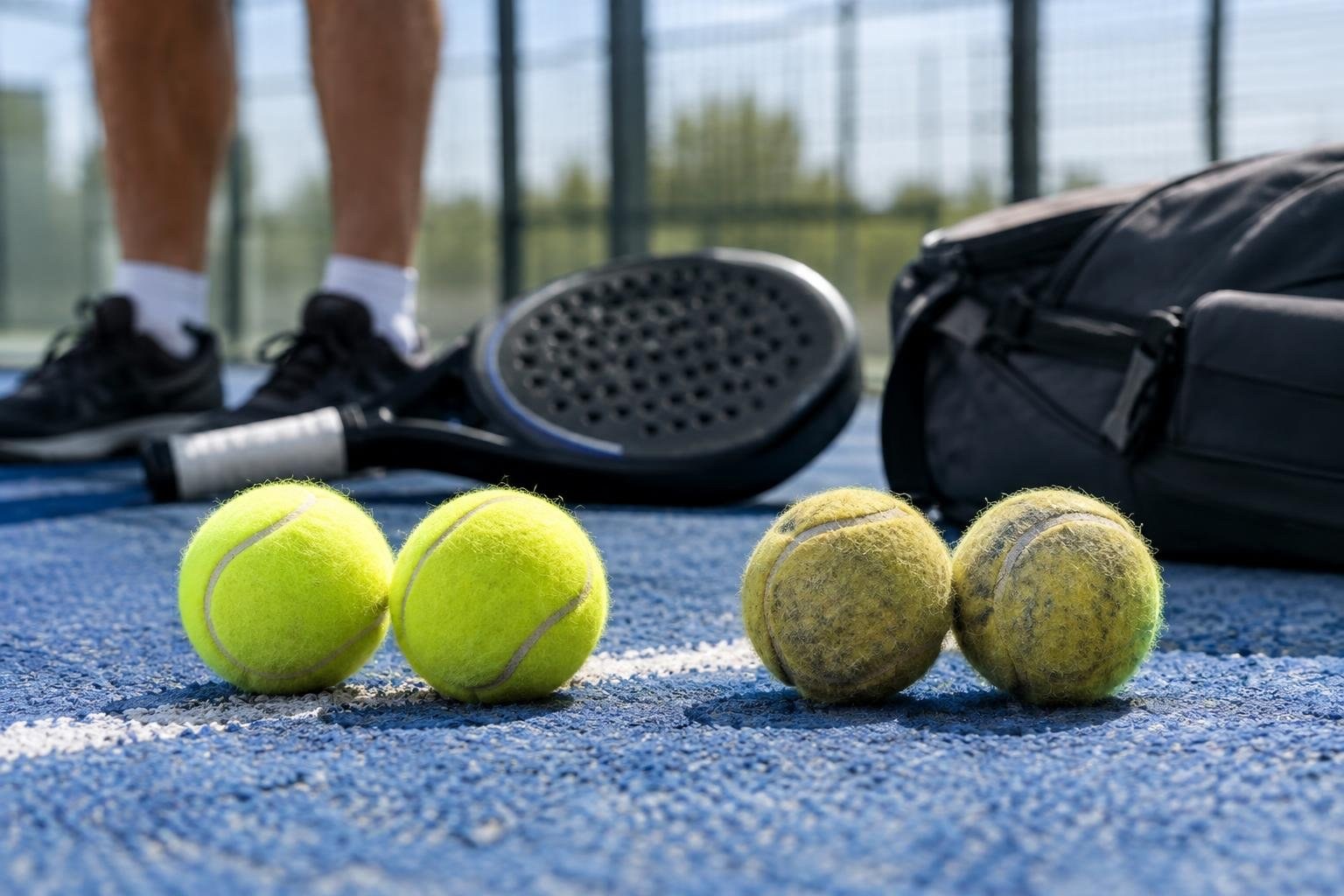
How long do padel balls last? The practical answer
There is no single dependable match count for every set of padel balls. Several consumer guides estimate roughly two to five matches, while other estimates cluster around three to five. One source describes a can of three balls lasting about three to five hours of active play before pressure loss noticeably affects performance. These figures are best treated as ranges, not guarantees.
The reason estimates differ is that “a match” is not a uniform amount of use. Two matches may involve different playing time and intensity, and balls may be stored or repressurized differently between sessions. A useful rule is to start checking the bounce after a few matches and replace the set when its performance no longer feels consistent for your game.
Some sources say padel balls that are returned to appropriate pressure between sessions may last substantially longer, with one claiming dozens of matches. That is an optimistic possibility, not a promise. It depends on the ball and how it is used and stored.
Why ball lifespan matters to your game
Padel balls gradually lose pressure. When the bounce weakens, the ball can feel slower and change the timing of shots. Several sources connect lifespan with how long the balls are played and with loss of internal pressure over time. The practical result is that balls that once rebounded reliably may begin to feel less lively.
Ball consistency matters because players adjust their timing and shot choices to the bounce. If one ball in a set behaves differently from the others, or your familiar shots begin to feel unusually slow, check the balls before changing your technique. A tired ball is not necessarily unusable, but it may make a session less representative of how you normally play.
This is especially relevant if you are practicing a specific shot or playing a close match: a consistent set makes it easier to focus on execution. For casual hitting, you may be comfortable playing longer with a set that is no longer at its liveliest.
How the ball-use and replacement process works
The relevant “process” is simple: use the balls, assess their bounce, and decide whether to continue, replace them, or preserve them between sessions.
- Start with a fresh set. Notice how its bounce and pace feel during play.
- Keep a rough use record. Note matches or active hours instead of relying on memory.
- Reassess after play. If the balls are being used again, compare their bounce with a new ball when practical.
- Choose the next step. Continue using them for casual play, use a pressure-preserving product according to its instructions, or replace them for more consistent play.
This approach is more useful than treating a printed or online lifespan estimate as a deadline. Reported estimates range from a few matches to much longer when balls are pressurized between sessions.
Signs your padel balls may need replacing
Consider replacing a set when its bounce becomes noticeably lower, the pace feels slower, or the balls no longer behave consistently. One source specifically describes weaker bounce and a slower-feeling game after balls begin losing pressure. These signs are more useful than trying to judge age from appearance alone.
- Lower bounce: A ball does not rebound as lively as a new one under similar playing conditions.
- Slower feel: You find that the ball seems to move or play differently than expected.
- Uneven set: Balls used together do not seem to produce similar bounce.
- Unexplained adjustment: You are repeatedly changing timing because the ball feels different from a fresh set.
A single odd bounce is not conclusive. Compare more than one point or rally, and account for the possibility that balls have had different amounts of use. If performance matters for a match or structured practice, choosing a fresh set is the straightforward option when doubt remains.
Cost and pricing considerations
There is no supported universal price for replacing balls or buying a pressurizer in the available evidence. Price depends on what you are comparing, and current retail costs can vary by location, seller and product. Check the price at the time you buy rather than planning around an outdated estimate.
For a fair comparison, look at the total cost of the option, not just the first purchase. A new set means replacing the balls when performance drops. A pressurizer adds an accessory purchase and a storage step, while its value depends on whether you play often enough to make preserving balls worthwhile. The available source claims that repressurized balls can last much longer, but this does not prove that every player will save money.
Before buying, compare the ball quantity, the seller’s stated product details, and any clear instructions for using a pressurizer. Avoid assuming a higher-priced ball necessarily lasts longer unless the product information supports that claim.
What affects how long padel balls last?
Ball lifespan varies because several conditions influence how quickly pressure and performance change. The sources identify playing frequency or total time, match intensity, court surface, ball quality and environmental conditions as relevant considerations. One source also identifies temperature and playing style.
- Time in play: More active use gives the balls more opportunity to wear and lose freshness.
- Intensity: Sources associate more intense play and rallies with faster pressure loss.
- Court: The type of playing surface is cited as a factor, though the sources do not quantify how much each surface changes lifespan.
- Ball quality: The quality of the ball itself is identified as a variable; no supplied evidence supports a universal ranking of brands.
- Conditions and storage: Environmental conditions and pressure management can affect the outcome.
These factors interact.
Options and tradeoffs: replace, keep playing, or preserve pressure
You have three practical choices: replace the balls after a few matches, continue using them while their bounce remains acceptable, or try to preserve pressure between sessions. The right choice depends on how sensitive your play is to ball condition and how much effort you want to spend managing equipment.
| Option | May suit | Tradeoff |
|---|---|---|
| Replace regularly | Players who prioritize a lively, consistent feel | Uses new balls more often |
| Keep playing until bounce declines | Casual play where a slower feel is acceptable | Performance may become less consistent |
| Use a pressure-preserving product | Players who want to try extending a ball’s useful life | Requires an accessory and following its instructions; results are not guaranteed |
Published estimates differ: some sources report two to four matches, others three to five, and one estimates three to five active hours. A source also claims dozens of matches when pressure is restored between sessions. Do not compare these numbers as if they came from one controlled test. Choose based on your own use and the bounce you observe.
What to expect, including timing
For a new set, expect several matches of good performance rather than a fixed number of days. One source estimates about three to five hours of active play, while multiple sources describe ranges around two to five matches. Those are different ways of counting use, and match duration can vary.
Performance may decline gradually as pressure is lost, so you may notice a change before deciding to retire the balls. Build a quick check into your routine: record roughly how many times a set has been used, assess bounce before play, and compare with a fresh ball if you cannot decide. If the balls are being preserved between sessions, follow the accessory maker’s directions rather than assuming any particular timing or pressure setting.
There is no source-supported schedule for how many days or weeks a can should last. Frequency of play is a better personal tracking measure than calendar age alone.
How to choose a qualified seller or product provider
Most players do not need a specialist to decide whether a ball has lost its bounce. If you are buying balls or a pressure-preserving accessory, choose a seller that gives clear product descriptions, quantity, care directions and terms for returns or warranty where applicable. Check those details before purchasing, because they can vary by product and seller.
Compare the product’s stated purpose with your needs. If you want balls for casual play, you may prioritize value and availability. If you want a consistent feel for regular practice, you may prefer replacing balls sooner or following a careful pressure-preservation routine.
If buying in person, ask the seller to clarify whether the package contains the quantity you expect and whether a pressurizer is included. If buying online, read the product listing and seller policies rather than relying on a short headline alone.
Permits, credentials, warranties, and safe product use
Do not assume a particular warranty or safety certification applies: check the product packaging, seller terms and instructions for the specific item.
If using a pressure-preserving container, follow its own directions and inspect it for damage before use. Do not improvise pressure settings based on a general lifespan estimate. The evidence supports the idea that pressure management can extend useful ball life, but it does not provide a universal operating procedure for every device.
For a product problem, keep the packaging and proof of purchase and contact the seller or manufacturer through the channel given with the product. Warranty coverage and return conditions depend on their stated terms.
Ways to save safely and get more use from a set
To reduce waste without compromising the consistency you need, track use and make replacement decisions based on performance. If you play casually, you may decide a slightly slower ball remains acceptable. If the ball’s changed bounce disrupts practice or match play, replacing it may be worth the added cost.
- Keep sets together and note how often they have been used.
- Compare questionable balls with a fresh one before discarding a set.
- Consider a pressure-preserving accessory if you play frequently and are willing to use it correctly.
- Do not buy a bulk quantity solely because one source gives a long lifespan estimate.
- Compare current prices and package quantities before deciding which option offers value.
One source suggests that correctly repressurized balls may last dozens of matches, but other estimates for ordinary use are much shorter. Treat the longer estimate as a possible benefit, not a guaranteed saving or a reason to keep a ball that no longer performs well.
Mistakes to avoid and a practical replacement checklist
Avoid using a single match count as an absolute rule. The sources report different ranges, and they identify different conditions that can change lifespan. Other common buying and use errors include expecting a ball to feel new indefinitely, assuming every ball in a set has identical use history, and treating a seller’s broad claim as a guarantee.
Quick checklist before your next session:
- Do the balls still bounce and feel consistent with each other?
- Are they noticeably slower or less lively than a fresh set?
- How many matches or active hours have they had?
- Are you using them for casual play, practice or a match where consistency matters?
- If using a pressurizer, have you followed the product’s own instructions?
- Have you checked current price, package quantity and seller terms before replacing them?
If the bounce is clearly reduced and consistency matters, use a fresh set. If the balls remain acceptable for your purpose, there is no need to replace them just because a generic estimate says a certain number of matches has passed.
Frequently asked questions
How many matches do padel balls usually last?
Most estimates put padel balls at roughly two to five matches. The number is only a guide: playing intensity, court, ball quality, and pressure management can change how long a set remains lively.
Can I keep playing with old padel balls?
Not necessarily. A ball may remain playable after its bounce declines, but slower or less consistent bounce can change the rally. Replace it when the difference affects play or when you need consistent conditions.
Does a padel ball pressurizer make balls last longer?
A pressurizer is intended to help preserve ball pressure between sessions. One source says properly pressurized balls can last dozens of matches, while estimates without that process are much shorter. Actual results vary.
How can I tell if my padel balls have lost pressure?
Compare a questionable ball with a fresh one under similar conditions. If it repeatedly bounces lower or feels noticeably slower, use a fresh set for a more consistent game.
How long do padel balls last in hours?
Expect the ball to lose pressure gradually rather than on a guaranteed match count. The available estimates range from a few hours of active play to a few matches, depending on the source and conditions.
People Also Ask
How many games should a padel ball last?
A reasonable expectation is a few matches: published estimates commonly fall between two and five. Treat that as a planning range, not a guaranteed replacement interval.
How many hours do padel balls last?
One guide estimates about three to five hours of active play before pressure loss noticeably affects performance. Match length and intensity make hours and match counts imperfect comparisons.
Do padel balls last longer than tennis balls?
The sources reviewed give different estimates, but several put typical lifespan around two to five matches. Differences in play intensity, court and ball quality help explain why a single exact number is not dependable.
What happens when padel balls lose pressure?
A ball that has lost pressure tends to bounce less and make play feel slower. Compare it with a fresh ball if you are unsure whether the change is from wear or conditions.
Should I buy a padel ball pressurizer?
A pressurizer may help preserve ball pressure between sessions. One source says re-pressurized balls can last dozens of matches, but that figure should not be treated as a promise for every ball or player.
What affects how long padel balls last?
The cited estimates identify playing frequency, intensity, court surface, ball quality, temperature and pressure management as factors. Your own replacement interval will reflect the combination of these conditions.
A practical starting point is to expect a new can of padel balls to play well for a few matches, then judge the balls by how consistently they bounce and feel. Estimates vary: several sources place typical life around two to five matches, while another gives roughly three to five hours of active play. Keep track of use, compare the balls with a fresh set when uncertain, and use a suitable pressurizer if you want to extend their playing life. Choose replacements based on reliable performance, not a fixed calendar rule.
Your next step
Compare your options, learn what to look for, and search for padel providers on Estimate.org.
Last reviewed and updated October 8, 2026 by the Major League Padel Editorial Team.
Sources
- Durability of Padel Balls : When and why to replace them | Serve and Smash
- How Long Do Padel Balls Last?
- How Long Do Padel Balls Last?
- Padel Balls — What They Are, How They Work, and Which Ones to Buy in the US | PadelGuideUS
- How Long Padel Balls Last: Signs of Wear and When It's Time To Replace
- How long do Padel balls last? – Justpadel.com
- How Long Do Padel Balls Last? – Raquex
- How long do Padel Balls Last? Tips & Lifespan Insights – PadelShop.com